High-Performance Architectural Pivot Entry Doors for Russian Construction
Tested for extreme thermal resistance, structural wind load, and anti-burglary protection. Configured for residential luxury villas, commercial developments, and harsh winter climates.
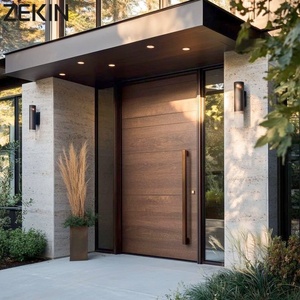
ZEKIN Modern American Design House Heat Insulation Fire Prevention Luxury Entrance Pivot Door
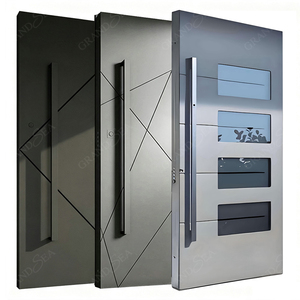
Luxury Modern Cast Aluminum Smart Armored Entry Door Solid Wood Pivot Front Door
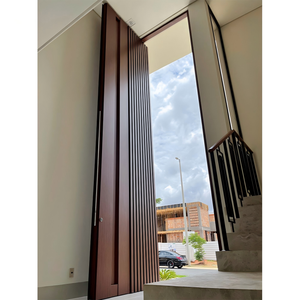
Heavy-Duty Extra Large Aluminum Pivot Door Smart Lock Luxury Villa Exterior Entry Door
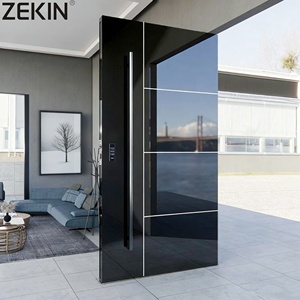
ZEKIN Modern Design Aluminum Front Entry Doors Luxury Security Pivot Door with Smart Locks
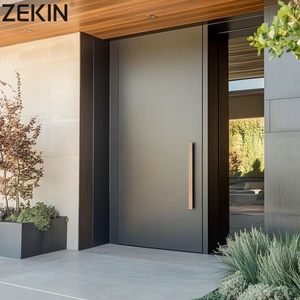
ZEKIN Outdoor Back Painted Glass Anti-theft Exterior Security Aluminum Cast Pivot Door
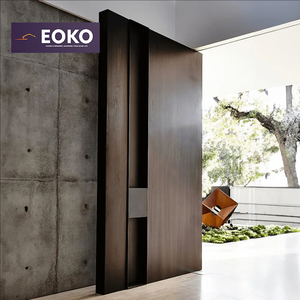
EOKO Custom Wooden Grain Front Entry Security Aluminum Decorous Exterior Pivot Door
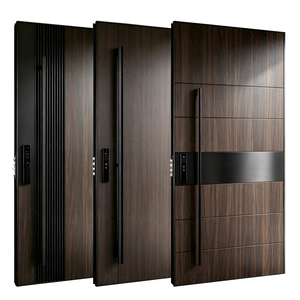
Classic Design Modern Solid Wood Pivot Front Entry Door With Stainless Steel Aluminium Frame
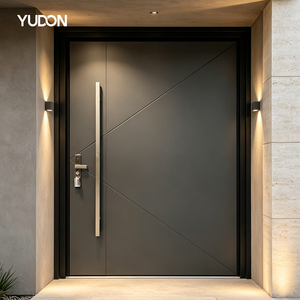
YUDON Main Entrance Pivot Door Entry Door Matte Gray Finish Custom Size Soundproof for Villa
Architectural Sourcing of Large-Format Pivot Entry Doors in the Russian Federation
Analysis of market demands, thermal break engineering requirements, GOST compliance standards, and structural hardware performance under Eurasian climatic conditions.
In recent years, the architectural landscape across the Russian Federation—spanning high-end suburban cottage settlements in the Moscow Region (such as Rublyovka and Novorizhskoye Shosse), coastal luxury estates in Sochi, and modern private developments in Saint Petersburg, Kazan, and Yekaterinburg—has undergone a structural shift. Traditional, narrow steel hinged doors are increasingly being replaced by large-format aluminum pivot entry doors measuring up to 3.5 meters in height and 2.0 meters in width. These grand entrance systems provide an unparalleled architectural statement, clean geometric sightlines, and seamless integration with contemporary curtain wall facades.
However, specifying pivot doors for the Russian climate presents extreme physical and thermodynamic challenges. With external winter temperatures dropping to -35°C in Central Russia and down to -50°C in Siberian zones, coupled with indoor heating set to +22°C, an entry door leaf faces a severe thermal differential ($\Delta T$) of up to 72 degrees Celsius. Standard uninsulated aluminum profile systems or imported Mediterranean pivot doors will suffer from severe cold bridging, surface frost condensation, seal hardening, and bimetallic warping that leads to mechanical binding. As a premier manufacturer and global supplier, Crestor Door Manufacturing Co., Ltd. resolves these engineering bottlenecks through specialized thermal-break profile design, laser cold-welding, multi-barrier air sealing, and low-temperature synthetic hydraulic hardware.
Technical Information Gain: Solving the Bi-Metal Warping & Condensation Defect
When an exterior aluminum plate freezes at -40°C while the interior face warms at +22°C, thermal expansion differentials cause structural deflection (the "bowing effect"). Crestor's engineered pivot doors incorporate flexible PA66 GF25 polyamide thermal isolation strips combined with floating interior aluminum skins. This allows independent expansion and contraction without warping the main structural sash or breaking frame seals.
Key Performance Standards: GOST Compliance & Sub-Zero Isolation
GOST 31173-2016 Certification
Complies with Russian national standards for steel and aluminum door blocks. Tested for structural rigidity under Class 1 high wind loads (up to 5.0 kPa) and burglary resistance up to Grade 4 multi-point latching criteria.
Quadruple-Barrier Frost Seal
Features automotive-grade continuous EPDM rubber seals alongside drop-down automatic floor weather-strips. Prevents cold draft infiltration, snowpack melt penetration, and ice accumulation at the threshold bottom.
Sub-Zero Hydraulic Floor Springs
Equipped with specialized German-engineered hydraulic floor pivots utilizing low-viscosity synthetic fluid. Ensures smooth, controlled self-closing operation and 90° hold-open functionality from -50°C up to +60°C.
Pivot Door Material Typology Comparison for Russian Climates
A comparative engineering matrix analyzing material performance under severe thermal stress, humidity fluctuations, and anti-burglary demands.
| Performance Parameter | Cast Aluminum Armored Pivot | Solid Wood Composite Pivot | Back-Painted Glass Armor Pivot |
|---|---|---|---|
| Thermal Transmittance ($U$-Factor) | 0.82 W/m²K (Grade 10) | 0.95 W/m²K (Grade 9) | 0.88 W/m²K (Grade 10) |
| Sub-Zero Warping Resistance (-45°C) | Optimal (Floating Plate Tech) | Moderate (Requires Core Slits) | Excellent (Reinforced Metal Frame) |
| Acoustic Insulation Rating ($R_w$) | 42 dB | 40 dB | 44 dB (Acoustic IGU) |
| GOST 5089-2011 Security Rating | Class 4 (Highest Anti-Burglary) | Class 3 | Class 4 (Laminated Security Glass) |
| Surface Finish Durability | PVDF Fluorocarbon (25 Yr Guarantee) | Exterior UV Oil / Varnish | Ceramic Back-Fired Enamel |
| Maximum Sash Weight Capacity | Up to 800 kg | Up to 500 kg | Up to 650 kg |
Regional Application Profiles in Russian Real Estate & Architecture
1. Moscow & St. Petersburg Luxury Cottages
Focuses on high visual impact and grand architectural scale. Systems are specified with extra-large entrance openings (e.g., 2000mm x 3200mm), integrated side-lights featuring Low-E triple glazing filled with Argon gas, and facial recognition biometric smart handles. Surface finishes lean toward anodized dark bronze, matte slate gray, or custom cast aluminum 3D reliefs.
2. Alpine & Resort Properties (Sochi & Altai)
Designed for mountain terrain and coastal humidity. Application demands high wind-load resistance (Class 9 / 5.0 kPa) and superior rain-tightness (700 Pa water tightness). Corrosion-resistant PVDF coatings ensure resistance to maritime salt spray, while floor pivots are elevated above snow meltwater drain paths.
3. Siberian Industrial & Private Estates (Novosibirsk, Tyumen)
Engineered strictly for sub-zero performance. Incorporates triple thermal break aluminum profiles with 34mm PA66 insulation strips, aerogel cavity insulation, and quad-seal gaskets. Prevents structural frost accumulation even during prolonged -45°C cold spells.
Why Importers & Contractors Partner with Crestor Door
Combining three decades of engineering authority, end-to-end industrial production, and strict international certification for worldwide B2B export.
160,000 m² Integrated Industrial Base
Founded in 1997, Crestor Door Manufacturing Co., Ltd. operates a premier manufacturing footprint in Dongying, Shandong, paired with a dedicated R&D Center in Shunyi District, Beijing. With over 200 engineers, technicians, and skilled staff, all key manufacturing processes—aluminum extrusion machining, powder coating, insulating glass unit (IGU) processing, laser cold-welding, and final assembly—are executed completely in-house under strict ISO 9001:2015 quality management.
±0.05 mm Precision CNC Machining & Patents
Holding over 219 patented fenestration technologies, our facility utilizes ultra-precise 5-axis CNC machining centers to process door sashes and frames to tolerances of ±0.05 mm. Combined with laser cold-welding corner joints, 12 mm sash overlap engineering, and automated seal insertion, Crestor doors deliver airtight structural rigidity, eliminating draft gaps and operational misalignment during long-term field use.
Frequently Asked Questions by Russian Importers & Contractors
How do Crestor pivot entry doors prevent frost and ice accumulation at -40°C?
What documentation is required to clear customs and comply with Russian building codes?
What is the maximum custom dimension available for oversized pivot entry doors?
How are heavy pivot doors packed to prevent transit damage during long overland rail or sea freight to Russia?
What options exist for smart locks and security hardware under freezing conditions?
What is the typical lead time for custom OEM/ODM pivot door project orders?
Ready to Elevate Your Architectural Project in Russia?
Consult directly with our senior fenestration engineers to receive custom shop drawings, technical U-factor calculations, and factory-direct pricing for your pivot door orders.
Get Catalog