OEM/ODM Architectural Pivot Door Solutions
Custom-engineered aluminum and wood-composite front entry pivot door systems designed for high-end residential estates, commercial developments, and modern architectural projects in Japan.
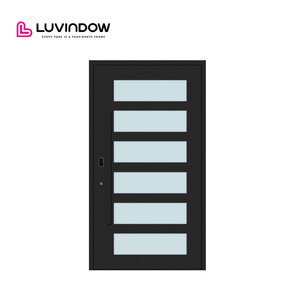
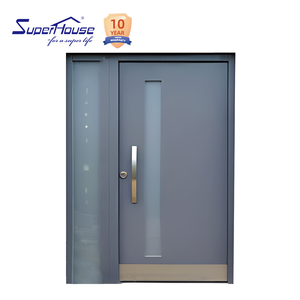
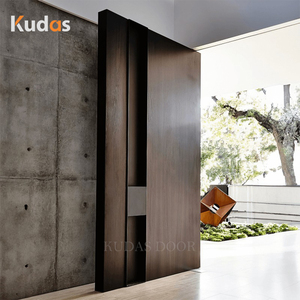
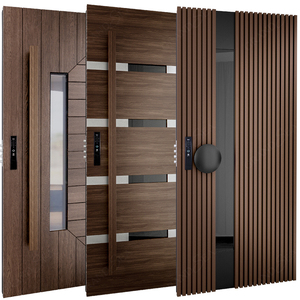
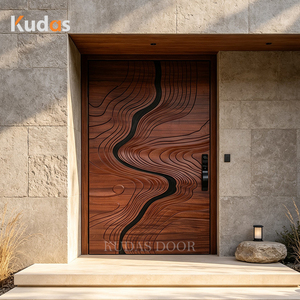
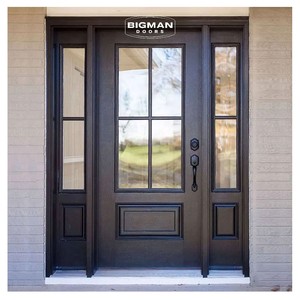

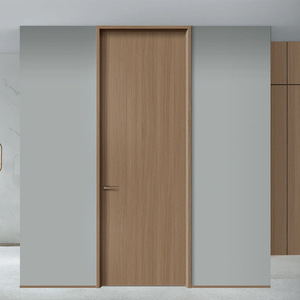
Architectural Engineering & Structural Performance for the Japanese Market
As modern Japanese architectural trends increasingly favor expansive, light-filled entrances and seamless spatial transitions, the conventional sliding door (*hikido*) and traditional hinged door are being complemented by large-format, modern pivot doors. However, exporting architectural door systems to Japan requires navigating strict localized mechanical, structural, and climatic standards. Japanese building codes (such as the Building Standards Law / *Kenchiku Kijun-hō*) mandate unparalleled performance regarding seismic resilience, wind load resistance during typhoon seasons, and stringent energy efficiency (ZEH - Zero Energy House standards).
Crestor Door Manufacturing Co., Ltd., leveraging over 27 years of OEM/ODM fenestration engineering expertise, provides fully customized modern aluminum and hybrid wooden pivot door systems precision-engineered for Japanese architects, general contractors (ゼネコン - *Genekon*), real estate developers, and high-end residential importers.
Information Gain Insight: Unlike standard hinged doors that transfer leaf weight entirely to lateral jamb frames, Crestor's heavy-duty pivot systems utilize top-and-bottom offset floor-pivot hardware. This distributes loads directly into the concrete slab, accommodating massive single-panel doors up to 2,500mm wide and 6,000mm high, weighing up to 800kg, with minimal operational resistance.
1. JIS A 4702 & Seismic Inter-Story Drift Performance
Japan is situated in one of the world's most active seismic zones. Exterior doors installed in commercial and residential structures must withstand significant inter-story drift angle deformation without glass shattering, frame binding, or structural failure. Crestor's modern pivot doors feature floating structural perimeter seals and reinforced 6060-T6 architectural aluminum profiles engineered to accommodate elastic deformation up to 1/100 to 1/150 relative story displacement under severe earthquake simulation testing.
2. Typhoon Water Tightness (700 Pa+) & Wind Load Resistance (5.0 kPa)
Coastal prefectures in Japan—including Tokyo Bay, Kanagawa, Osaka, and Kyushu—face severe annual typhoons. Traditional large pivot doors historically struggled with water penetration at the perimeter. Crestor overcomes this engineering hurdle through a proprietary multi-tier perimeter sealing system combining German-engineered EPDM compression gaskets, automatic hydraulic drop-down bottom seals, and hidden internal drainage channels. Tested to China's national lab standards matching JIS A 1513, our pivot systems achieve wind load resistance of Grade 9 (5.0 kPa) and water tightness of Grade 6 (700 Pa+).
3. ZEH (Zero Energy House) & Thermal Insulation Compliance (PA66 Polyamide Breaks)
With Japan's national mandate pushing for all newly constructed houses to meet ZEH energy conservation guidelines, entrance doors must minimize thermal bridging. Crestor integrates 24mm to 34mm PA66 GF25 fiberglass-reinforced polyamide thermal barrier strips inside the extruded aluminum profiles. Combined with Low-E insulated glass units (triple-pane, argon filled) or insulated solid carved wooden composite cores, our pivot door assemblies achieve whole-door thermal transmittance values down to U ≤ 0.9 W/m²K.
Engineering Comparison: Crestor OEM/ODM Pivot Doors vs Standard Market Imports
When specifying pivot doors for Japanese architectural projects, understanding technical distinctions between standard commodity doors and high-performance OEM engineering is vital for long-term operational stability.
| Performance Characteristic | Crestor OEM/ODM Heavy-Duty Pivot System | Standard Import / Off-the-Shelf Pivot Door | Impact on Japanese Project |
|---|---|---|---|
| Structural Profile Material | Primary 6060-T6 Extruded Aluminum (Wall Thickness 3.0mm - 4.0mm) | Recycled 6063-T5 Aluminum (Wall Thickness 1.4mm - 2.0mm) | Prevents sagging and frame warping over decades of continuous use. |
| Thermal Insulation (U-Value) | U ≤ 0.9 - 1.2 W/m²K (PA66 Thermal Break + Triple Low-E Argon) | U ≥ 2.8 W/m²K (Non-Thermal Break / Single Air Space) | Ensures full compliance with Japanese ZEH & Next-Gen Energy Standards. |
| Seismic Inter-Story Drift | Certified up to 1/100 story drift displacement elasticity | Rigid fixed frame without drift tolerance (< 1/300) | Critical for structural survival during major earthquakes in Japan. |
| Weather Sealing & Drainage | Quad-EPDM Gaskets + Hydraulic Auto Drop Seal + Internal Cascade Drain | Single Brush Strip + Standard Rubber Seal | Prevents water ingress during 150km/h typhoon-driven torrential rain. |
| Pivot Hardware System | German Dormakaba / Custom Heavy-Duty Hydraulic Floor Spring (800kg Cap) | Generic Surface Pin Pivot (150kg - 200kg Cap) | Delivers silky-smooth micro-adjustable operation & soft-closing control. |
| Corrosion Resistance (Finishes) | PVDF Coating / Anodized Grade 25 / AkzoNobel Powder (JIS H 8602 match) | Basic Spray Painting / Low-film Anodizing | Resists severe coastal salt-spray fading in bay and maritime areas. |
Localized Application Scenarios across Japanese Architectural Typologies
Crestor’s modular OEM/ODM platform allows tailored customization suited to distinct microclimates and regional aesthetic traditions throughout Japan.
Luxury Residential Estates in Tokyo (Minato-ku, Den-en-chofu, Shibuya)
In high-density luxury residential districts in Tokyo, privacy, acoustic insulation (Rw 44 dB), and commanding architectural prestige are essential. Crestor supplies floor-to-ceiling modern aluminum pivot doors featuring dark anodized bronze finishes, integrated smart biometric locks (Aiphone/Panasonic interface ready), and hidden multi-point locking hooks.
Alpine Chalets & Resort Properties in Niseko (Hokkaido) & Hakuba
Cold-climate alpine environments demand maximum thermal performance to prevent ice damming, condensation, and cold air drafts. Crestor configures ultra-insulated triple-glazed pivot doors utilizing PA66 thermal breaks and heavy-duty insulated core panels, maintaining comfort when outdoor temperatures plummet below -20°C.
Modern Machiya Renovations & Hybrid Ryokans in Kyoto & Kanazawa
Blending historic Japanese wood aesthetics with modern structural durability, Crestor provides aluminum-wood composite pivot doors. The interior face features real natural Walnut, Oak, or Japanese Hinoki cedar veneers, while the exterior armor consists of weather-resistant, thermal transfer powder-coated aluminum profile frames.
Flagship Commercial Outfits & Retail Storefronts in Ginza & Omotesando
For commercial luxury boutiques and architectural showrooms, smooth high-traffic operation and barrier-free ingress are paramount. Crestor’s pivot doors incorporate completely flush zero-threshold floor tracks compliant with Japan's Barrier-Free Law (*Barierfurī-hō*), equipped with heavy-duty overhead concealed hydraulic closers.
Key Localization & Architectural Design Trends in Japan (2025–2030)
The Japanese building industry is undergoing a significant transformation driven by demographic shifts, environmental regulations, and architectural minimalism. Importers and general contractors sourcing OEM door hardware must align with these evolving market dynamics:
1. Flush Zero-Threshold Barrier-Free Engineering (*Barierfurī*)
Japan’s aging population has led to strict architectural requirements for zero-step thresholds in both public and residential construction. Crestor has engineered an ultra-slim flush sill mechanism featuring automatic magnetic drop-down seal strips. When closed, the seal presses tightly against the smooth floor plate to block water and wind; when opened, the seal retracts invisibly into the door leaf bottom channel, leaving a 100% barrier-free floor line.
2. Minimalist Frame Visibility & Oversized Glazing
Modern Japanese architecture—influenced by figures like Tadao Ando and Kengo Kuma—emphasizes *Ma* (negative space) and clean geometric lines. Crestor's slim-frame pivot door series hides structural frames behind glass edges or aligns profiles flush with drywall plastering, maximizing natural light daylighting while maintaining thermal integrity.
3. Integration with Japanese Smart Home Ecosystems
Contemporary buyers expect entry doors to seamlessly sync with local smart home security networks. Crestor pivot doors can be factory-pre-wired for Japanese digital locking systems (such as Miwa Lock, Goal, Panasonic, or electronic keyless fob systems), incorporating hidden electric strike locks, conduit pathways, and magnetic door sensors inside the aluminum extrusions.
Why Partner with Crestor Door Manufacturing Co., Ltd.?
Founded in 1997, Crestor Door Manufacturing Co., Ltd. has grown from a specialized aluminum profile machining plant into a global leader in architectural fenestration systems. With an R&D headquarters in Beijing and a massive 100,000 m² smart manufacturing base in Dongying, Shandong, we offer complete in-house production accountability.
Full In-House Process Ownership
From aluminum extrusion alloy billet selection, precision CNC profile machining (tolerance within ±0.05mm), to vertical powder coating, insulating glass processing, and final assembly—we control 100% of production. No outsourced sub-contractors means consistent quality and competitive factory-direct pricing.
219+ Patents & Laser Cold-Welding
Our engineering team holds over 219 patents. We utilize advanced laser cold-welding for profile frame corners, eliminating visible seam lines and increasing corner structural joint strength by up to 200% compared to traditional mechanical cleat crimping.
Dedicated Export Packaging for Sea Freight to Japan
Shipping large-format glass pivot doors requires zero-defect export packaging. Every order destined for major Japanese ports (Tokyo, Yokohama, Osaka, Nagoya, Kobe) is protected with high-density corner guards, multi-layer scratch-resistant wrap film, and loaded into custom reinforced steel-frame crates to prevent sea transport flex.
Procurement & Technical FAQ for Japanese General Contractors & Importers
Direct answers to commonly raised technical questions when procuring custom OEM/ODM pivot doors for Japanese construction projects: