Architectural Entrance Systems Engineered for New Zealand Climates
Delivering factory-direct precision, certified thermal efficiency, and storm-proof durability for commercial developers, custom home builders, and window fabricators across Auckland, Wellington, Christchurch, and Queenstown.
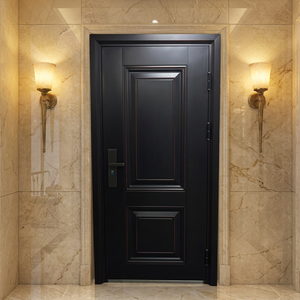
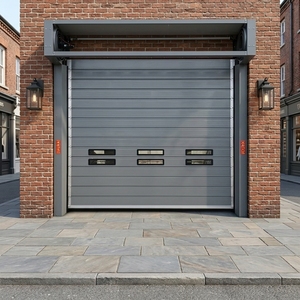
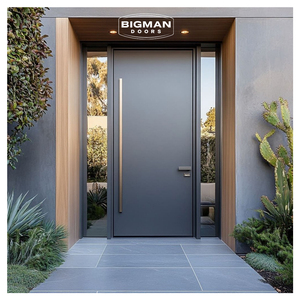
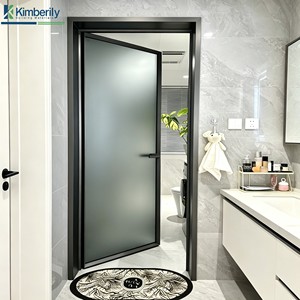
Navigating New Zealand's Fenestration Revolution: H1 Code Changes & Thermal Break Demands
The New Zealand building industry is undergoing a historic shift in envelope performance standards. With the progressive rollout of the updated New Zealand Building Code (NZBC) Clause H1 (Energy Efficiency), traditional non-thermally broken aluminum entry doors and single-glazed fenestration assemblies are no longer viable for compliant residential and commercial construction. Across New Zealand's 6 climate zones—from the subtropical warmth of Northland down to the sub-alpine extremes of Queenstown and Central Otago—building owners, architects, and developers are required to specify entrance systems with significantly reduced thermal transmittance (U-values) and higher construction R-values.
Standard aluminum is an exceptionally efficient conductor of heat. Without an integrated structural thermal barrier, cold external winter temperatures rapidly transfer through the door frame into the building interior, causing massive heating loss, internal surface draft, and persistent interstitial condensation. In humid coastal environments such as Auckland or Tauranga, internal condensation quickly degrades adjacent interior linings, invites mold growth, and compromises indoor air quality.
Polyamide PA66 GF25 Structural Insulation Barrier
Crestor solves the thermal conductivity challenge by inserting precision-engineered PA66 GF25 (25% glass fiber reinforced polyamide) thermal break strips directly between the exterior and interior extruded aluminum profile chambers. Polyamide 66 exhibits a thermal conductivity rating of just 0.30 W/m·K—nearly 500 times less conductive than structural aluminum alloy (200 W/m·K). This permanent structural barrier eliminates thermal bridging, maintains elevated interior frame surface temperatures, and easily enables entire entry door assemblies to exceed New Zealand's stringent target R-values of R0.46 to R0.50 m²·K/W (U-value ≤ 2.0 to 1.4 W/m²K depending on glazing selection).
Engineered for NZ Wind Zones & Coastal Marine Environment Durability
New Zealand’s unique geography subjects buildings to some of the most aggressive weathering forces on Earth. Wind loads in exposed coastal ridges, Wellington harbor corridors, and Canterbury plains frequently reach Extra High (EH) and Specific Design (SD) wind zones under NZS 4211, demanding extraordinary structural rigidity, perimeter sealing integrity, and hardware shear resistance.
NZS 4211 Wind Load & Air/Water Tightness
Crestor thermal break entry doors are tested and rated to withstand Ultimate Limit State (ULS) wind pressures up to 5.0 kPa (Grade 9) and water penetration resistance up to 700 Pa (Grade 6). Our multi-chamber extrusion geometry incorporates continuous, high-grade EPDM weather gaskets along triple-seal contact points. Integrated water drainage channels ensure wind-driven rain is collected and directed externally away from building sills, fully satisfying the durability principles of NZBC Clause E2 (External Moisture).
C4/C5 Coastal Marine Corrosion Protection
With most major New Zealand population centers located within coastal salt spray regions (ISO 9223 Atmospheric Corrosivity Category C4/C5), standard surface coatings rapidly chalk, pit, and peel. Crestor utilizes premium Qualicoat Class 2 / Class 3 fluoropolymer PVDF coatings and 25-micron architectural anodizing processes on architectural aluminum 6063-T5/T6 alloy profiles. This guarantees high UV resistance under New Zealand's intense solar radiation index while resisting salt fog oxidation for decades without blistering.
Localized Application Scenarios Across New Zealand Architecture
Tailoring entrance design, structural load capacity, and acoustic sealing to specific regional microclimates and architectural typologies.
Auckland Harbourside, Bay of Plenty & Marlborough Sounds Villas
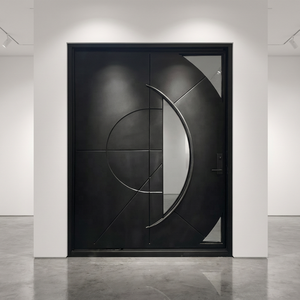
Architectural Demand: Grand entrance statements with oversized flush-panel front doors or heavy-duty pivot doors featuring expansive architectural glass inserts, seamless threshold transitions, and salt air immunity.
Crestor Customization Solution: Oversized thermal break pivot doors fitted with heavy-duty German concealed hydraulic pivot hinges supporting panel weights up to 400 kg. Glazed with double or triple-layer Low-E toughened safety glass (AS/NZS 2208 certified) with Argon gas fills. Finished in ultra-durable matte black PVDF coating to withstand ocean salt fogs and extreme coastal humidity.
Queenstown Lakes, Wanaka & Canterbury High Country Estates
Architectural Demand: Maximum thermal insulation to prevent interior heat loss during severe freezing winters, zero frost bridging on sills, and heavy snow/wind load resistance.
Crestor Customization Solution: 76mm+ multi-cavity thermal break aluminum profile series featuring 34mm wide PA66 thermal barrier strips. Paired with triple-glazed warm-edge Low-E insulated glass units (IGU) delivering whole-door system U-values as low as 0.9 W/m²K (R-value ~1.1 m²·K/W). Prevents internal sill frosting even when exterior ambient temperatures drop below -10°C.
Auckland Central, Wellington High-Wind Corridors & Christchurch Townhouses
Architectural Demand: Superior acoustic insulation against city noise and howling winds, high-frequency security locking, and compact narrow-frame profiles for space efficiency.
Crestor Customization Solution: Ultra-narrow frame thermal break casement and swing entry doors equipped with multi-point automated security lock bolts and laminated acoustic glass builds. Delivers acoustic attenuation up to Rw 44 dB, isolating apartment dwellers from traffic sounds while satisfying council acoustic consent requirements.
Engineering Performance Matrix: Crestor vs. NZ Technical Benchmarks
Independently verified laboratory test results from national accredited test centers, evaluated under GB/T 31433 and cross-referenced with NZS 4211 performance metrics.
| Performance Parameter | Crestor Tested Value | GB/T & NZ Standard Grade | Engineering Significance for NZ Projects |
|---|---|---|---|
| Wind Load Resistance | 5.0 kPa (5000 Pa) | Grade 9 (Top Class) / Exceeds NZ EH Zone | Resists structural deflection in high-rise coastal facades and exposed mountainous wind shear zones. |
| Water Tightness | 700 Pa | Grade 6 (Top Class) / NZBC E2 Compliant | Eliminates rainwater ingress during severe cyclonic storms and heavy wind-driven rain showers. |
| Thermal Transmittance (U-Value) | U ≤ 0.9 - 1.4 W/m²K | Grade 10 (Highest Efficiency) | Exceeds NZBC Clause H1 minimum target R-values (R0.46 - R0.50+ m²·K/W), reducing HVAC energy loads. |
| Air Infiltration Rate | < 0.5 m³/(m·h) | Grade 8 (Top Class Airtightness) | Prevents cold drafts, air leakage, and heat dissipation, achieving Passive House airtightness targets. |
| Acoustic Isolation Rating | Rw 42 - 44 dB | High Acoustic Performance Class | Dampens external environmental, aircraft, and street traffic noise for quiet internal luxury living. |
| Profile Alloy & Temper | 6063-T5 / T6 High-Purity Aluminum | Architectural Grade Specification | Provides high tensile strength, precise extrusion tolerances (±0.05mm), and structural durability. |
Why Global Importers & NZ Builders Choose Crestor Door Manufacturing
Combining 29 years of advanced architectural fenestration manufacturing with direct factory-to-site engineering support.
100,000 m² Manufacturing Base
Established in 1997, operating a massive smart production facility in Dongying, Shandong, paired with a dedicated Beijing engineering R&D center.
Laser Cold-Welding Tech
Utilizing 219+ patented technologies including laser corner cold-welding for seamless profile joints, superior corner strength, and complete moisture sealing.
Full In-House Pipeline
From raw aluminum extrusion machining and powder coating to insulating glass unit processing and final assembly—we hold single-point accountability for quality.
Export Logistics Protection
Heavy-duty custom wooden crate packaging, protective film wrapping, and reinforced corner guards ensuring zero freight movement or glass breakage during sea shipping to NZ ports.
Frequently Asked Questions for New Zealand Procurement
Addressing technical compliance, custom engineering capabilities, and international order fulfillment for New Zealand buyers.
How do Crestor thermal break entry doors comply with New Zealand Building Code (NZBC) Clause H1?
Can Crestor supply test reports and Producer Statements (PS1 equivalent) for NZ council consenting?
What surface finish options are recommended for New Zealand coastal marine environments (C4/C5 zones)?
What documentation or architectural files are needed to begin a custom door order?
How are products packaged and shipped to New Zealand ports such as Auckland, Tauranga, and Lyttelton?
What is the difference between Crestor’s OEM and ODM manufacturing services?
Have Plans or a Window Schedule Ready for Your NZ Project?
Send your drawings or opening sizes directly to Crestor’s engineering sales team. Receive a comprehensive technical proposal, thermal performance analysis, and factory-direct quotation within 24 hours.
Inquire Now