Featured Marine-Grade Aluminum Doors for Export
Factory-direct high-durability door systems tested for thermal break insulation, wind pressure, and long-term anti-corrosion resilience.
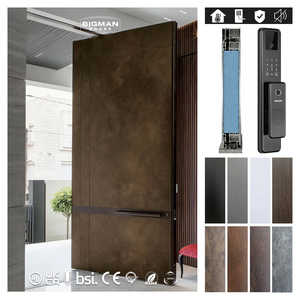
Australia Villa Exterior Front Entrance All-weather Rustic Antique Patina Texture Aluminum Security Door With Pivot Hinge
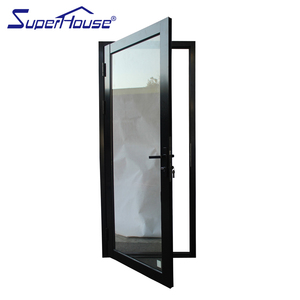
Miami NOA Approved Modern Hurricane Proof Impact Resistance Triple Glazed Aluminum Alloy Hinged Patio Door With Finished Surface
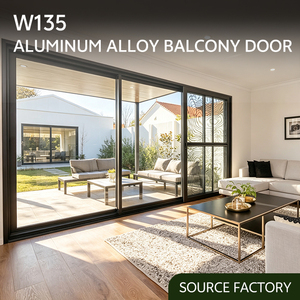
NFRC Hurricane Proof 4 Panel Aluminum Sliding Doors Soundproof Heavy Duty Lift and Slide Patio Door Triple Glazed Sliding Doors
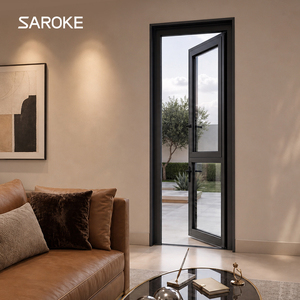
American Standard House Black Metal Patio Exterior Thermal Break Aluminum Doors And Windows
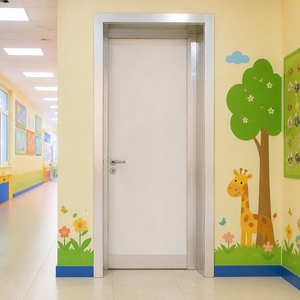
Modern Design Aluminum Fireproof Front Door Anti-Corrosion Thermal Break Soundproof Metal Security Door for House
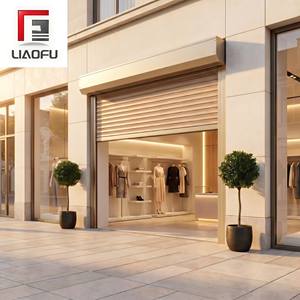
Powder Coated Aluminum Roller Shutter Door for Commercial Shop Front Corrosion Resistant Smart Control
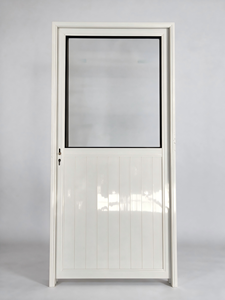
CE Certified Aluminum Alloy Bathroom Swing Door Anti-Corrosion and Waterproof with Frame for Interior Use
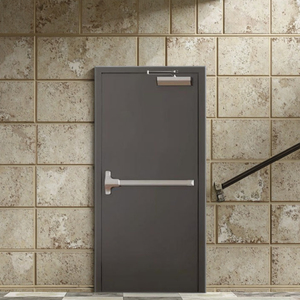
Front Door Workshop Commercial Security Single Explosion Fireproof Cast Aluminum Steel Door Hollow Metal Modern Finished
Engineering Whitepaper: Metallurgical & Surface Anti-Corrosion Science for Brazilian Coastal Environments
Brazil possesses a coastline spanning over 7,491 kilometers along the Atlantic Ocean, characterized by high relative humidity (frequently exceeding 80% RH year-round), intense ultraviolet (UV) radiation, and airborne sodium chloride particles. For real estate developers, structural engineers, and architectural importers in Brazil, specifying fenestration systems without advanced micro-structural surface preservation leads to rapid premature paint chalking, pitting corrosion, and mechanical failure of door hardware within 24 to 36 months of installation.
As China’s premier corrosion-resistant aluminum door manufacturer and exporter, Crestor Door Manufacturing Co., Ltd. integrates advanced chemical passivation, fluorocarbon PVDF electrostatic spraying, and architectural extrusion metallurgy to solve the degradation challenges inherent to tropical marine environments.
6063-T6 vs. Standard Extrusions: Alloy Composition & Intergranular Corrosion Resistance
The foundation of long-term door durability begins with raw billet chemistry. Standard commercial aluminum profiles often utilize recycled, secondary aluminum containing excessive iron (Fe) impurity levels (>0.35%). When exposed to marine aerosols in coastal cities like Rio de Janeiro, Florianópolis, or Salvador, excess iron forms localized galvanic micro-cells that accelerate intergranular corrosion. Crestor strictly utilizes primary 6063-T6 and 6060-T66 aluminum-magnesium-silicon alloys with controlled Fe content (<0.18%).
Magnesium (Mg) and Silicon (Si) ratios are artificially aged to precise T6 tempers, providing a tensile strength exceeding 205 MPa while preserving optimal crystalline ductility. This metallurgical configuration resists stress corrosion cracking (SCC) even under heavy coastal wind-load deflections.
Advanced Surface Treatments: PVDF Fluorocarbon & Qualicoat Class 2/3 Powder Coating
To resist Atlantic salt spray and equatorial UV degradation, Crestor applies multi-stage surface protective barriers verified by international standards such as ASTM B117 salt spray testing and AAMA 2605 specifications:
PVDF (Kynar 500) 3-Coat Systems
Utilizes 70% resin fluorocarbon polymers. Provides an impenetrable barrier against chalking and color fading under Brazil's UV index (11+). Tested to endure 3,000+ hours of continuous neutral salt spray without blister formation.
Qualicoat Class 2 & 3 Powder Coatings
Formulated with architectural super-durable polyester resins supplied by AkzoNobel and PPG. Engineered specifically to withstand coastal gloss retention demands and high thermal expansion rates.
Class AA25 Anodizing Barrier
An electrolytic oxidation process producing an integral aluminum oxide layer with a thickness of 20 to 25 microns. Creates a surface hardness exceeding 300 HV, rendering the substrate completely inert to marine moisture.
Preventing Galvanic Corrosion & Structural Hardware Isolation
A common point of failure in imported aluminum doors is micro-galvanic deterioration occurring where stainless steel or carbon steel hardware comes into direct contact with aluminum profiles. In the presence of saline condensate, the electrochemical potential difference triggers aggressive galvanic oxidation of the aluminum wall.
Crestor mitigates this risk by enforcing complete material isolation: all hinges, locksets, and fasteners utilize SS316 marine-grade stainless steel equipped with non-conductive EPDM or Nylon 66 isolation shims. Furthermore, our proprietary laser cold-welding joint process seals corner miters seamlessly, blocking water ingress into hollow profile chambers.
Localized Application Scenarios Across Brazil
Tailored fenestration solutions engineered for Brazil’s diverse climate zones—from Atlantic luxury beachfronts to dense metropolitan commercial hubs.
Oceanfront Luxury Villas & Coastal Resorts
Locations: Florianópolis (SC), Balneário Camboriú, Rio de Janeiro (Barra da Tijuca), Búzios, Trancoso.
High-end residential villas facing direct ocean spray require large panoramic glass spans that do not compromise structural stiffness. Crestor’s ultra-wide Lift-and-Slide and Heavy-Duty Pivot Door systems feature hidden drainage channels, triple-sealed EPDM gaskets, and PVDF coatings that withstand Class C5-M high-salinity exposure, resisting gusting coastal storms up to 5.0 kPa wind pressure.
High-Density High-Rise Residential Towers
Locations: São Paulo, Curitiba, Porto Alegre, Belo Horizonte.
Urban apartment skyscrapers require superior sound reduction against heavy city traffic alongside thermal insulation to reduce air conditioning loads. Our PA66 polyamide thermal break sliding and casement patio doors integrate double/triple Low-E laminated insulated glass units (IGUs), achieving sound acoustic dampening up to Rw 44 dB and lowering overall solar heat gain (SHGC).
Commercial Shopfronts & Hospitality Complexes
Locations: Salvador, Recife, Fortaleza, Natal, Manaus.
Heavy commercial foot traffic in hot, humid climates demands high-frequency operational stability. Crestor supplies heavy-duty commercial entrance swing doors, KFC-style windproof glass shopfronts, and motorized anti-corrosion aluminum roller shutters. Engineered with self-lubricating concealed pivots and reinforced lock bodies that operate smoothly despite tropical rainfall and ambient humidity.
Architectural Trends & Regulatory Dynamics in Brazil's Fenestration Market (2025–2030)
Brazil’s construction sector is undergoing a massive transformation driven by updated building performance standards, green building incentives, and evolving architectural preferences. Importers and property developers sourcing aluminum doors from China must align with four overarching market shifts:
1. Strict Enforcement of ABNT NBR 10821
The Brazilian National Standards Organization (ABNT) actively enforces NBR 10821, which dictates performance benchmarks for external doors and windows regarding air permeability, water tightness, structural wind resistance, and acoustic rating. Crestor fenestration systems are pre-tested to exceed Class 4 air tightness and Class 6 water resistance under equivalent ISO/GB testing protocols.
2. Growth of AQUA-HQE & LEED Brasil Projects
Sustainable real estate developments seeking AQUA-HQE (Haute Qualité Environnementale) or LEED certifications require energy-efficient fenestration. Thermal break aluminum door profiles fitted with warm-edge spacers and Low-E glass reduce building operational carbon footprints by up to 30%, qualifying for green building credits in major Brazilian capitals.
3. Minimalist Architectural Frameworks
Modern Brazilian luxury architecture emphasizes "integrating interior and exterior spaces" through slim-profile frames and ultra-large glass sightlines. Crestor’s narrow-sightline Lift-and-Slide series delivers structural stability with visible frame widths under 30mm, maximizing natural daylight while keeping tropical storms outside.
Performance Specification Matrix
Detailed engineering comparison showing how Crestor’s marine-grade systems out-perform standard commercial doors.
| Technical Parameter | Standard Commercial Aluminum Door | Crestor Marine-Grade Architectural System | Compliance Grade / Standard |
|---|---|---|---|
| Substrate Metallurgy | Secondary / Recycled Al alloy (High Fe impurity) | Primary 6063-T6 / 6060-T66 Pure Aluminum Billet | ASTM B221 / GB 5237 |
| Surface Coating | Standard Polyester Powder (50-60 µm) | Fluorocarbon PVDF (Kynar 500) / Qualicoat Class 3 | AAMA 2605 / ISO 12944 (C5-M) |
| Salt Spray Corrosion Resistance | blisters appear at 500–800 hours | > 3,000 Hours Neutral Salt Spray (NSS) No Blistering | ASTM B117 / ISO 9227 |
| Wind Pressure Resistance | 1.5 kPa – 2.5 kPa | 5.0 kPa (Grade 9 Top Class) | ABNT NBR 10821 / GB/T 31433 |
| Water Tightness | 250 Pa – 350 Pa | 700 Pa (Grade 6 Top Class) | EN 12208 / ASTM E331 |
| Thermal Insulation (U-Factor) | U ≥ 3.8 W/m²K (Non-thermal break) | U ≤ 0.9 - 1.4 W/m²K (PA66 GF25 Thermal Break) | ISO 10077 / NFRC Certified |
| Hardware Isolation | Direct metal contact (Galvanic corrosion prone) | SS316 Stainless Steel with EPDM/Nylon Shims | Anti-Galvanic Sealed |
Why Crestor is China’s Leading OEM/ODM Manufacturing Exporter to Brazil
Founded in 1997, Crestor Door Manufacturing Co., Ltd. has spent nearly 30 years refining the art and engineering of aluminum fenestration. Operating from a headquarters R&D center in Beijing and an expansive 100,000 m² smart manufacturing base in Dongying, Shandong, Crestor delivers true factory-direct accountability without reliance on third-party subcontractors.
End-to-End Vertical Integration
From aluminum profile machining, thermal break strip insertion, and Swiss Gema automated coating to insulating glass unit (IGU) fabrication and final assembly—every step occurs under our roof. This ensures stringent ISO 9001:2015 quality control at every phase.
219+ Patented Technologies
Our dedicated R&D engineering team holds over 219 patents in fenestration innovations, including seamless laser cold-welding corner technology, multi-point anti-burglary locking drives, and anti-pinch hydraulic soft-closing mechanisms.
International Certifications
Crestor systems hold official AS 2047 StandardsMark™ Licences (SMK41686), ISO 9001 quality system certification, CE conformity for Europe, and NFRC thermal performance compliance for global project tenders.
Frequently Asked Questions by Brazilian Importers
Direct answers regarding Brazilian customs compliance, shipping protocols, and custom OEM manufacturing.
How do Crestor aluminum doors ensure compliance with Brazilian ABNT NBR 10821 standards?
What surface coating thickness and specification is recommended for projects within 500 meters of the Brazilian beach line?
What are the typical shipping lead times and container loading procedures to main Brazilian ports?
How does Crestor support Brazilian buyers with import customs documentation (NCM tariff codes, CO, BL)?
Can Crestor produce customized OEM/ODM profile designs matching specific Brazilian project BOQs?
What structural warranty protection is offered against coating degradation and mechanical hardware failure?
Ready to Upgrade Your Brazilian Construction Projects with Marine-Grade Aluminum Doors?
Contact Crestor’s technical export team today. Send us your project drawings, BOQ, or door schedule to receive factory-direct wholesale pricing, structural calculations, and complete architectural product catalogs.