Curated Product Catalog
Premier Architectural Aluminum Entry Door Systems
Engineered for extreme structural resistance, advanced thermal insulation, and seamless smart lock integration.
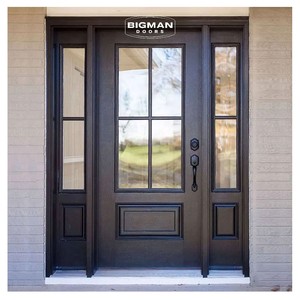
American Residential House Traditional French Style Tempered Glass Solid Wooden Front Entry Door Double Sidelite for Villa Hall
Send an Inquiry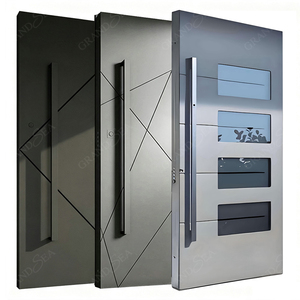
Luxury Modern American Cast Aluminum Smart Armored Entry Door High-end Security Main Entrance Door Solid Wood Pivot Front Door
Send an Inquiry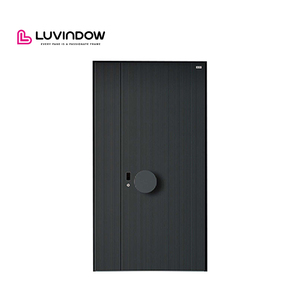
Luvindow Aluminum Doors for House Security Front Entrance Door With Smart Lock
Send an Inquiry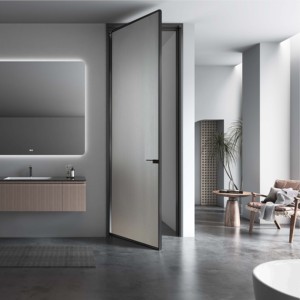
Professional Modern Invisible Aluminium Glass Swing Door for Villa House Interior Windproof Finished Surface Other Doors Product
Send an Inquiry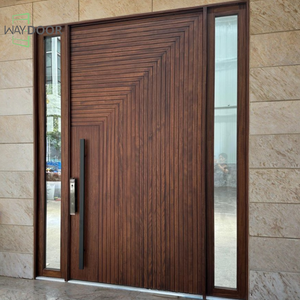
Premium Finished Oversize Heavy-Duty Single Front Entry Door With 2 Sidelights Oak Mahogany Solid Wood Exterior Pivot Door
Send an Inquiry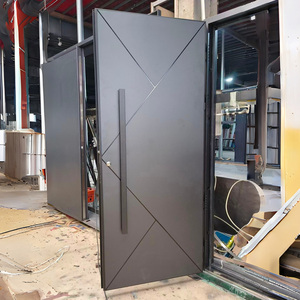
Homart Australia Modern Luxury Black Multilock Stainless Steel Anti-Theft Security Door Ballistic Proof for Exterior Entry Villa
Send an Inquiry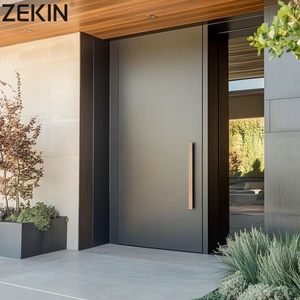
ZEKIN Outdoor Back Painted Glass Anti-theft Exterior Security Aluminum Cast Pivot Door Sound Insulation Front Entry Main Doors
Send an Inquiry1997
Established Heritage · 29 Years Sourcing Trust
100,000m²
Smart Manufacturing Base in Dongying
219+
Patented Fenestration Technologies
5.0kPa
Grade 9 Max Wind Load Resistance
Industry Whitepaper
Engineering Standards in Premium Aluminum Entry Door Manufacturing
A rigorous examination of metallurgy, thermal barrier science, ballistic armor plating, and smart entry access integration for international procurement teams.
1. Metallurgy, Extrusion Alloys, and Structural Integrity
In high-end commercial architecture and luxury residential villas, entry doors represent the primary defensive barrier against both forced intrusion and extreme climatic forces. Premium aluminum entry door manufacturers utilize prime-grade 6063-T6 or 6060-T6 aluminum alloys, engineered to achieve a tensile strength exceeding 205 MPa and yield strength of 170 MPa. Unlike lower-grade secondary extruded aluminum, prime T6 profiles resist structural deflection under severe wind loads up to 5.0 kPa (GB/T 31433 Grade 9 compliance).
To eliminate structural sagging over multi-decade lifespans—especially in sashes weighing over 250 kg—advanced factories deploy laser cold-welding corner assembly combined with mechanical corner crimping. High-pressure corner keys injected with structural polyurethane adhesive form an impermeable, monolithic frame bond. This prevents frame joint separation caused by seasonal thermal expansion and contraction cycles.
Key Procurement Insight: Always specify PA66 GF25 (Polyamide 66 reinforced with 25% glass fiber) thermal break strips. Standard PVC insulating strips break down under continuous UV exposure and fail to match aluminum's coefficient of thermal expansion, leading to seal failure and structural warping.
2. Thermal Isolation & Building Envelope Efficiency
The transition toward Net-Zero Energy Buildings (NZEB) and stringent regional building codes (such as ASHRAE 90.1, European EN 10077, and Australian AS 2047) requires entry doors to deliver whole-unit thermal performance comparable to curtain wall systems. Thermal break aluminum sashes feature multi-chambered profile designs integrated with continuous PA66 insulating bridges.
When combined with double or triple-pane Low-E insulated glass units (IGU) containing argon gas fills and warm-edge Technoform spacers, modern aluminum entry sashes achieve U-values as low as U ≤ 0.9 W/m²K. Furthermore, triple-seal EPDM continuous weatherstripping maintains air tightness at Grade 8 levels, eliminating cold drafts and preventing moisture infiltration during heavy driving rain events (tested up to 700 Pa water tightness).
3. Armored Security Engineering & Smart Access Integration
Architectural entry doors are increasingly required to provide high-level security without compromising aesthetic elegance. Premium manufacturers merge cast aluminum exterior sashes with internal steel armor cores, achieving certified RC3 to RC4 intruder resistance under European standard EN 1627, as well as ballistic protection standards.
Modern access control is fully embedded into the door sash structure during factory assembly. Features include:
- Motorized Multi-Point Lock Systems: Stainless steel multi-hook sashes driven by silent German-engineered servo motors, engaging automatically upon door closure.
- Biometric & IoT Integration: Concealed 3D facial recognition cameras, optical fingerprint sensors, encrypted RFID keycards, and native smart home integration via encrypted Zigbee/Matter protocols.
- Heavy-Duty Concealed Pivot Hinges: Precision-machined 304/316 stainless steel pivot hardware capable of supporting sashes up to 500 kg with 3D adjustability for micro-gap alignment.
Market Intelligence
Future Procurement & Technology Trends (2025–2030)
Strategic analysis for B2B buyers, architects, and estate developers navigating global supply chains.
1. Oversized Architectural Sashes
Demand for monumental pivot sashes exceeding 3.5 meters in height is accelerating in luxury residential sectors. Procurement must focus on manufacturers with specialized CNC machining centers capable of handling single-profile extrusions without structural splices.
- Floor-to-ceiling single sash designs
- Concealed floor spring pivot hydraulics
- Zero-threshold barrier-free bottom sills
2. Vacuum Insulated Glass (VIG)
Next-generation entry sashes are integrating VIG units. By creating a microscopic vacuum chamber between glass panes, VIG sashes achieve U-values below 0.6 W/m²K while reducing glass weight by 50% compared to bulky triple-glazed units.
- Ultra-slim sash profiles
- Superior low-frequency acoustic insulation (Rw 44+ dB)
- Elimination of internal condensation
3. Supply Chain Rigor & OEM IP Protection
Global distributors are shifting away from fragmented assembly workshops toward direct factory partnerships offering end-to-end OEM/ODM execution, custom profile die creation, and digital shop drawing validation prior to mass fabrication.
- 100% BIM/CAD drawing approval before production
- Full traceability from ingot to export crate
- Strict IP protection protocols for proprietary designs
Manufacturer Profile
Enterprise Strengths: Crestor Door Manufacturing Co., Ltd.
Combining nearly three decades of engineering innovation with direct manufacturing scale.
Integrated Manufacturing Ecosystem
Founded in 1997, Crestor operates a state-of-the-art 100,000 m² smart manufacturing base in Dongying, Shandong, backed by a dedicated R&D engineering hub in Beijing. Unlike assemblers who source third-party sashes, Crestor executes profile machining, fluorocarbon powder coating (PVDF), double/triple glass unit processing, and final robotic assembly completely in-house.
- Over 200 qualified engineers and fenestration specialists
- 219+ registered national patents for window & door systems
- Laser cold-welding corner technology for life-long structural stability
Global Certification & QA Standards
Every aluminum entry door system undergo rigorous physical testing at national test centers. Crestor holds the prestigious AS 2047 StandardsMark™ Licence (SMK41686), ISO 9001:2015 quality management accreditation, and European CE compliance. Sashes are specifically engineered to pass NFRC thermal standards for North American exports.
- AS 2047 tested & verified for extreme Australian climate conditions
- Standardized export packaging: corner protection, film wrap, plywood crate loading
- Complete national test center reports provided for project submittals
Verified Data Matrix
Technical Benchmarks & Performance Verification
Lab-tested parameters evaluated under GB/T 31433, AS 2047, and EN engineering protocols.
| Performance Metric | Tested Laboratory Result | Classification Grade | Architectural Application Scenario |
|---|---|---|---|
| Wind Pressure Load | 5.0 kPa (5000 Pa) | Grade 9 (Top Tier) | High-rise coastal towers, exposed beachfront villas, cyclone zones. |
| Water Tightness | 700 Pa | Grade 6 (Top Tier) | Resists wind-driven tropical rainfall and storm surges without leakage. |
| Air Infiltration | Grade 8 Infiltration Standard | Grade 8 (Top Tier) | Passive House envelopes; prevents HVAC air leakage and energy loss. |
| Thermal Transmittance (U-Value) | U ≤ 0.9 W/m²K | Grade 10 (Highest Insulation) | Extreme cold climates (Canada, Northern Europe) and high energy code zones. |
| Sound Reduction Index | Up to Rw 44 dB | Acoustic Shielding | Urban luxury apartments, airport-adjacent hotels, commercial suites. |
Sourcing FAQs
Frequently Asked Questions by Commercial Buyers
Technical and logistical guidance for importers, contractors, and project managers.
What architectural drawings or data are required to receive a formal OEM/ODM quote?
To generate an accurate engineering quote and proposal, please provide floor plans, elevation drawings, opening schedules, or a Bill of Quantities (BOQ). Sizing dimensions, required thermal performance targets (U-value), glass specifications (e.g., double Low-E, acoustic laminated), hardware preference (smart digital locks vs. mechanical multi-point locks), and powder coating finishes (RAL colors or anodized) will allow our engineering team to generate 100% compliant CAD shop drawings for sign-off.
How do thermal break aluminum entry doors compare to traditional solid wood doors in exterior durability?
While solid wood entry doors are prone to swelling, cracking, rot, and finish degradation under direct UV exposure and humidity changes, thermal break aluminum doors provide structural dimensional stability that lasts for decades. Aluminum profiles do not absorb moisture or warp. When paired with high-performance PVDF fluorocarbon coatings or anodized finishes, aluminum entry sashes require minimal maintenance and maintain color fastness even in harsh coastal environments.
Can I order pre-production samples to test quality before confirming bulk orders?
Yes. We strongly encourage pre-production validation for large-scale residential developments and OEM distributor partnerships. Buyers can request 1:1 corner cross-section samples demonstrating thermal breaks, rubber seals, and profile wall thickness, or commission a full-size operating door sash to evaluate lock operation, surface finish texture, weight balance, and installation tolerances prior to mass fabrication.
What hardware brands and smart lock systems can be integrated into sashes during factory assembly?
We partner with top-tier international hardware manufacturers including Siegenia, Hoppe, GU, and Sobinco, alongside our proprietary heavy-duty multi-point security hardware. For smart sashes, we integrate motorized locks supporting 3D facial recognition, optical fingerprint entry, digital keypads, Bluetooth/Wi-Fi modules, and dry-contact relays compatible with commercial building automation systems (BAS).
How are oversized aluminum entry doors packed to prevent damage during international sea freight?
Every manufactured sash undergoes a multi-layer protective packaging procedure. Sashes are wrapped in protective polyethylene anti-scratch film, fitted with reinforced plastic corner guards, sealed in bubble wrap, and strapped inside fully enclosed fumigated plywood crates with internal foam cushioning. Crates are structured with forklift channels for safe unloading at ocean ports and project job sites.
What is the lead time for custom aluminum entry door production and ocean delivery?
Standard production lead time is approximately 25 to 35 working days following final CAD shop drawing sign-off and deposit receipt. For specialized custom profile extrusion dies or custom powder coat colors, initial tooling may require an additional 10 to 15 days. Ocean freight transport timelines vary by destination port (typically 14–20 days to Australia/US West Coast, and 28–35 days to Europe/US East Coast).