Factory-direct high-performance entrance systems engineered with thermal-break technology, ballistic security alloys, low-E glazing, and custom architectural finishes.
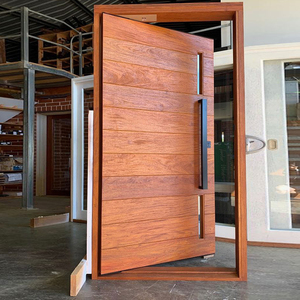
Thermal Insulation: High Grade
Security: Multi-point Lock
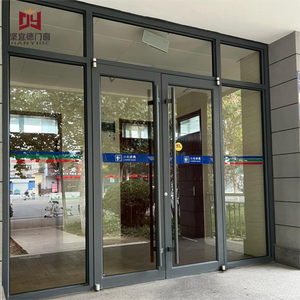
Wind Resistance: 5.0 kPa
Glass: Double Tempered Low-E
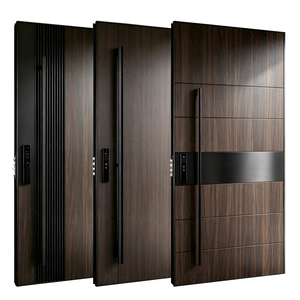
Material: Solid Wood + Stainless Steel
Hinges: Heavy-duty Pivot Hinge
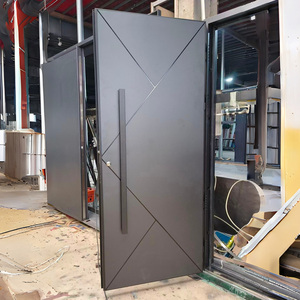
Lock: Multi-Locking Gearbox
Compliance: Australian Standards
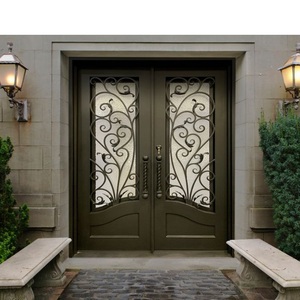
Structure: Reinforced Frame + Glass
Finish: Electrostatic Powder Coating
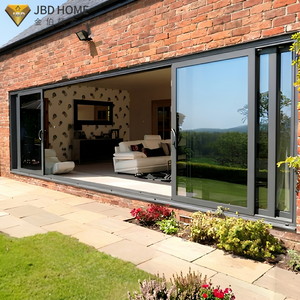
Glazing: 6+12A+6 Double Tempered
Water Tightness: 700 Pa
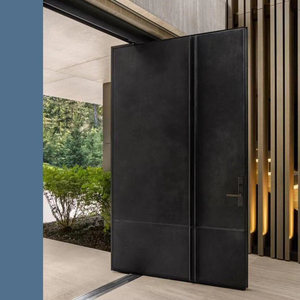
Axis: Concealed Hydraulic Pivot
Factory Price: Direct Wholesale
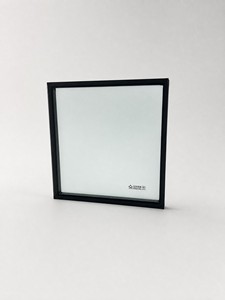
U-Value: ≤ 0.9 W/m²K
Sound Insulation: Up to Rw 44 dB
Combining systemic engineering rigor with direct factory pricing. We manage profile extrusion, precision machining, thermal break inserting, surface treatment, and insulating glass assembly in-house.
100,000 m² Integrated Smart Factory
Located in Dongying, Shandong, our facility houses state-of-the-art aluminum profile machining centers, automated powder-coating lines, and double-glazed insulated glass processing plants. Zero subcontracting guarantees uncompromising quality control from raw billet to packed container.
Rigorous International Certifications
Engineered to exceed strict building codes worldwide. Our door systems carry the AS 2047 StandardsMark™ (SMK41686), ISO 9001:2015 Quality Management certification, full CE conformity, and NFRC-ready thermal profile compliance for North American buyers.
Patented Laser Cold-Welding
Utilizing over 219 proprietary inventions, our structural door frames incorporate laser cold-welded seamless corners. This eliminates joint leakage, elevates torsional stability, and ensures flawless powder-coat edge adhesion across decades of exposure.
Modern Entry Door Architectural Trends & Development Analysis (2026–2030)
As modern architectural design moves toward minimal sightlines, grand openings, and high-performance exterior envelopes, entry doors have evolved from traditional functional barriers into complex, highly engineered architectural focal points. Global procurement directors and real estate developers are shifting focus from simple material purchasing to whole-system performance verification.
1. The Shift to Oversized Pivot Systems with Concealed Hydraulics
Architects worldwide are increasingly specifying oversized pivot entrance doors reaching heights up to 4.5 meters and widths up to 2.2 meters. Traditional butt-hinged entrance doors suffer from sagging under high sash weights (>250kg). Modern manufacturing now integrates top and floor concealed hydraulic pivot hinges that distribute structural dead loads directly into the floor slab, allowing effortless finger-touch operation despite massive panel dimensions.
2. Thermal Break Engineering: PA66 GF25 Insulation Channels
With global energy conservation standards continuously tightening (such as the EU Energy Performance of Buildings Directive EPBD and US Title 24), non-thermal break aluminum doors are rapidly being phased out. Current industry standards require multi-chambered 6063-T6 aluminum extrusions fitted with PA66 GF25 (25% Glass Fiber Reinforced Polyamide) thermal barrier strips. This mechanical thermal break interrupts conductive heat transfer, achieving system U-values as low as 0.85 to 1.1 W/m²K when combined with Low-E insulated glass.
3. Smart Biometric & Electro-Mechanical Locking Integration
User intent mining reveals a sharp increase in demand for entry doors engineered out-of-the-factory with integrated cable raceways and smart lock cutouts. Modern factories must provide pre-drilled, multi-point lock gearboxes compatible with 3D facial recognition, biometric fingerprint scanners, keypad entry, and home automation systems (Zigbee/Matter/RS485), avoiding risky site-modification of security doors.
4. Advanced Surface Treatments & Environmental Resilience
Exterior entry doors face intense environmental stressors, from high UV exposure to salt-spray coastal atmospheres. The industry trend heavily favors AkzoNobel Interpon or PPG Fluorocarbon (PVDF) powder coating systems capable of surviving 3,000+ hours of continuous salt spray testing (ASTM B117). Real-wood veneer composite aluminum doors are also leading luxury villa projects by combining authentic natural wood aesthetics internally with weather-proof anodized aluminum externally.
Strategic insights for commercial project buyers, wholesale distributors, and architectural specifiers navigating global supply chains over the next decade.
A. Shift to Pre-Assembled OEM/ODM Modular Delivery
To mitigate sky-rocketing job-site labor costs in North America, Europe, and Australia, procurement strategies are pivoting toward factory pre-glazed, pre-hung entry door packages. Importers now mandate that factories deliver doors with pre-installed multi-point hardware, EPDM weather seals, and factory-tested alignment, allowing rapid tilt-in installation on site with zero field assembly required.
B. Stringent Third-Party Performance Verification
Leading buyers no longer rely on unverified factory spec sheets. Sourcing standards demand comprehensive laboratory test reports from accredited bodies (such as Intertek, NAMI, or national wind-testing institutes) covering Air Infiltration (ASTM E283), Water Penetration (ASTM E331), Structural Wind Load (ASTM E330), and Acoustic Rating (ISO 717-1 up to Rw 44 dB).
Technical performance data based on national standard test center reports (GB/T 31433, AS 2047, & EN standards).
| Performance Criterion | Crestor Factory Standard | Industry Standard Average | Architectural Impact & Benefit |
|---|---|---|---|
| Wind Load Resistance | 5.0 kPa (Grade 9) | 3.0 kPa – 3.5 kPa | Tested for coastal storm resistance, high-rise wind pressure, and hurricane zones. |
| Water Tightness | 700 Pa (Grade 6) | 350 Pa – 500 Pa | Prevents wind-driven rain penetration under harsh storm conditions. |
| Thermal Insulation (U-Value) | U ≤ 0.9 W/m²K | 1.8 – 2.4 W/m²K | Significantly reduces building HVAC energy consumption; Passivhaus compatible. |
| Acoustic Attenuation | Rw 44 dB | 28 dB – 35 dB | Eliminates high-frequency urban traffic, airport, and environmental noise. |
| Corner Jointing Tech | Laser Cold-Welding | Mechanical Crimping | 100% leak-proof seam structural integrity with zero paint peeling at corners. |
Key technical and logistical questions answered by Crestor's senior fenestration engineering team.