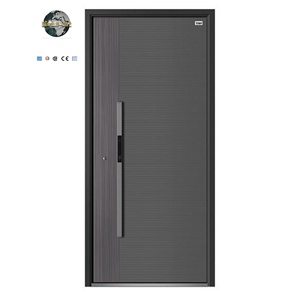
Modern Minimalist Anti-Theft Aluminum Alloy Entry Door
Side-opening sliding entry door equipped with multi-point stainless steel security locks, integrated weather seals, and subterranean water tracks.
Get a QuotePrecision-engineered architectural door systems tested for extreme storm resistance, zero water penetration, and thermal efficiency. Certified for North America, Europe, Australia, and Middle East B2B project deployment.
Side-opening sliding entry door equipped with multi-point stainless steel security locks, integrated weather seals, and subterranean water tracks.
Get a Quote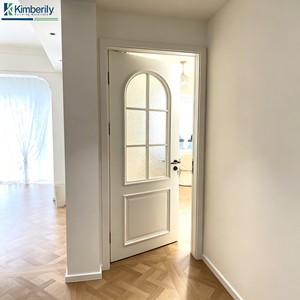
Smooth surface custom finish with sound-insulating Low-E glass build-up, ideal for executive offices and luxury residential developments.
Get a Quote
Impact-resistant large size bifold system featuring PA66 structural polyamide strips and Grade 9 wind pressure endurance (5.0 kPa).
Get a Quote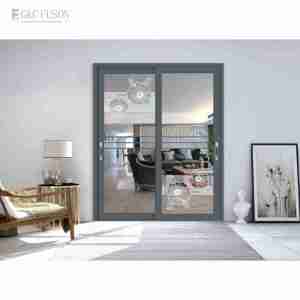
Engineered for extreme coastal weather with elevated threshold step drainage, anti-lift rollers, and wind-driven rain isolation.
Get a Quote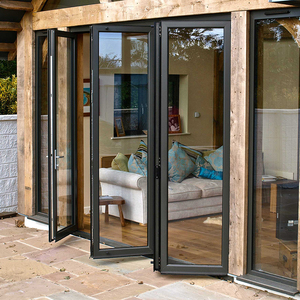
Seamless indoor-outdoor opening with continuous EPDM triple gaskets, double tempered glazing, and superior acoustic isolation (Rw 44 dB).
Get a Quote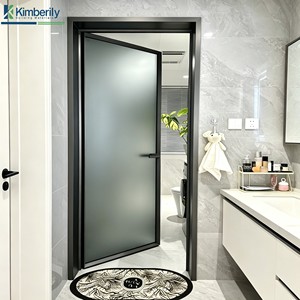
Minimalist architectural profile designed for modern boutique hotels and luxury bathrooms, providing complete moisture and thermal barriers.
Get a Quote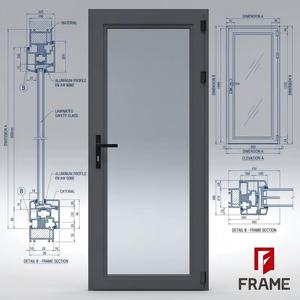
Versatile architectural door system suitable for interior commercial spaces and external entrances with high traffic durability.
Get a Quote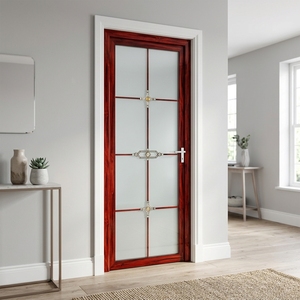
Anodized and PVDF coated aluminum alloy frame built to withstand high internal humidity and saline coastal environments without degradation.
Get a QuoteWhy leading global developers, architectural specifiers, and facade engineers rely on top Chinese waterproof aluminum door manufacturers for high-load environmental resilience.
In modern architectural engineering, waterproofing performance in aluminum door systems is not merely a surface property—it is a fluid dynamics challenge governed by air pressure differentials, surface tension, capillary action, and mechanical deflections. When selecting a premier China waterproof aluminum door exporter, procurement officers must look beyond standard aesthetic finishes to evaluate the structural physics behind frame chamber construction, elastomeric sealing polymers, and subterranean drainage engineering.
Standard architectural doors fail under severe weather conditions because wind-driven rain creates positive pressure against the exterior face, driving liquid through minor gasket imperfections. Leading Chinese fenestration exporters solve this through Rain Screen Principle Engineering (Equalized Pressure Chamber Design). By dividing the internal hollow profile of 6063-T6 aluminum extrusions into isolated pressure-equalization zones, the air pressure inside the internal drainage chamber matches the exterior wind pressure. Without a differential pressure gradient, water cannot be drawn inward and flows harmlessly downward via gravity.
Specially engineered hidden weep holes equipped with anti-backflow gravity caps allow continuous liquid evacuation even under direct 700 Pa wind pressures.
Co-extruded Automotive-grade Ethylene Propylene Diene Monomer (EPDM) weatherstripping ensures superior elastic memory and UV resistance over 30 years.
Precision CNC corner crimping reinforced with two-component anaerobic structural adhesives eliminates micro-gaps at 45-degree profile miters.
Thermal bridging is a major secondary source of moisture damage in building envelopes. When cold external temperatures meet humid indoor air across conductive metal frames, condensation occurs. Premier Chinese exporters utilize imported PA66-GF25 (Polyamide 66 reinforced with 25% glass fiber) insulating strips. These thermal breaks isolate the exterior aluminum profile from the interior frame, dramatically lowering the overall U-value (≤ 0.9 W/m²K) and eliminating indoor dew point formation, which prevents internal frame sweating and mold proliferation.
To verify structural compliance across global construction jurisdictions (AS 2047 in Australia, EN 12208 in Europe, and ASTM E331 in North America), top-tier Chinese door exporters subject their product lines to rigorous national laboratory verification. Below is a comparative benchmark of verified performance metrics:
| Performance Indicator | Chinese National Standard (GB/T 31433) | International Standard Equivalent | Engineering Significance |
|---|---|---|---|
| Water Tightness | Grade 6 (700 Pa) | EN 12208 Class E750 / ASTM E331 15 PSF | Zero water penetration during continuous 700 Pa pressure spraying (equivalent to hurricane storm conditions). |
| Wind Pressure Load | Grade 9 (5.0 kPa) | AS 2047 / AS 4055 Ultimate Limit State | Profile maintains structural deflection limits (< 1/300 span) under 5000 Pascals of positive/negative wind force. |
| Air Infiltration / Tightness | Grade 8 (q1 ≤ 0.5) | EN 12207 Class 4 / ASTM E283 | Eliminates micro-drafts, reducing building HVAC energy loss by up to 38% annually in high-rise applications. |
| Acoustic Attenuation | Rw 44 dB | ISO 717-1 / ASTM E90 STC 42 | Triple-seal acoustic damping combined with argon-filled laminated insulated glass reduces urban noise pollution. |
Key market developments shaping international buyer specifications, sustainability compliance, and structural technology in Chinese fenestration exports.
Architects increasingly demand maximum daylighting with ultra-slim vertical stiles (under 20mm visible width). Future-proof exporters reinforce narrow aluminum profiles with internal stainless steel stiffness fins, achieving grand 6-meter opening heights without compromising wind resistance.
Next-generation doors incorporate integrated smart home sensors that automatically activate motorized pneumatic compression gaskets upon sensing storm conditions or humidity spikes, providing an active hydrostatic shield for coastal properties.
With global carbon border adjustment mechanisms (CBAM) coming into force, top Chinese exporters are shifting to hydro-powered primary aluminum and post-consumer recycled 6063 alloys, significantly lowering embodied carbon in building construction projects.
Combining 30 years of fenestration research with direct factory manufacturing scale to deliver verified system quality worldwide.
Founded in 1997, Crestor Door Manufacturing Co., Ltd. has grown from an elite architectural aluminum processor into a global OEM/ODM powerhouse. Operating a state-of-the-art 100,000 m² smart manufacturing base in Dongying, Shandong, backed by an advanced R&D engineering center in Beijing, Crestor maintains absolute end-to-end control over the entire production cycle—from raw profile machining and automated powder coating to insulating glass unit (IGU) fabrication and final assembly.
Equipped with 6 automated CNC machining centers, robotic corner welding units, and double-component glass sealing lines capable of producing 500,000 m² of doors annually.
Holding continuous patents in multi-track drainage, thermal break locking mechanisms, soundproof corner joints, and hurricane-proof sash reinforcement.
Fully certified under ISO 9001:2015 quality systems, holding AS 2047 StandardsMark™ Licence (SMK41686), CE compliance, and NFRC thermal verification.
Unlike trading intermediaries, Crestor operates as a true system brand. Every custom door order undergoes rigorous digital pre-assembly testing. Shop drawings are verified by structural engineers before aluminum extrusions are cut, ensuring zero site-assembly discrepancies for international contractors in Australia, North America, Europe, Central Asia, and the Middle East.
Expert answers addressing technical specifications, logistics protection, custom OEM orders, and international compliance standards for importing aluminum doors from China.
Contact our senior engineering sales team today. We provide full shop drawing reviews, structural wind-load estimations, and factory-direct wholesale quotes within 24 hours.