Featured Thermal Insulated Aluminum Door Systems
Factory-direct precision engineering tested to AS 2047, NFRC, ISO 9001, and CE standards for high-load, weather-resistant international developments.
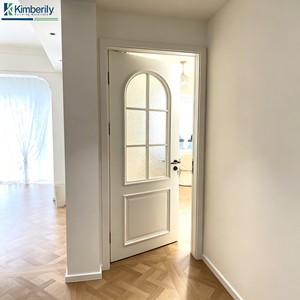
Simple Modern Aluminum Casement Door Smooth Surface Color Custom Sound Insulated Door For Office Residential Renovation
Inquire Now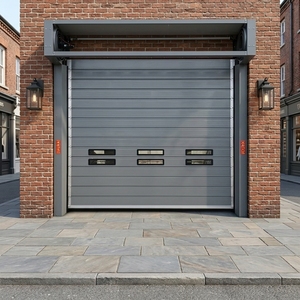
Heavy Duty Aluminum Spiral High Speed Door Windproof Anti-Theft Fast Door Aluminum Entrance Door for Retail Stores
Inquire Now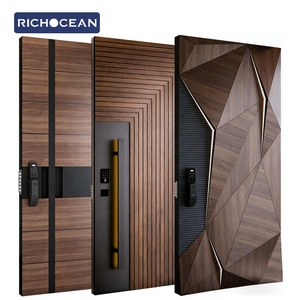
Richocean Luxury Bulletproof lamborghini Front Entry Door Aluminum Storm Security Voordeur Residential Doors
Inquire Now
Corrosion Resistant Aluminum Honeycomb Door Complete Fittings Ready to Install for Villa and Mall Use
Inquire Now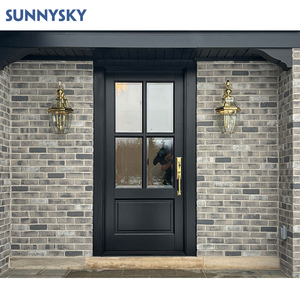
Sunnysky Modern American Design House Entrance Front Pivot Door Front Entry Pivot Doors
Inquire Now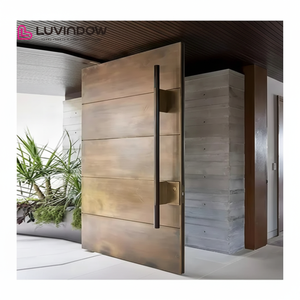
American Style Contemporary Solid Wood Entry Main Entrance Wooden Doors Front Doors for Houses Modern Exterior Main Pivot Door
Inquire Now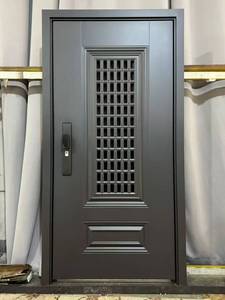
Secure Aluminum Entrance Door, Exterior Door, Aluminum Exterior Door With Smart Lock, Custom Size
Inquire Now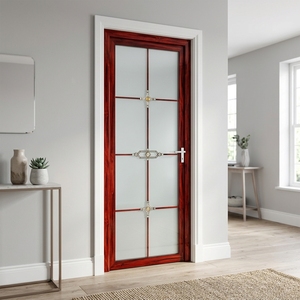
Commercial Classic Style Waterproof Anti Corrosion Aluminum Villa Indoor Use Bathroom Door
Inquire NowThe Physics of Thermal Insulation in Modern Architectural Aluminum Doors
Understanding thermodynamic transfer, profile extrusion metallurgy, structural deflection resistance, and micro-climate sealing in commercial-grade fenestration engineering.
Engineering Core Insight: Replacing cheap PVC thermal strips with high-precision Polyamide 66 reinforced with 25% structural glass fiber (PA66-GF25) drops thermal conductivity from 220 W/m·K down to 0.3 W/m·K. This 700-fold reduction forms an impenetrable thermal barrier that cuts building HVAC thermal loading by up to 42%.
Thermodynamics Breakdown: Calculating Whole-Door U-Values ($U_w$)
System Formula: $U_w = \frac{A_f \cdot U_f + A_g \cdot U_g + l_g \cdot \Psi_g}{A_f + A_g}$
Where $U_f$ represents profile thermal transmittance, $U_g$ represents insulating glass thermal transmittance, $A_f$ and $A_g$ represent their respective surface areas, and $\Psi_g$ represents the linear thermal transmittance factor of the glass edge seal spacer.
By pairing Crestor’s multi-cavity PA66-GF25 thermal profiles ($U_f \le 1.3 \text{ W/m²K}$) with argon-filled, double-layered Low-E glass units containing warm-edge Swisspacer ($U_g \le 0.6 \text{ W/m²K}$), overall window/door thermal performance achieves **$U_w \le 0.9 \text{ W/m²K}$**, meeting Passive House standards and strict climate codes across North America, Northern Europe, and Australia.
Acoustic Attenuation ($R_w$)
Multi-chamber extrusion geometries combined with asymmetric laminated double/triple Insulated Glass Units (IGUs) dampen low-frequency urban traffic noise up to $R_w = 44 \text{ dB}$.
Wind Load Resistance
Engineered to structural Grade 9 ($5.0 \text{ kPa}$ wind pressure under GB/T 31433 and AS 2047 standards), guaranteeing deflection stability across 60+ story high-rise envelopes.
Water Tightness (700 Pa)
Internal continuous EPDM weather-stripping gaskets, concealed drainage channels, and pressure-equalized outer cavities eliminate wind-driven water ingress in extreme coastal environments.
Detailed Product Recommendations & Structural Specs
Explore the specialized structural mechanics, hardware integration, and ideal procurement applications across China's leading export door configurations.
1. Modern Thermal Break Casement & French Swing Doors
2. Heavy-Duty High-Speed Industrial & Commercial Spiral Entrance Doors
3. Architectural High-Security Bulletproof & Armored Entrance Systems
4. Ultra-Large Architectural Front Entry Pivot Doors
5. Aluminum Honeycomb Core Interior & Commercial Door Assemblies
Material & System Comparison Matrix
Comparative analysis of structural thermal doors versus alternative fenestration materials across key engineering parameters.
| Material / System Type | Thermal Transmittance ($U_w$) | Structural Load Resistance | Expected Lifespan | Maintenance Requirement | Fire Rating & Recyclability |
|---|---|---|---|---|---|
| Crestor Thermal Aluminum (PA66) | 0.8 - 1.2 W/m²K | Extreme (5.0 kPa+) | 40+ Years | Low (Powder / PVDF) | Non-combustible / 100% Recyclable |
| Non-Thermal Aluminum | 3.5 - 5.8 W/m²K | High (4.0 kPa) | 40+ Years | Low | Non-combustible / 100% Recyclable |
| Solid Hardwood (Oak/Teak) | 1.4 - 2.1 W/m²K | Moderate (2.2 kPa) | 15-25 Years | High (Varnish/Sanding) | Combustible / Organic |
| Vinyl / uPVC Profiles | 1.3 - 1.8 W/m²K | Low (1.5 - 2.0 kPa) | 10-15 Years | Low (Prone to UV yellowing) | Toxic Fumes / Poor Recyclability |
Global Procurement & Sourcing Trends (2025–2030)
Navigating environmental regulation, carbon border adjustments, smart home automation, and modern architectural aesthetics.
1. Decarbonization & CBAM Compliance
With the European Union's Carbon Border Adjustment Mechanism (CBAM) and strict North American green building mandates (LEED v4.1, Title 24), global developers prioritize door manufacturers using low-carbon recycled aluminum billets smelted via hydropower rather than coal power.
2. Biometric & Smart Access Integration
Commercial and residential buyers demand seamless OEM factory integration of motorized multi-point lock bodies, biometric fingerprint sensors, facial recognition access control, and smart home IoT connectivity embedded directly within the door profile frames during manufacturing.
3. Ultra-Slim Sightlines & Max Glass
Modern architectural design favors narrow frame sightlines (down to 20mm visible frame profile width) with concealed hinges and sub-floor tracks. Achieving structural integrity under wind loads with minimal aluminum profiles requires advanced 6060-T66 aluminum alloys.
Inside Crestor’s 160,000 m² Manufacturing Facility
Vertical integration from billet extrusion, CNC machining, and automated powder coating to insulated glass assembly.
CNC Machining (±0.05mm)
Utilizing German 5-axis CNC profile machining centers, hardware mortises, lock slots, and drainage channels are milled to ultra-precise tolerances, ensuring smooth mechanical operation.
Laser Cold-Welding
Patented corner joining technology combines laser cold welding with heavy mechanical corner cleat crimping and two-component polyurethane corner glue injection for airtight, structural corner joints.
AAMA 2605 Surface Coating
Automated Swiss Gema powder coating lines apply AkzoNobel PVDF fluorocarbon and Qualicoat Class 3 powder coatings, delivering 30+ year color stability against salt spray corrosion (C5 environment).
OEM/ODM Capacity: With over 219 patented technological innovations and certified compliance with AS 2047 (Licence SMK41686), ISO 9001:2015, and CE standards, Crestor manufactures private-label window and door systems for premier building product brands worldwide.
B2B Sourcing & Technical FAQ
Direct answers to common technical, logistics, compliance, and custom manufacturing inquiries from international buyers.
What drawings and documentation are required to initiate a custom door quote?
To generate an accurate engineering quote and bill of materials (BOM), buyers can provide architectural CAD elevation drawings, structural schedules, or basic rough opening (RO) sizes along with targeted performance metrics ($U$-value, wind load, acoustic rating). Crestor’s engineering department generates full bilingual 2D/3D CAD shop drawings within 48 hours for buyer sign-off prior to profile extrusion and production.
How does Crestor guarantee compliance with regional building standards like AS 2047 or NFRC?
Our 76M tilt & turn window and door system holds an official AS 2047 StandardsMark™ Licence (SMK41686) verified by SAI Global for the Australian market. For North American and European projects, we configure profile series with specific thermal breaks and Low-E glass packages that comply with NFRC thermal standards and CE EN 14351-1 requirements. Certified test reports from national test centers are available upon request.
What is the structural difference between OEM and ODM procurement options?
Under OEM (Original Equipment Manufacturing), you supply proprietary profile die designs, custom hardware specifications, and private packaging artwork. Crestor acts as your dedicated high-capacity manufacturing base under strict Non-Disclosure Agreements (NDAs). Under ODM (Original Design Manufacturing), you select from our pre-tested, certified product portfolio, allowing us to apply your brand logos and custom powder colors for a faster, cost-effective product launch.
Can we order full-scale structural samples prior to commercial container manufacturing?
Yes. We strongly encourage pre-production sample validation. Importers can order 300mm x 300mm corner cutaway samples to inspect PA66 thermal break crimping, anodizing/coating depth, and multi-seal gaskets. Alternatively, full-size physical door samples can be manufactured and bench-tested prior to mass production container loading.
How are oversized glass and aluminum doors packed to prevent sea-freight damage?
Export door units undergo an 8-layer protective packaging process: 1) Protective adhesive film on aluminum profiles, 2) Heavy rubber corner guards, 3) Shock-absorbing foam wrap, 4) Waterproof shrink wrap, 5) Custom fumigated solid plywood crates or steel A-frame glass racks with heavy-duty polyester strapping. This ensures zero panel movement or glass breakage during FCL or LCL ocean freight transit.
What surface coating options are offered for extreme salt-spray or high-UV climates?
For coastal environments (within 1 km of the sea), we specify AkzoNobel or PPG PVDF Fluorocarbon coatings (AAMA 2605 standard) or Qualicoat Class 3 seaside-grade powder coatings. These treatments withstand 4,000+ hours of continuous salt-spray testing without chalking, cracking, or color fading.
Ready to Specify Thermal Insulated Doors for Your Project?
Connect directly with Crestor's senior fenestration engineering team. Send your drawings or project schedule for expert system selection, detailed shop drawings, and competitive factory-direct pricing.
Inquire Now