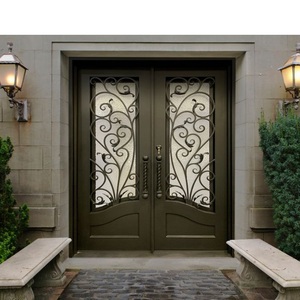
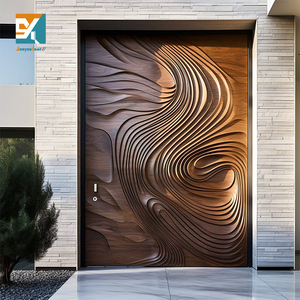
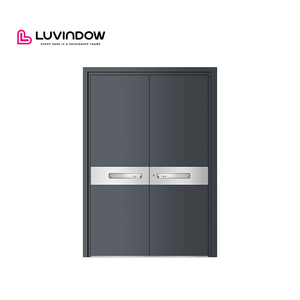
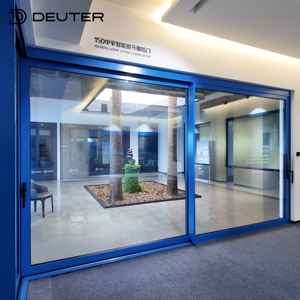
China’s Premier Oversized Entry & Exterior Door Systems
Precision-engineered grand entrance systems tested to international standards for wind resistance, thermal isolation, and high-load mechanical reliability.
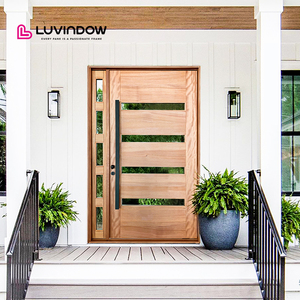
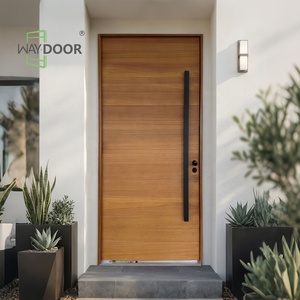
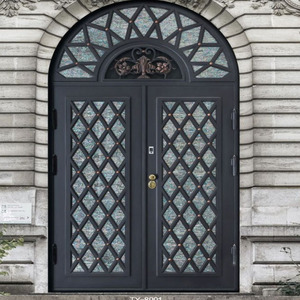
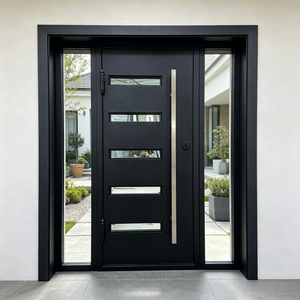
Why Top Global Exporters Lead China's Oversized Door Sector
Engineering depth, vertical production control, and rigorous physical testing isolate premier Chinese manufacturers from low-tier trading intermediaries.
160,000 m² Integrated Infrastructure
Operating a mega-scale smart manufacturing base in Dongying, Shandong, and an advanced R&D center in Beijing, leading exporters eliminate subcontractor volatility by controlling every production milestone under one roof.
- In-house high-tensile profile extrusion & machining
- Automated PVDF & fluorocarbon powder coating lines
- Argon-gas insulating glass unit (IGU) fabrication
- Laser cold-welded corner joint stabilization
AS 2047 & ISO 9001 Certified Standards
System reliability is certified through internationally recognized testing standardizations. Premier exporters hold official StandardsMark™ Licenses (such as SMK41686 for 76M systems), delivering total regulatory peace of mind.
- AS 2047 Windows and External Glazed Doors compliance
- ISO 9001:2015 Quality Management System audited
- CE Marking (EN 14351-1) for European Union compliance
- NFRC energy certification readiness for North America
GB/T 31433 Verified Performance
Physical testing conducted at national fenestration research institutes confirms structural performance values far exceeding standard commercial building codes.
- Wind Resistance: 5.0 kPa (Grade 9 · Top Class)
- Water Tightness: 700 Pa (Grade 6 · Stormproof)
- Thermal U-Factor: U ≤ 0.9 W/m²K (Passive House)
- Acoustic Insulation: Sound reduction up to Rw 44 dB
| Engineering Property | Tested Technical Benchmark | GB/T & International Grade | Impact on Commercial & Residential Projects |
|---|---|---|---|
| Wind Load Resistance | 5.0 kPa (5000 Pascals) | Grade 9 (Maximum Rating) | Prevents panel deflection in coastal hurricane zones and elevated luxury penthouses. |
| Water Penetration Resistance | 700 Pa Static Pressure | Grade 6 (Maximum Rating) | Zero water ingress under extreme driven rains; protects interior hardwood and stone floors. |
| Air Infiltration Rate | Grade 8 Airtight Matrix | Top Tier Energy Standard | Eliminates draft air loss, drastically reducing HVAC power consumption in modern estates. |
| Thermal Insulation (Whole Unit) | U ≤ 0.9 W/m²K (R-11 Equivalent) | Passive House Compatible | PA66-GF25 thermal breaks isolate exterior heat spikes and sub-zero freeze cycles. |
| Acoustic Sound Attenuation | Up to Rw 44 dB Reduction | High Acoustic Isolation | Dampens heavy highway, aircraft, and urban noise, creating sanctuary-level interior acoustics. |
Architectural Deflection, Pivot Physics & Thermal Dynamics in Oversized Doors
An in-depth structural analysis of heavy-scale entrance engineering for architects, general contractors, and facade engineers.
Modern luxury architecture has expanded the structural boundary of residential and commercial entrance openings. Where standard exterior sashes rarely exceeded 2.2 meters in height, contemporary architectural blueprints regularly mandate oversized grand entry sashes measuring 3.5 to 6.0 meters tall and up to 2.5 meters wide. Executing sashes of this magnitude without structural sag, air perimeter leakage, or thermal bowing presents a complex engineering challenge that requires deep manufacturing expertise.
1. Heavy-Load Pivot Mechanics & Deflection Management
Traditional side-hinged door frames rely on cantilevered weight transfers back to the perimeter jamb frame. When a solid timber, glass, or composite door panel exceeds 250 kilograms, cantilevered sashes induce severe lateral torque, causing jamb deflection, hinge pin wear, and eventual bottom-rail drag. Top China oversized entry door exporters have solved this limitation through integrated floor-recessed hydraulic offset pivot systems.
By transferring 100% of the sash's dead load vertically into the concrete slab via a heavy-duty floor spindle rated up to 1,000 kg (2,200 lbs), lateral jamb stress is reduced to near-zero. Furthermore, top-pivot guide bearings feature high-tensile stainless steel CNC pins with internal dampening springs to absorb top-of-panel wind sway while allowing smooth manual or motorized rotation.
2. Thermal Deflection ("Bowing Effect") Mitigation
A frequent failure point in large metal or dark-finished exterior doors exposed to direct solar radiation is differential thermal expansion. When the exterior aluminum face reaches 75°C under summer sun while the interior ambient temperature is climate-controlled at 21°C, thermal expansion differentials cause the exterior profile to expand faster than the interior profile. This differential creates a convex curve ("thermal bowing"), causing top and bottom latch points to bind or fail to seal.
To overcome thermal deflection, high-tier Chinese engineering utilizes shear-decoupled thermal break profiles incorporating PA66-GF25 (25% glass-fiber reinforced polyamide) insulating bars. Shear-decoupled connections allow minor longitudinal movement between the inner and outer aluminum skins while maintaining full structural shear stiffness across the transverse axis, ensuring the door remains perfectly plumb under severe temperature gradients.
Global Procurement Outlook: What Architectural Buyers Demand (2025–2030)
Market intelligence gathered across North America, Europe, Australia, and the Middle East reveals clear structural shifts in entry door specification.
Integrated Smart Access & Automation
Importers are shifting away from traditional mechanical keyways toward motorized multi-point locks integrated into building automation systems (BMS).
- Concealed electromagnetic locking bolts rated over 12,000 N holding force
- Biometric 3D facial recognition & fingerprint scanners recessed into door pulls
- Motorized drop-down perimeter weather sweeps triggered by magnetic sensors
Hybrid Material Science
Pure timber warps under humidity, while uninsulated steel transfers extreme cold. Procurements now favor multi-material architectural composites.
- Exterior: Architectural-grade anodized or PVDF-coated aluminum skin
- Core: High-density rigid polyurethane foam (PU) for maximum insulation
- Interior: Natural solid Teak, Oak, or Walnut veneers for luxury ambiance
Prefabricated Modular Delivery
General contractors increasingly require complete factory-assembled unitized door modules to eliminate costly job-site fitting errors.
- Pre-hung door leaf, frame, sidelites, and transom delivered as one synchronized kit
- Factory-installed, laser-aligned pivot hardware requiring minimal job site setup
- Heavy-duty plywood crate packaging engineered for crane hoisting on site
Frequently Asked Questions by B2B Importers & Contractors
Direct technical answers addressing structural engineering, freight logistics, customization, and warranty coverage when importing oversized doors from China.
6-Stage Engineering & Delivery Protocol
From architectural drawing sign-off to container loading, every project follows a transparent quality-controlled milestone timeline.
1. CAD & Shop Drawing Approval
Engineers analyze opening dimensions, structural wind load targets, and slab details, issuing comprehensive CAD shop drawings for architect sign-off before manufacturing.
2. Precision Machining & Coating
High-tensile aluminum extrusions undergo 5-axis CNC milling to ±0.05 mm tolerances, followed by automated PVDF or fluorocarbon powder coating application.
3. Thermal & Corner Assembly
Profiles are joined using PA66-GF25 thermal break strips and laser cold-welding corner insertion to ensure permanent joint alignment under thermal stress.
4. Glazing & Hardware Fitting
Insulating glass units sealed with dual-component structural silicone are set into sashes alongside heavy-duty floor pivots, multi-point locks, and drop seals.
5. Factory Mockup Inspection
Every complete unit is mounted on factory test frames to verify smooth pivot operation, latch alignment, perimeter seal compression, and air tightness.
6. Heavy Export Crating
Units are wrapped in protective membranes and secured inside reinforced plywood crates engineered for safe container loading and job-site crane offloading.
Ready to Specify Oversized Entry Doors for Your Next Project?
Submit your architectural drawings, schedule of openings, or BOQ directly to our engineering team. Receive factory-direct pricing, CAD shop drawing validation, and sample corner kits within 24 hours.
Inquire Now