Featured Architectural Entry & Patio Door Systems
Precision-engineered thermal break aluminum assemblies, smart locking hardware integrations, and impact-resistant glazing profiles manufactured for global commercial and residential projects.
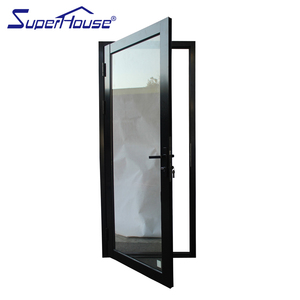
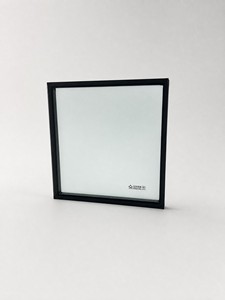
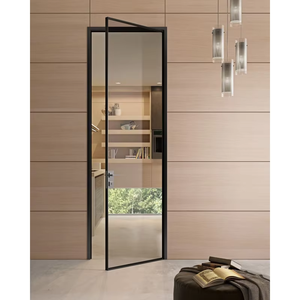
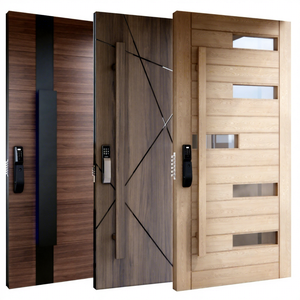
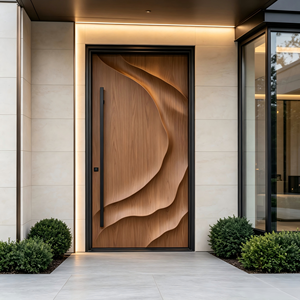
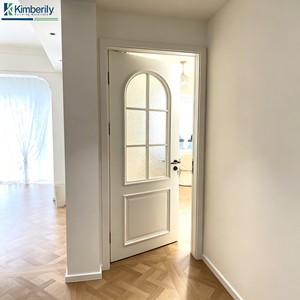
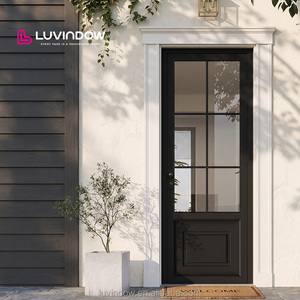
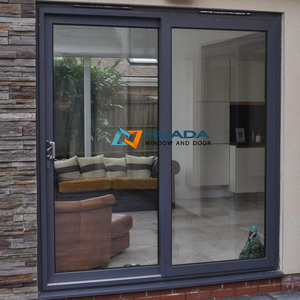
The Evolution of Modern Architectural Entry Systems: Why Smart Aluminum Front Doors Lead Global Demand
The global luxury building envelope and fenestration market is undergoing a structural transition. Driven by stringent energy-efficiency standards, modern architectural design trends, and the ubiquity of Internet of Things (IoT) home automation, commercial buyers and residential developers are increasingly replacing traditional timber and steel doors with advanced thermal break aluminum front doors integrated with smart electronic locks.
China has established itself as the world’s primary manufacturing epicenter for high-performance aluminum fenestration. By combining industrial-scale 6063-T6 aluminum extrusion capabilities, automated CNC machining, proprietary PA66 thermal barrier strip insertion, and advanced surface finishing technologies (PVDF coating, anodizing, and laser-carved 3D textures), top Chinese exporters supply global procurement managers with custom entrance systems that meet demanding structural, thermal, and security requirements.
When selecting a manufacturing partner in China for smart aluminum entry doors, procurement directors must look beyond basic aesthetic appeal. Evaluating technical capability requires an analysis of air-water-structural engineering, structural thermal isolation ($U_w$ factors), biometric lock system integration protocols, and export compliance certifications such as Florida’s Miami-Dade NOA, Australia’s AS 2047, European CE ratings, and ISO 9001 quality management systems.
Key Development Trends in Aluminum Smart Door Manufacturing
Understanding the technological shifts shaping the next decade of architectural entry doors and smart hardware integration.
1. Fully Integrated Hidden Smart Locking Systems
Legacy smart doors often relied on surface-mounted electronic deadbolts that compromised structural integrity and visual aesthetics. Modern factory integration buries multi-point motor-driven mortise locks within the reinforced aluminum profile chamber. Features include 3D structured-light facial recognition, hidden capacitive biometric sensors, AES-128 encrypted keypads, and native Matter/Zigbee/Z-Wave protocol connectivity.
2. Ultra-Low Thermal Transmittance (Passive House Standard)
With energy codes mandating lower thermal bridge coefficients, China's leading factories utilize multi-chamber thermal break profiles equipped with 24mm to 34mm polyaminde (PA66GF25) insulation strips. Paired with triple-glazed Low-E insulated glass units (IGUs) filled with 90% Argon gas, modern aluminum front doors achieve overall thermal transmittance values of U ≤ 0.9 W/m²K.
3. Extreme Weather & Hurricane Impact Resistance
Export requirements for coastal zones (such as Florida, the Caribbean, and Australia's cyclone belts) demand extreme structural wind load resistance. Top factories employ heavy-duty wall thicknesses (2.0mm to 3.0mm primary extrusions), heavy pivot hinges, and SGP laminated safety glass engineered to withstand design pressures exceeding 5.0 kPa and hurricane impact testing.
4. Large-Format Pivot Systems & 3D Architectural Artistry
Architectural trends favor grand entrance doors up to 4 meters high and 2 meters wide. Aluminum pivot doors utilizing industrial-grade concealed floor springs allow smooth operation despite sash weights exceeding 300kg. CNC 3D fluid wave carving, brushed metallic anodizing, and real wood veneer lamination provide custom tactile finishes without timber maintenance issues.
5. Laser Cold-Welded Seamless Corners
Traditional mechanical crimping leaves microscopic joint seams vulnerable to water ingress and surface finish oxidation. Advanced Chinese manufacturing facilities now utilize automated laser cold-welding corner technology, creating unified frame corners with high structural shear strength and flawless powder-coated aesthetics.
6. Integrated Acoustic Insulation Engineering
Urban commercial developments and residential villas prioritize noise reduction. By pairing multi-chamber aluminum profile frames with multi-layered EPDM continuous sealing gaskets and asymmetric laminated glazing (e.g., 6mm Low-E + 16A + 6mm Laminated), sound insulation values reach up to Rw 44 dB.
Technical Specification & Engineering Performance Matrix
Standard performance baseline parameters across Chinese tier-1 OEM export smart door systems compared to traditional industry benchmarks.
| Performance Parameter | Standard Entry Doors | High-End Smart Aluminum Front Doors | Export Compliance Standards |
|---|---|---|---|
| Primary Alloy Profile | Recycled aluminum / 6063-T5 (1.4mm) | Virgin 6063-T6 Aluminum (2.0mm - 3.0mm) | GB/T 6892, ASTM B221 |
| Thermal Insulation ($U_w$) | 2.8 – 3.5 W/m²K (Non-thermal break) | 0.9 – 1.4 W/m²K (PA66 Thermal Break) | NFRC 100/200, CE EN 14351-1 |
| Wind Load Resistance | 1.5 – 2.5 kPa | 5.0 kPa (Grade 9 / Top Grade) | GB/T 31433, Miami-Dade NOA |
| Water Tightness Rating | 250 – 350 Pa | 700 Pa (Grade 6 / Delta-P Shield) | AS 2047, ASTM E331 |
| Smart Lock Integration | External Bluetooth deadbolt | Embedded 3D Facial / Biometric / Zigbee / C-Class Cylinder | ANSI/BHMA A156.25, CE RED |
| Sound Reduction Index | 28 – 32 dB | Up to Rw 44 dB | ISO 10140-2, ASTM E90 |
| Corner Jointing Tech | Manual mechanical corner keys | Laser Cold-Welding + Epoxy Injection | ISO 9001 Factory Audit Verified |
Future B2B Procurement Trends in China’s Aluminum Door Export Sector
Sourcing door systems internationally requires navigating evolving commercial dynamics, supply chain standards, and custom technical requirements. Over the next five years, B2B procurement of aluminum smart front doors from China will be governed by three primary structural trends:
1. Direct-to-Factory OEM/ODM Customization Workflows
Global architectural distributors, property developers, and window brands are moving away from multi-tier trading intermediaries. Sourcing managers now establish direct contractual relationships with original manufacturers capable of complete in-house fabrication—from raw billet extrusion and powder coating to IGU assembly and smart hardware testing. Direct collaboration ensures full control over IP, reduces unit costs by 20–35%, and eliminates miscommunication regarding shop drawings and structural engineering tolerances.
2. BIM (Building Information Modeling) & Shop Drawing Digitalization
Leading Chinese exporters are integrating digital engineering workflows into their commercial proposals. Prior to cutting extrusions, factory technical teams issue parametric BIM models (Revit/IFC) and detailed shop drawings specifying opening clearances, structural fixing points, thermal barrier locations, and electrical wire routing for smart locks. This digital validation phase eliminates on-site installation friction and ensures seamless integration with project general contractors.
3. Modular Export Packaging & Pre-Wired Smart Assembly
To reduce expensive job-site labor costs in North America, Europe, and Australia, procurement specifications now demand pre-hung, factory-tested assemblies. Smart aluminum front doors are fully assembled, pre-wired, and calibrated in the factory before being disassembled into modular, high-protection export crates. Units arrive on site with corner guards, protective polyethylene wrapping, and plug-and-play smart lock power connectors, minimizing field labor to simple mechanical mounting and power hookup.
Why Source From Crestor Door Manufacturing Co., Ltd.?
Founded in 1997, Crestor Door Manufacturing Co., Ltd. brings nearly three decades of engineering excellence to global fenestration markets. Operating a 100,000 m² smart manufacturing base in Dongying, Shandong, and an R&D center in Beijing, Crestor combines system-brand engineering depth with factory-direct pricing for international OEM/ODM projects.
Frequently Asked Questions (FAQ) for Enterprise Procurement
Clear, definitive technical guidance to help sourcing managers, architects, and importers evaluate aluminum smart entrance door projects.
Ready to Upgrade Your Architectural Door Sourcing?
Send your project blueprints, BOQs, or opening dimensions directly to our engineering desk. Receive shop drawings, structural wind load analyses, and direct factory pricing within 24 hours.
Inquire Now