Industry Whitepaper
Evaluating Top 10 Modern Villa Door Manufacturers & Exporters: The Technical Benchmark
In modern architectural design, luxury villa doors have evolved far beyond basic barrier functions. Today's high-end residential entrances represent a complex intersection of structural engineering, thermodynamic performance, smart mechatronic security, and spatial aesthetics. Sourcing from global manufacturers requires rigorous technical due diligence to ensure that products meet stringent building energy codes (such as NFRC and CE standards) and high-load structural requirements (such as Australia's AS 2047 standard).
When procurement managers, architects, and international building material importers evaluate the world's leading villa door exporters, five non-negotiable engineering criteria dictate product quality and long-term durability:
- Structural Extrusion Alloy Grade: Premium exterior pivot and armored doors utilize 6063-T6 or 6060-T66 architectural-grade aluminum extrusions. Wall thickness must meet or exceed 2.0mm to 3.0mm to prevent structural deflection under extreme wind loads (up to 5.0 kPa).
- Thermal Isolation Integrity: The integration of Polyamide 66 reinforced with 25% fiberglass (PA66-GF25) thermal break strips isolates external temperature transfer, preventing condensation and lowering whole-door U-values below 0.9 W/m²K.
- Load-Bearing Pivot Hardware Engineering: Large-span villa front entries rely on concealed bi-directional hydraulic pivot hinges capable of smoothly supporting panel weights ranging from 400 kg up to 1,000 kg with zero floor drag over 200,000 operational cycles.
- Anti-Burglary & Ballistic Resistance: Multi-point motorized locking systems featuring hardened anti-drill plates and anti-pry steel deadbolts certified to European EN 1627 RC3/RC4 ratings or international ballistic safety benchmarks.
- Weather Seals & Drainage Systems: EPDM marine-grade triple-gasket perimeter sealing coupled with zero-threshold drop seals and hidden drainage channels to maintain water tightness under wind-driven rain pressures up to 700 Pa.
Global Villa Door Manufacturer Evaluation Matrix
| Evaluation Parameter |
Standard Market Grade |
High-End Architectural Benchmark |
Crestor Enterprise Grade |
| Wind Load Resistance |
2.0 – 3.0 kPa (Grade 4-5) |
4.0 – 4.5 kPa (Grade 7-8) |
5.0 kPa (Grade 9 Top Class) |
| Water Tightness |
250 – 350 Pa |
500 – 600 Pa |
700 Pa (Grade 6 Top Class) |
| Thermal Insulation (U-Value) |
1.8 – 2.4 W/m²K |
1.2 – 1.5 W/m²K |
≤ 0.9 W/m²K (Grade 10 Top) |
| Sound Insulation (STC) |
28 – 32 dB |
35 – 40 dB |
Up to Rw 44 dB Acoustic |
| Corner Joint Technology |
Standard Mechanical Crimping |
Glue Injection Crimping |
Laser Cold-Welding + Sealing |
In-Depth Product Analysis
Technical Deep-Dive: Architectural Villa Door Categories & Sourcing Specifications
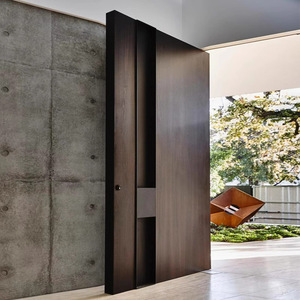
1. High-Security Wood-Aluminum Composite Heavy Pivot Doors
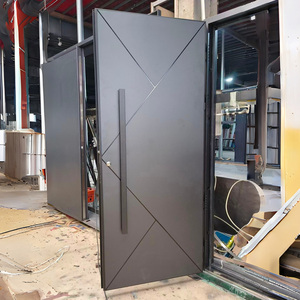
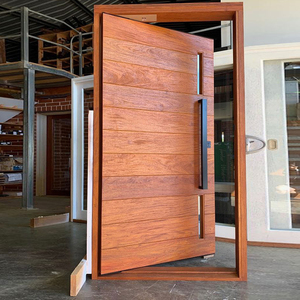
Combining the natural warmth of real interior timber with the weather resistance of exterior heavy-duty aluminum extrusions, wood-aluminum pivot doors are the premier choice for luxury coastal villas and modern architectural mansions. The exterior face features a PVDF fluorocarbon powder-coated aluminum cladding system engineered to resist UV degradation and salt spray corrosion for over 25 years. Inside, solid hardwood veneers (such as American Black Walnut or Natural Oak) provide luxurious interior tactile quality. Structural integrity is guaranteed by a multi-chamber thermal break frame and heavy-duty concealed floor pivots engineered for smooth 360-degree or 180-degree swing control.
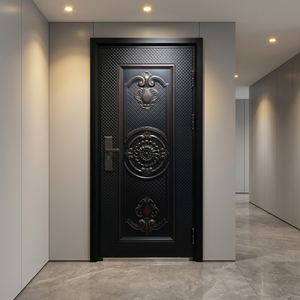
2. 3D Carved Cast Aluminum Exterior Armored Entrance Doors
Cast aluminum armored entry doors represent the pinnacle of physical security and sculptural architecture. Constructed with high-density solid cast aluminum armor plates (thickness ranging from 8mm to 15mm), these doors are virtually impervious to impact, drilling, and forced entry. The surface is carved using multi-axis CNC routers to create dramatic 3D geometric textures, metallic patinas, or bespoke architectural motifs. Inside the core, multi-layer insulating materials—including rock wool, ceramic fiber insulation, and aluminum honeycomb panels—deliver fire rating protection alongside thermal isolation.
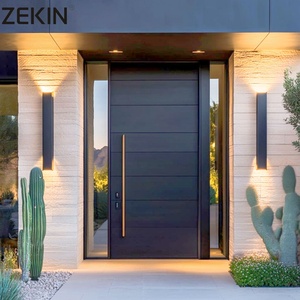
3. Smart Biometric Armored Pivot Doors with Motorized Locking
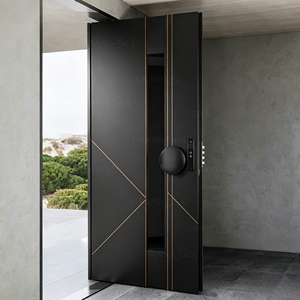
Modern luxury homes demand keyless spatial integration. High-end pivot armored doors feature integrated 3D facial recognition sensors, encrypted fingerprint scanners, dynamic mobile app control (Tuya, Matter, or Zigbee protocol), and hidden motorized multi-point latches. When activated, motor-driven locking pins retract within 0.4 seconds. In case of emergency or power failure, mechanical override cylinders with C-level anti-drill keys ensure absolute reliability.
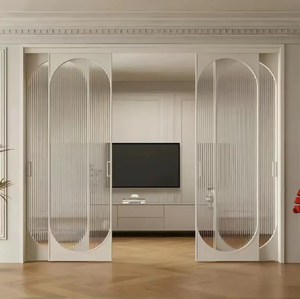
4. Trackless Art Glass Partition & Interior Sliding Systems
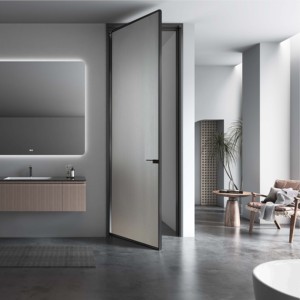
Creating fluid spatial transitions between living rooms, dining areas, and indoor patios requires minimalist glass partitioning. Trackless glass sliding door systems eliminate floor channels entirely, mounting suspended heavy-duty roller assemblies overhead inside concealed ceiling soffits. Utilizing 10mm to 12mm tempered safety glass or fluted acoustic laminated glass, these doors provide visual light transmission while maintaining acoustic boundaries. Soft-closing hydraulic dampers absorb closing force to ensure smooth, quiet operation.
5. Ballistic-Proof & Anti-Theft Stainless Steel Security Entry Doors
For high-net-worth residential estates, embassy compounds, and luxury villas requiring extreme security, 316-grade stainless steel multi-lock doors offer certified ballistic protection. Engineered with reinforced structural steel sub-frames, anti-pry interlocking hinge flanges, and multi-directional deadbolts that lock simultaneously into top, bottom, and side jambs. Coupled with bullet-resistant laminated glass inserts (UL 752 standard), these doors ensure uncompromised protection without sacrificing modern aesthetic elegance.
Technical Innovations
Product Engineering & Technological Advancements in Villa Door Manufacturing
To stay competitive in the export landscape, advanced factories are overhauling conventional production methods in favor of high-precision automated manufacturing. Key technological developments include:
Laser Cold-Welding & Corner Sealing
Traditional mechanically crimped aluminum frame corners tend to open slightly after years of thermal movement, letting in water and air. Seamless laser cold-welding joins extrusion corners into a single continuous metal unit, increasing structural strength by 300% and providing absolute water tightness.
Advanced Fluorocarbon Surface Coatings
Exterior villa doors are exposed to intense sunlight and harsh weather. Exporters are adopting 3-coat electrostatically sprayed PVDF (Polyvinylidene Fluoride) coatings and anodized metallic oxide finishes that resist UV chalking, acid rain, and color fading under ASTM B117 salt spray testing for over 2,000 hours.
Factory Advantage
Enterprise Strengths: Crestor Door Manufacturing Co., Ltd.
As a leading Chinese designer and direct manufacturer of high-end aluminum window and door systems, Crestor Door Manufacturing Co., Ltd. has delivered engineered building envelope solutions since 1997. Operating a state-of-the-art 100,000 m² smart manufacturing base in Dongying, Shandong, along with a dedicated R&D center in Beijing, Crestor combines system-brand technical innovation with factory-direct supply chain efficiency.
Vertical Production Control
From raw profile machining and automated powder coating to insulating glass unit (IGU) assembly, every process takes place in-house under strict ISO 9001:2015 quality management systems.
Certified Global Compliance
Crestor window and door systems hold Australian AS 2047 StandardsMark™ Licences (SMK41686), European CE conformity certificates, and national laboratory test reports for wind pressure, water tightness, and sound isolation.
Complete Engineering Support
Over 200 engineers and skilled technicians provide comprehensive shop drawing generation, structural load calculation, custom sample validation, and secure export crating for global project delivery.