1. Executive Market Intelligence: The Shift Toward Intrusion-Proof Architectural Aluminum Fenestration
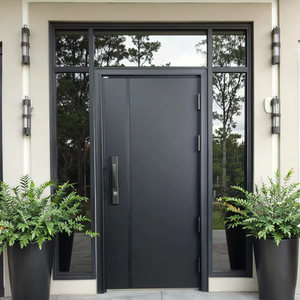
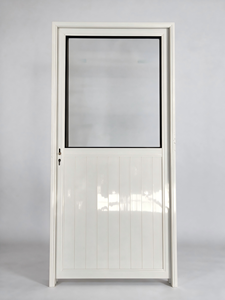
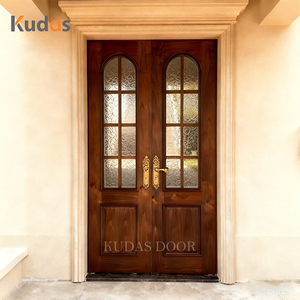
In contemporary architectural design, the demand for burglar-resistant aluminum doors has evolved from a niche commercial requirement into a primary specification criterion for luxury residential developments, high-end commercial complexes, and modern villa projects worldwide. Historically, security doors relied heavily on bulky steel structures that compromised thermal performance and aesthetic versatility. Today, advancements in high-tensile 6063-T6 and 6061-T6 aluminum extrusion alloys, paired with polyamide (PA66GF25) thermal break strips, have unlocked a new paradigm: ultra-slim sightlines capable of achieving European Resistance Class Ratings (EN 1627 RC2 to RC4) alongside exceptional U-values (≤ 0.9 W/m²K).
When commercial buyers, architects, and estate developers analyze forced-entry risks, intent mining demonstrates a fundamental shift from simple locking mechanisms to systemic structural integrity. Modern burglars employ sophisticated physical tools—ranging from heavy screwdrivers, crowbars, and anti-pry wedges to cordless angle grinders and drills. Consequently, an effective burglar-resistant door cannot rely solely on a strong lock; it requires a integrated engineering approach combining reinforced profile wall thicknesses (≥ 2.0mm to 3.0mm), multi-point motorized locking rods, anti-drill armor plates, explosion-proof laminated safety glass (P4A to P6B glazing), and laser cold-welded corner joints.
RC3/RC4
European Anti-Burglar Rating
5.0 kPa
Top Wind Load Resistance (Grade 9)
≤0.9
Thermal U-Value (W/m²K)
Rw 44dB
Acoustic Sound Insulation
2. Understanding International Burglar Resistance Standards: EN 1627 vs. PAS 24 vs. UL 752
To make informed procurement decisions, commercial importers must understand how global testing laboratories evaluate forced-entry resistance. The European Norm standard EN 1627 to 1630 remains the premier global benchmark, testing door assemblies against mechanical static loads, dynamic impact tests, and simulated manual break-in attempts using standardized tool sets.
| Resistance Class | Tool Set Used | Resistance Time | Target Threat Level | Typical Application |
|---|---|---|---|---|
| EN 1627 RC2 | Screwdrivers, pliers, wedges, hand saws | 3 Minutes | Opportunistic burglar trying physical force & basic tools | Standard Luxury Residential Entrance / Patio |
| EN 1627 RC3 | Heavy crowbars, pin punches, mechanical hand drills | 5 Minutes | Experienced burglar targeting specific high-value targets | Villas, Ground-Floor Commercial, Financial Hubs |
| EN 1627 RC4 | Heavy hammers, axes, chisels, cordless drills, shears | 10 Minutes | Organized criminal attack with heavy specialized power tools | Armored Entrance Doors, Luxury Estates, Server Rooms |
| PAS 24:2022 | Bumping, picking, prying, 350kg mechanical load | Pass/Fail Criteria | Standard UK security compliance for new residential builds | UK & Commonwealth Residential / Commercial Projects |
| UL 752 Level 3-8 | Ballistic firearms (9mm to 7.62mm rifle rounds) | Zero Penetration | Armed intrusion & ballistic protection requirements | Government Buildings, Embassies, Secure Mansions |
Information Gain Insight: A door system certified to RC3 or RC4 does not merely feature a stronger key cylinder; the entire outer frame, internal structural mullions, hinge pins, and glass retention beads are engineered to absorb massive shear forces. When an attacker attempts to pry open the door sash using a 750mm crowbar, an RC3 aluminum system distributes the leverage across multi-point interlocking steel hooks anchored directly into the structural masonry or aluminum sub-frame.
3. Comprehensive Analysis of Top 10 Burglar Resistant Aluminum Door Manufacturers & Suppliers
Based on structural engineering capabilities, export volume, hardware customization, anti-intrusion certifications, and OEM/ODM manufacturing scale, we have audited the top 10 global manufacturers dominating the high-security aluminum fenestration market:
1. Crestor Door Manufacturing Co., Ltd. (China)
Core Specialization: Custom Heavy-Duty Armored Aluminum Entry Doors, Thermal Break Bifold & Large-Span Pivot Systems.
Security Certifications: ISO 9001:2015, AS 2047 StandardsMark™ (SMK41686), CE Conformity, Tested under GB/T 31433 to Grade 9 Wind Load (5.0 kPa) & Grade 6 Water Tightness (700 Pa).
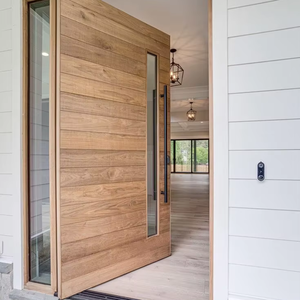
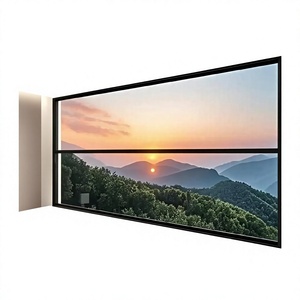
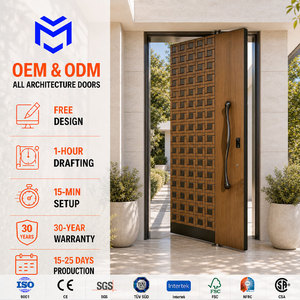
Key Advantage: Operating a massive 160,000 m² smart manufacturing base in Dongying and R&D center in Beijing, Crestor integrates full in-house profile extrusion machining, powder coating, insulating glass processing, and laser cold-welding corner assembly. Crestor’s proprietary 135 Panoramic and Armored Wooden Aluminum Pivot systems feature 5-point motorized locks, anti-pry hinge pins, and custom Low-E laminated burglar-proof glass. Factory-direct OEM/ODM capabilities deliver tier-1 system-brand quality at direct manufacturer prices.
2. Schüco International (Germany)
Core Specialization: High-End System Aluminum Profile Engineering, ADS 90.SI Door Systems.
Security Certifications: EN 1627 RC2/RC3/RC4, DIN Standards.
Key Advantage: Renowned for German engineering precision, Schüco offers comprehensive system architecture with integrated mechatronic lock systems (Schüco BlueCon). Highly expensive with strict proprietary constraints, but widely specified in flagship architectural landmarks across Europe.
3. Reynaers Aluminium (Belgium)
Core Specialization: Architectural MasterLine 8 & MasterLine 10 Door Series.
Security Certifications: EN 1627 RC2 & RC3, Minergie Thermal Standards.
Key Advantage: Reynaers provides architectural flexibility with modular thermal breaks. Their MasterLine door solutions offer high forced-entry resistance combined with high air-tightness, suitable for passive houses in extreme climates.
4. Cortizo Systems (Spain)
Core Specialization: Millennium Touch & Heavy-Duty Commercial Sliding Doors.
Security Certifications: European Norm Compliance, CE Mark.
Key Advantage: Major European supplier catering to Southern Europe and Latin America. Known for sleek aesthetic profiles with concealed hardware options and multi-point European lock integration.
5. Kawneer (Arconic Corporation, USA)
Core Specialization: Heavy Commercial Entrances & Blast Mitigation Curtain Walls.
Security Certifications: ASTM F3038 Forced Entry, Florida Product Approval (Hurricane/Impact).
Key Advantage: Kawneer is an industry leader in North American commercial architecture, specializing in heavy-duty commercial storefront entrances designed to withstand severe impact and forced entry.
6. YKK AP Inc. (Japan)
Core Specialization: ProTek Impact & Security Commercial Entrances.
Security Certifications: JIS Japanese Standards, US High-Velocity Hurricane Zone (HVHZ).
Key Advantage: YKK AP excels in ultra-precise manufacturing, delivering standardized aluminum sliding and entrance doors with integrated security glazing for high-traffic commercial installations.
7. Alumil Systems (Greece)
Core Specialization: Supreme SD95 & Zen Armored Pivot Entrance Doors.
Security Certifications: EN 1627 RC3, IFT Rosenheim Tested.
Key Advantage: Specializes in modern pivot entrance doors with large dimensions, high thermal insulation, and multi-point locking gear designed for contemporary Mediterranean villa architecture.
8. Technal (Hydro Group, France)
Core Specialization: Soleal Security Doors & Low-Carbon Recycled Aluminum Extrusions.
Security Certifications: RC2, RC3, Hydro CIRCAL 75R certification.
Key Advantage: Backed by Hydro's sustainable aluminum supply chain, Technal focuses on eco-friendly, low-carbon aluminum security doors tailored for European public sector and green-building projects.
9. Origin Frames (UK)
Core Specialization: Custom Bifolding & Residential Front Entrance Doors.
Security Certifications: PAS 24:2022, Secured by Design (SBD) Accreditation.
Key Advantage: A dominant force in the UK residential replacement market, Origin is widely recognized for bright powder-coated finishes, unique finger-safe gaskets, and 8-point locking mechanisms.
10. Centor (Australia)
Core Specialization: Integrated Folding & Sliding Security Screen Doors.
Security Certifications: Australian Standard AS 2047, Bushfire Attack Level (BAL).
Key Advantage: Innovator of fully integrated doors featuring concealed hardware, built-in insect screens, and light-filtering shades coupled with high-strength structural extrusions.
4. Structural Engineering Breakdown: What Makes an Aluminum Door Truly Intrusion-Proof?
To achieve genuine RC3 or RC4 intrusion protection, an aluminum door relies on an intricate balance of metallurgical alloy grade, profile wall geometry, hardware anchoring, and glass composition. Below is an engineering overview of the critical components:
A. Profile Metallurgy & Multi-Chamber Extrusion
Standard non-security aluminum doors utilize 1.4mm profile thickness. In contrast, burglar-resistant systems utilize 6063-T6 or 6061-T6 structural aluminum alloy with wall thicknesses ranging from 2.0mm to 3.5mm. Internal multi-chamber profiles feature reinforced internal ribbing that prevents the frame from buckling when subjected to 10+ kilonewtons of lateral force during prying attempts.
B. Polyamide PA66GF25 Thermal Break Strips
Thermal efficiency must not compromise physical strength. High-security doors employ 24mm to 34mm PA66GF25 (25% fiberglass reinforced polyamide) thermal barrier strips. These strips feature high shear resistance, holding outer and inner aluminum extrusions together tightly even under thermal expansion and heavy kinetic impact.
C. Multi-Point Interlocking Rods & Anti-Drill Plates
Single-latch locks fail in seconds under crowbar leverage. Burglar-resistant doors feature multi-point gearboxes (typically 3-point, 5-point, or 7-point locking systems). Hardened steel hook bolts swing out and interlock into heavy stainless steel strike plates anchored directly into the structural core. Anti-drill manganese steel armor plates protect the lock cylinder against drilling and core pulling.
D. P4A / P6B Laminated Security Glazing
Glazed entry, bifold, or pivot doors are vulnerable at the glass interface if standard tempered glass is used. Intrusion-resistant doors utilize laminated safety glass (EN 356 Class P4A to P6B) comprising multiple layers of float glass bonded with tough Polyvinyl Butyral (PVB) or SentryGlas® (SGP) interlayers. Even when shattered by sledgehammers, the glass remains stuck to the interlayer, resisting penetration.
5. Enterprise Advantages & Manufacturing Depth of Crestor Door Manufacturing Co., Ltd.
Founded in 1997, Crestor Door Manufacturing Co., Ltd. has grown from a precision aluminum processor in Beijing into a premier global manufacturer of thermal break aluminum window and door systems. Serving OEM brands, architectural contractors, distributors, and real estate developers across North America, Europe, Australia, and the Middle East, Crestor bridges the gap between raw factory pricing and system-brand engineering excellence.
160,000 m² Integrated Smart Facility
Located in Dongying, Shandong, Crestor's smart manufacturing plant manages all 4 core processes in-house: profile machining, powder coating, insulating glass processing, and final unit assembly. No subcontracting means single-point quality control.
Nearly 30 Years of Engineering History
Established in 1997 with over 200 skilled engineers and technicians, Crestor holds 219+ patented technologies, including laser cold-welding corner technology that eliminates joint gaps and enhances frame rigidity by 35%.
Certified for Demanding Export Markets
Holds an official AS 2047 StandardsMark™ Licence (SMK41686) for the 76M system, ISO 9001:2015 quality management certification, and full CE compliance. Configurable to NFRC thermal performance targets.
6. Future Procurement Trends in Burglar Resistant Aluminum Doors (2026–2030)
As B2B buyers evaluate long-term supply chain strategy, several key technological and regulatory trends are reshaping the global security door market:
1. Smart Access Control Integration (Biometric & IoT)
Mechanical keys are increasingly being replaced by integrated mechatronic locks. High-end aluminum security doors now incorporate flush biometric fingerprint sensors, 3D facial recognition cameras, RFID cards, and encrypted mobile app APIs directly into the door sash profile. Future procurement requires manufacturers to supply pre-wired internal channels and smart lock compatibility.
2. Convergence of Thermal Insulation & Forced-Entry Resistance
Historically, heavy security doors created thermal bridges. Modern building codes (such as Europe's EPBD and North America's Energy Star 7.0) mandate high energy efficiency. Future procurement favors systems like Crestor's thermal break doors that deliver low U-values (≤ 0.9 W/m²K) without sacrificing RC3 burglar resistance ratings.
3. Ultra-Slim Sightlines with Concealed Heavy-Duty Hinges
Architectural preference has moved away from thick, bulky door frames toward ultra-slim, minimalist sightlines and floor-to-ceiling panoramic glass openings. Future-proof security doors feature 3D adjustable concealed hinges capable of supporting 300kg+ door sashes while remaining completely inaccessible to outside angle-grinder attacks.
4. Sustainable Low-Carbon Aluminum Sourcing
Carbon border adjustment mechanisms (such as the EU's CBAM) require importers to verify the embodied carbon footprint of structural aluminum. Procurement strategies are prioritizing factories using hydro-electric powered aluminum smelting and circular post-consumer recycled extrusion alloys.
7. Frequently Asked Questions (FAQ) for B2B Importers & Contractors
What technical documentation is required to start a custom aluminum door order?
To initiate an OEM/ODM or project quote, you can provide architectural drawings, elevation plans, a Bill of Quantities (BOQ), or opening dimensions along with your target wind load and energy requirements. Crestor's engineering team selects profile series, glass build-ups, and locking hardware, issuing detailed CAD/BIM shop drawings for approval prior to production.
How do I verify the burglar resistance rating before placing a bulk order?
Buyers can request third-party national laboratory test reports (GB/T, EN 1627, or AS 2047). Additionally, Crestor provides corner structural samples or full-size prototype sample doors. This allows you to evaluate finish quality, hardware operation, seal compression, and corner weld strength firsthand before committing to mass manufacturing.
What is the structural difference between OEM and ODM partnership models?
With OEM (Original Equipment Manufacturer), you supply custom extrusions, proprietary dies, or specialized hardware specifications, and we manufacture according to your exact standards under strict non-disclosure IP protection. With ODM (Original Design Manufacturer), you select pre-engineered, pre-tested door systems from our product library, and we apply custom branding, powder-coated finishes, and export packaging.
What packaging methods are used to prevent transit damage during ocean freight?
Every door unit undergoes protective blue-film wrapping, rubber corner guards, bubble wrap insulation, and is packed into fully enclosed fumigated plywood crates or steel-framed A-frame racks. Units are strapped to prevent internal shift or glass friction during sea freight across international routes.
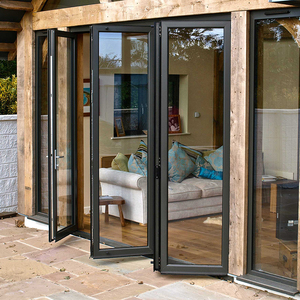
Can aluminum bifold and pivot doors achieve genuine burglar resistance?
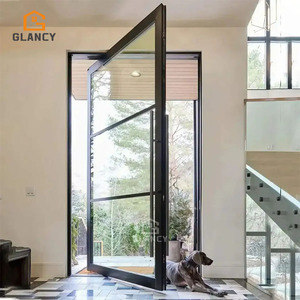
Yes. While traditional bifold and pivot doors were considered vulnerable, modern thermal break designs utilize top and bottom shoot-bolt locking rods, interlocking hinge pins, anti-drop guide rollers, and multi-point hook locks. When combined with laminated safety glass (P4A or higher), bifold and pivot systems can achieve EN 1627 RC2 and RC3 security ratings.
What glass and surface finish configurations are available for coastal projects?
For harsh marine environments, profiles receive Qualicoat Class 2 / PVDF fluorocarbon coatings or 25-micron anodized surface treatments to prevent salt spray corrosion. Glazing options include double or triple insulated glass units (IGU) featuring Low-E coatings, argon gas filling, warm-edge spacers, and laminated storm-impact layers.
Ready to Upgrade Your Door Supply Chain with Factory-Direct Engineering?
Whether you are sourcing custom aluminum pivot entrance doors for a villa development, specifying bifold patio systems, or seeking a reliable OEM factory partner for private-label distribution, Crestor's engineering team provides comprehensive shop drawings, performance test reports, and competitive pricing.