Product Showcase
Precision-Engineered Aluminum Door & Frame Systems
Explore our flagship OEM/ODM reinforced entrance, sliding, folding, and architectural aluminum door systems engineered for extreme durability, wind-load performance, and thermal insulation.
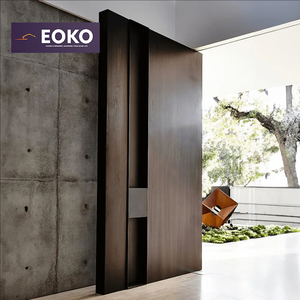
Modern Giant Iron Entry Wrought Aluminum Door with Arched Steel Design Anti-Theft Feature for Villa Application
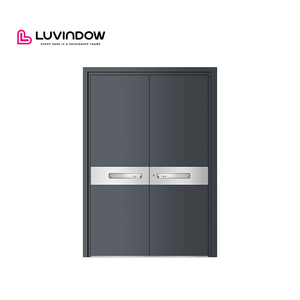
Lolands Custom Modern Aluminum Entry Door with Low-E Double Tempered Glass for Residential Villa and Supermarket Front Entrance
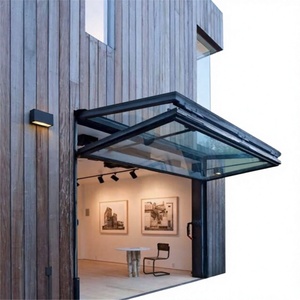
135 Panoramic Front Entry Door Thermal Break Aluminum Alloy Frame Tempered Hollow Low-E Glass Folding Glass Door for Villa Hotel
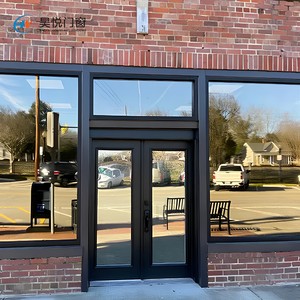
Custom Design Glass Commercial Entry Door Aluminum Alloy Store Front Aluminum Tempered clear Glass Continuous Hinges Front Door
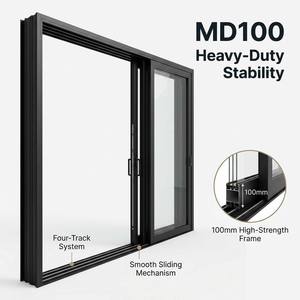
Triple Glazed Four Panel Sliding Door Four Track Thermal Insulated Energy Rated Draft-Proof Aluminum Door
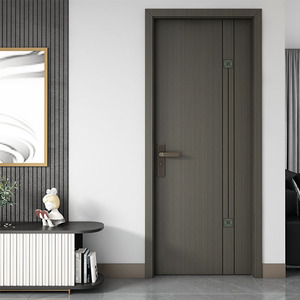
Corrosion Resistant Aluminum Honeycomb Door Complete Fittings Ready to Install for Villa and Mall Use
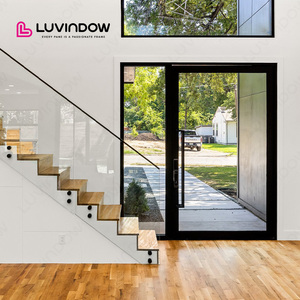
Modern Style Main Entrance Door Heat Insulated Aluminum Double Glazed Glass Pivot Door
1997
Established Operational Legacy
160,000 m²
Smart Manufacturing Base
219+
Patented Fenestration Tech
5.0 kPa
Wind Load Resistance Grade
Reinforced Aluminum Door Frame Engineering: A Technical B2B Executive Whitepaper
In modern architectural fenestration, the structural integrity of entry and curtain-wall door assemblies relies entirely on the metallurgical density, extrusion tolerance, and thermal break integration of the underlying framing system. As building energy codes tighten globally—spanning North America’s NFRC standards, Europe’s EN 14351-1 CE mandates, and Australia’s AS 2047 specification—the demand for an authoritative OEM/ODM reinforced aluminum door frame supplier & exporter has shifted from commodity extrusion sourcing to specialized structural co-engineering.
Architectural aluminum door frames are no longer mere static borders. They serve as primary dynamic load-bearing structures that must accommodate multi-point locking torque, dead-load glass pressures exceeding 150 kg per panel, seismic deflections, and extreme differential temperature fluctuations. Achieving structural longevity requires an intimate understanding of 6063-T5 vs. 6061-T6 alloy heat treatments, structural polyamide (PA66 GF25) thermal strip insertion, and precision corner joinery systems such as laser cold-welding.
Extrusion Chemistry and Structural Load Deflection Physics
To eliminate structural warping and door sag under heavy commercial foot traffic or extreme wind loads, high-grade door frame manufacturing begins with raw extrusion chemistry. Standard commercial door frames frequently suffer from micro-yield failure under high cyclic loads due to inconsistent wall thickness and low-grade recycled billet usage. Premium OEM framing utilizes virgin primary aluminum alloyed with precise ratios of Magnesium and Silicon (Al-Mg-Si series) to optimize tensile strength, yield strength, and surface anodizing response.
Magnesium-Silicon Alloy Engineering
Engineered using 6063-T5/T6 architectural aluminum billets yielding ultimate tensile strength up to 205 MPa, preventing long-term frame flex and sagging.
Laser Cold-Welding Joinery
Patented corner assembly technology creating hermetically sealed joint seams with microscopic structural tolerances within ±0.05 mm.
PA66 GF25 Thermal Barriers
Reinforced 25% glass-fiber polyamide thermal break strips engineered to minimize thermal conduction, achieving total system U-values ≤ 0.9 W/m²K.
Empirical Performance Data Matrix & Testing Standards
For commercial contractors, architectural specifiers, and OEM brand owners, performance verification via standardized national test laboratories is essential for risk mitigation. Crestor Door Manufacturing Co., Ltd. subjects all reinforced framing profiles to rigorous structural load chamber testing, water penetration resistance trials, and acoustic decay analysis under GB/T 31433, AS 2047, and international equivalent protocols.
| Performance Parameter | Tested Value / Threshold | Industry Standard Grade | Architectural Engineering Benefit |
|---|---|---|---|
| Wind Load Resistance | 5.0 kPa (P3 Pressure Rating) | Grade 9 (Top Class) | Prevents frame deformation on high-rise curtain walls and exposed coastal structures. |
| Water Tightness | 700 Pa Static Pressure | Grade 6 (Top Class) | Eliminates rainwater ingress under severe hurricane-force driving wind conditions. |
| Whole-Frame U-Factor | U ≤ 0.9 W/m²K | Grade 10 Passive Target | Drastically lowers building HVAC energy consumption, complying with global Net-Zero codes. |
| Acoustic Attenuation | Rw = 44 dB Sound Reduction | Acoustic Shield Class | Filters urban noise pollution for luxury hotel suites, high-end villas, and executive office suites. |
| Machining Precision | ±0.05 mm CNC Tolerance | Aerospace Grade | Guarantees seamless hardware alignment, smooth hinge movement, and zero air-leak gaps. |
Future Procurement Trends in Reinforced Aluminum Door Frame Systems
As global supply chains realign around sustainability, digital traceability, and strict carbon accounting, international buyers must navigate evolving market forces when selecting an OEM/ODM aluminum framing partner. Five core trends are defining the future of commercial fenestration procurement:
1. Decarbonization and Low-Carbon Recycled Aluminum Billet Sourcing: Environmental Product Declarations (EPDs) and Europe’s Carbon Border Adjustment Mechanism (CBAM) are compelling developers to prioritize suppliers using hydroelectric-smelted aluminum or high-percentage post-consumer recycled content without compromising structural yield strength.
2. Prefabricated Unitized & Modular Framing Systems: On-site labor costs in North America, Western Europe, and Australia have surged. Importers are increasingly requesting fully pre-milled, pre-gasketed, and knock-down (KD) or modular unitized door frame assemblies that reduce site installation labor by up to 65%.
3. Advanced Multi-Chamber Thermal Insulation Architecture: Traditional single-cavity aluminum extrusions are being replaced by multi-cavity profiles integrated with expanding polyurethane insulating foam insertions and multi-point EPDM weather-stripping to satisfy stringent Passive House certification mandates.
4. Smart Building & Concealed Automated Hardware Integration: Modern reinforced door frames must accommodate concealed motor drives, electromagnetic access controls, and biometric sensor conduits within internal frame channels without reducing structural wall thickness.
5. Extreme Weather and Impact-Resistant Engineering: Driven by changing global climate patterns, coastal jurisdictions require hurricane-rated impact frames capable of passing missile-impact tests (ASTM E1886/E1996) and cycle pressure loading.
Industry & Technology Development Trends: Surface Finish & Structural Metallurgy
The durability of an exterior door frame is fundamentally governed by its surface protection technology. Substandard surface treatments lead to chalking, atmospheric oxidation, and filiform corrosion in maritime environments. Crestor's advanced finishing lines provide three primary coating technologies tailored for heavy-duty B2B applications:
PVDF (Fluorocarbon) Spray Coating: Utilizing 70% Kynar 500 / Hylar 5000 resin systems, PVDF coating provides unmatched resistance against UV degradation, acid rain, and salt spray exposure. It maintains color retention and gloss integrity for over 30 years, meeting AAMA 2605 specifications.
Electrostatic Powder Coating: Compliant with AAMA 2604 standard requirements, solvent-free powder coating offers superior scratch resistance, high impact toughness, and an extensive spectrum of custom RAL colors and textured architectural finishes.
Sublimated Fluorocarbon Wood-Grain Transfer: Combines the warm aesthetic appeal of natural timber with the structural stability, zero-maintenance, and fire-resistant properties of heavy-gauge extruded aluminum—ideal for modern luxury residential entrance doors.
Why Partner With Crestor
Integrated OEM/ODM Manufacturing Excellence Since 1997
Eliminate middleman markups and supply chain uncertainty. Crestor Door Manufacturing Co., Ltd. controls every stage of production under one roof.
100,000 m² Manufacturing Facility
Our expansive smart manufacturing base in Dongying, Shandong handles profile machining, powder coating, insulating glass processing, and final frame assembly.
Beijing R&D Center
Over 200 engineers and skilled technicians continuously develop innovative fenestration profiles, securing over 219 patented technological breakthroughs.
Certified Quality Assurance
Certified under ISO 9001:2015, holding AS 2047 StandardsMark™ Licence (SMK41686), alongside full CE conformity documentation for global compliance.
Full In-House Ecosystem
By owning our extrusion dies, surface coating lines, and double-glazing lines, we maintain complete single-point accountability for every order.
Buyer Guidance
Frequently Asked Questions for Door Frame Sourcing
Direct technical and commercial answers designed to assist architectural buyers, importers, and brand owners in making informed procurement decisions.
What detailed technical documentation is required to initiate a custom OEM/ODM door frame project?
To provide an exact engineering quotation and shop drawings, our technical team requires architectural CAD drawings (.DWG or .DXF formats), a detailed Bill of Quantities (BOQ), structural wind-load requirements, target thermal U-values, glass specification requirements, and local building code standards (e.g., AS 2047, NFRC, or CE mandates). If formal drawings are not available, structural opening dimensions and elevation sketches are sufficient for our engineers to develop preliminary concept proposals.
How does Crestor guarantee quality validation prior to full mass-production runs?
We execute a multi-tier sample validation process. Buyers can order physical corner joint cuts demonstrating extrusion wall thickness, PA66 thermal strip integration, and surface finish texture. For large commercial or multi-family project orders, we fabricate a full-scale mock-up window or door frame unit for lab testing, hardware fit verification, and client sign-off before mass extrusion and fabrication commence.
What is the difference between Crestor’s OEM and ODM manufacturing services?
Under our OEM (Original Equipment Manufacturer) service, clients supply proprietary extrusion designs, structural specifications, and branded hardware requirements; we manufacture strictly according to these specifications with full Intellectual Property (IP) non-disclosure protection. Under our ODM (Original Design Manufacturer) service, clients select from Crestor’s extensive library of pre-tested, certified door systems, and we customize branding, surface colors, hardware configurations, and export packaging for rapid market entry.
What international structural and thermal certifications back Crestor products?
Crestor’s flagship 76M system holds an official AS 2047 StandardsMark™ Licence (SMK41686) for the Australian market. Our manufacturing operations strictly conform to ISO 9001:2015 quality management benchmarks. Additionally, our product configurations achieve full CE conformity for European Union distribution and can be tailored to meet North American NFRC energy performance specifications.
How are heavy aluminum door frames protected during international sea freight export shipping?
Every frame component undergoes rigorous export packaging protocols. Individual extrusion frame members are wrapped in protective anti-scratch polyethylene film, fitted with reinforced high-density corner guards, and enclosed in heavy-duty moisture-barrier shrink wrapping. Complete unit assemblies or pre-hung frames are packed into custom, ISPM 15-compliant fumigated wooden crates or steel-framed export pallets designed for safe forklift handling and containerized sea transport.
What structural alloy options and wall thicknesses are available for heavy-duty commercial entrances?
We offer high-tensile 6063-T5, 6063-T6, and 6061-T6 structural aluminum alloy extrusions. Frame profile wall thicknesses range from 1.4 mm for standard residential openings up to 2.0 mm–3.0 mm heavy-wall profiles designed for oversized commercial store fronts, hurricane-resistant entrance doors, and high-traffic public infrastructure projects.
Ready to Scale Your Fenestration Project With Direct Factory Engineering?
Send your architectural drawings, project schedules, or OEM specifications directly to our engineering sales office. Our senior technical specialists will analyze your requirements and issue detailed shop drawings and competitive factory-direct pricing within 24 hours.