Impact-Resistant Entry Door Systems & Profiles
Structural engineering meets refined architectural aesthetics. Directly manufactured in our 160,000 m² smart plant for international developers, distributors, and B2B contractors.
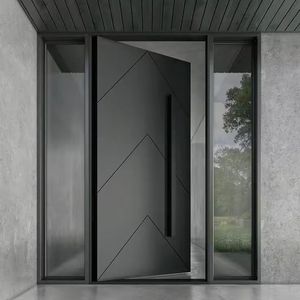
Modern Pivot Door Anti-Theft Minimalist Aluminum Finished Entry For Apartment And Villa Outdoor Use
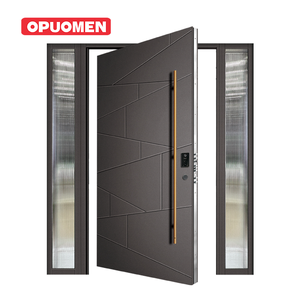
Elegant Aluminum Structure Inside Armored Security Door Entry Doors Modern Aluminum Security Door
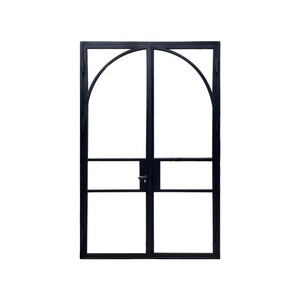
Square Double French Steel Customized Swing Graphic Design Steel Glass Door Modern Entry Doors Steel Windows Exterior
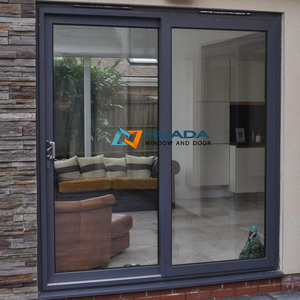
High-End Waterproof Entry Front Door Hurricane Impact Sliding Glass Windows and Doors Energy Efficient Lifting and Sliding Door
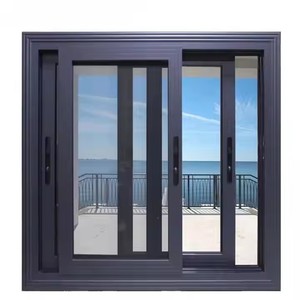
Customized Impact-Resistant Hurricane Windows And Doors Aluminum Sliding Glass For Home Alloy Frame
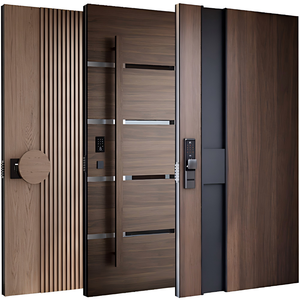
Chinese High-end Brands Armored Metal Security Front Door Security Aluminum Pivot Door Bulletproof Anti Theft Main Door
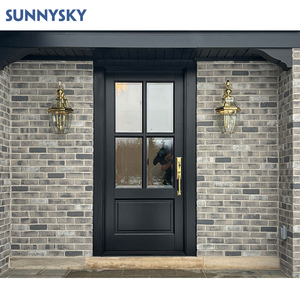
Sunnysky Modern American Design House Entrance Front Pivot Door Front Entry Pivot Doors
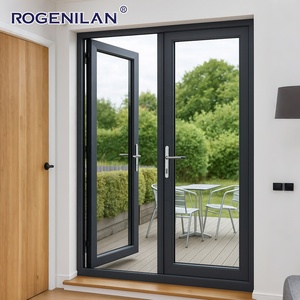
Rogenilan China Supplier Customized Size Aluminum Doors And Window Double Large Glass Fixed French Door For Houses
Engineering High-Impact Architectural Entry Systems for Global Markets
In contemporary coastal and high-velocity hurricane zones (HVHZ), entry doors represent the primary defensive boundary against wind-borne debris, cyclic pressure variations, and atmospheric moisture intrusion. Crestor Door Manufacturing Co., Ltd. (founded in 1997) engineers OEM and ODM impact-resistant glass entry door systems that synthesize extreme structural resilience with architectural elegance.
Operating from our primary R&D center in Beijing and a sprawling 100,000 m² (expanding to 160,000 m² overall infrastructure) digital smart manufacturing facility in Dongying, Shandong, Crestor maintains absolute end-to-end control over the fabrication cycle. From precision aluminum profile extrusions, multi-stage anodizing and PVDF coating, to automated Insulated Glass Unit (IGU) lamination and CNC frame corner welding—our output eliminates third-party variance to satisfy rigorous international standards including AS 2047 (StandardsMark™ Licence SMK41686), ISO 9001:2015, and European CE directives.
Certified Hurricane & Intrusion Defense
Our structural aluminum door series are built with high-tensile 6063-T6/6005-T6 alloy frames paired with SGP (SentryGlas® Plus) ionoplast laminated impact glass. Engineered to withstand cyclic wind pressures exceeding 5.0 kPa (Grade 9) and dynamic water resistance up to 700 Pa (Grade 6), Crestor door systems deliver verified safety across luxury residential villas, multi-family towers, and heavy-commercial complexes.
Vertical Integration & Structural Manufacturing Advantages
Controlling every variable in-house ensures flawless tolerances, competitive price-to-performance metrics, and seamless project tracking.
In-House Extrusion & Coating
We process raw billet aluminum into custom thermal-break profiles fitted with imported PA66 GF25 polyamide insulation strips. Surface finishes include AkzoNobel powder coating, fluorocarbon PVDF, and Italian sublimated wood-grain transfers guaranteed against UV chalking for 20+ years.
Laser Cold-Welding Technology
Eliminating conventional mechanically screwed joints that loosen under structural torque, Crestor utilizes proprietary automated laser cold-welding for profile miters. This creates a seamless, watertight, and ultra-high-strength corner joint capable of handling massive architectural pivot sashes.
National Laboratory Tested
Every system undergoes real-world destructive testing at China’s national fenestration centers. Verified test reports validate design pressure (DP), air infiltration rates (Grade 8), thermal transmittance (U ≤ 0.9 W/m²K), and acoustic damping up to Rw 44 dB.
Impact Entry Door Structural Performance Matrix
Empirical engineering metrics translated into compliance parameters for project managers and facade consultants.
| Performance Parameter | Tested Standard & Result | National Standard Grade | Engineering Significance for Project Sourcing |
|---|---|---|---|
| Wind Pressure Resistance | P3 ≥ 5.0 kPa (104 PSF equivalent) | Grade 9 (Top Tier) | Protects structural framing from deflection under severe hurricane-force gusts in high-rise coastal applications. |
| Water Tightness | ΔP ≥ 700 Pa (14.6 PSF) | Grade 6 (Top Tier) | Prevents water ingress during extreme storm conditions with zero leakage through sashes or sill drainage tracks. |
| Air Permeability | q1 ≤ 0.5 m³/(m·h) | Grade 8 (Top Tier) | Maximizes HVAC energy retention, eliminating drafts and vapor transfer across climate zones. |
| Thermal Transmittance (U-Factor) | U ≤ 0.9 W/m²K (Passive House ready) | Grade 10 (Max Efficiency) | Utilizes PA66 thermal breaks and low-emissivity argon-filled IGUs to satisfy strict energy code targets (NFRC/CE). |
| Acoustic Damping (STC/OITC) | Rw + Ctr ≥ 44 dB | High Damping Class | Substantially reduces urban sound transmission, providing quiet luxury in city center apartments and roadside developments. |
Future Sourcing & Architectural Procurement Trends (2025-2030)
Key industry shifts shaping global supply chains, code updates, and material selections for high-impact fenestration.
1. Transition to SGP Interlayer Systems
While traditional Polyvinyl Butyral (PVB) interlayers remain prevalent in budget impact glass, tier-one global projects are standardizing on SentryGlas® Plus (SGP) ionoplast interlayers. SGP provides 5 times the tear strength and 100 times the rigidity of standard PVB. In the event of glass breakage, SGP maintains structural glass posture even under repetitive wind cycles, eliminating post-impact blowouts.
2. Minimalist Profiles with Ultra-Large Pivots
Architectural preferences have shifted toward ultra-slim sightlines without sacrificing structural load capacities. Large-format impact entry doors—exceeding 3.5 meters in height and 2.0 meters in width—are increasingly specified with hidden heavy-duty hydraulic floor pivots, multi-point electronic locking latches, and integrated biometric access control systems.
3. Strict Carbon Accounting & EPD Compliance
Global developers operating under LEED v4.1 and BREEAM protocols now require Environmental Product Declarations (EPD) for structural door systems. Crestor’s utilization of low-carbon recycled aluminum billets, non-toxic powder finishes, and energy-neutral manufacturing lines provides clients with complete decarbonization documentation for modern compliance.
Advanced Metallurgy & Thermal Barrier Breakthroughs
The evolution of impact-resistant entry doors relies heavily on material advancements. Standard solid aluminum profiles act as natural thermal conductors. To conquer energy loss in extreme hot or cold environments, Crestor embeds high-density polyamide 66 reinforced with 25% glass fiber (PA66 GF25) structural thermal breaks within our profiles.
Furthermore, our glass units integrate multi-layer soft-coat Low-E coatings paired with stainless steel or warm-edge composite spacers. This configuration reflects long-wave infrared radiation while maximizing natural light transmittance, preventing frame sweating, condensation buildup, and seal degradation over decades of use.
The Engineering Behind Impact Glass Layers
- Outer Pane: Fully tempered 6mm to 10mm high-clarity low-iron glass for maximum surface compressive strength.
- Cavity: 12mm to 18mm Argon gas chamber with warm-edge structural spacer technology.
- Inner Laminated Assembly: Double 5mm or 6mm heat-strengthened glass fused with 1.52mm SGP or 2.28mm structural PVB.
6-Stage B2B Sourcing & Engineering Governance
From preliminary architectural drawings to final sea-freight container unloading—how we protect your schedule and brand reputation.
Drawing & BOQ Analysis
Submit your project drawings or Bill of Quantities (BOQ). Our structural engineering group reviews wind-load zone demands and proposes optimum profile depth and glass build-ups.
Shop Drawing Sign-Off
We issue full CAD shop drawings detailing glass specs, frame anchorage, sill flashing details, dynamic load calculations, and hardware configurations for architect approval.
Prototyping & Testing
Full-size sample doors or corner cutaway profiles are manufactured and dispatched via air freight for hands-on sensory, tactile, and aesthetic verification.
CNC Precision Production
Profiles pass through automated 5-axis CNC machining, robotized laser corner welding, powder coating lines, and computerized IGU lamination under ISO 9001 supervision.
Multi-Point QC Audit
Every single entry door unit undergoes air/water seal verification, hardware cycle tests (minimum 200,000 cycles), paint thickness checks (60-80 microns), and glass clarity scans.
Heavy Export Packaging
Finished sashes and frames are sealed in protective film, fitted with corner armor, packed into fully enclosed plywood crates, and loaded into containers for safe ocean transport.
Impact-Resistant Door Sourcing & Engineering FAQ
Clear, direct technical answers for procurement directors, importers, and facade engineers.
What technical data is required to initiate an OEM impact entry door project?
How do Crestor’s impact entry doors achieve AS 2047 and NFRC compliance?
What is the functional difference between OEM and ODM partnership models at Crestor?
What is the advantage of choosing SGP interlayers over standard PVB for impact entry doors?
How does Crestor handle international container packing to prevent freight damage?
What custom finishes and colors can be specified for structural aluminum doors?
Accelerate Your Project With Custom Impact-Resistant Door Systems
Partner with a proven manufacturer backed by 160,000 m² of smart capacity, 219+ patents, and certified AS 2047 engineering. Request complete technical catalogs, CAD files, and factory-direct wholesale quotes today.