Engineering Door Systems Showcase
Precision-manufactured entrance solutions optimized for hurricane resistance, thermal efficiency, and luxury architectural aesthetics.
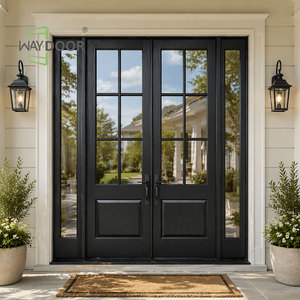
Customized Hardwood Oak Mahogany Front Door with Sidelights & 12-lite Glass
Get Catalog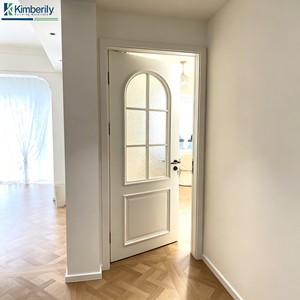
Simple Modern Aluminum Casement Door Smooth Surface Sound Insulated
Get Catalog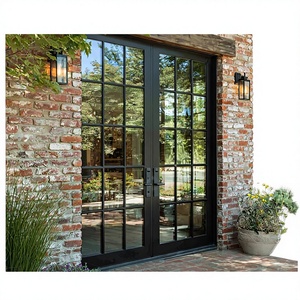
Sunnysky French Style Exterior Entry Double Tempered Glass Black Aluminum Swing Door
Get Catalog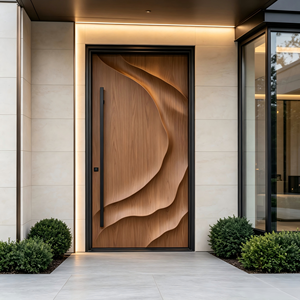
American Style Modern Oversize Aluminum Pivot Door with 3D Fluid Wave Carving
Get Catalog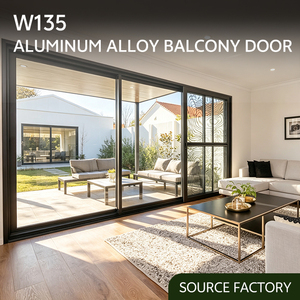
NFRC Hurricane Proof 4 Panel Aluminum Heavy Duty Lift and Slide Door
Get Catalog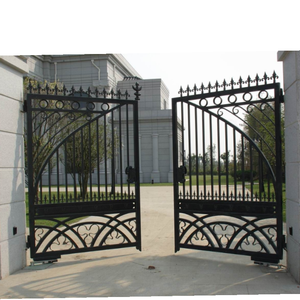
Villa Gate Designs Entrance Double Security Wrought Iron Front Entry Door
Get Catalog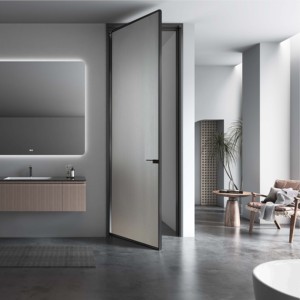
Professional Modern Invisible Aluminium Glass Swing Door for Modern Villa
Get Catalog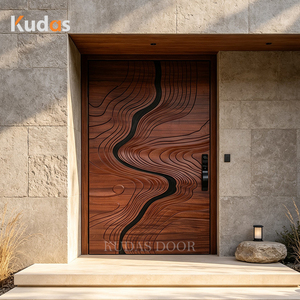
Luxury Villa 3D Carved Solid Wood Pivot Front Door Custom Modern Pattern
Get CatalogEnterprise OEM/ODM Infrastructure & Technical Capabilities
As a global premier OEM/ODM Entry Door Manufacturer & Supplier, Crestor Door Manufacturing Co., Ltd. operates an integrated 160,000 square meter smart manufacturing base in Dongying, Shandong, paired with a specialized Fenestration R&D Center in Beijing. Founded in 1997, the enterprise bridges the gap between custom architectural craftsmanship and industrial mass production. Unlike pure trading intermediaries or unequipped regional fabricators, Crestor executes every critical production phase in-house—including raw aluminum extrusion profile machining, PA66 thermal break insertion, automated powder coating, Low-E insulating glass unit (IGU) processing, and corner-joint laser cold-welding assembly.
Our facility houses over 200 senior engineers, structural designers, and specialized technicians operating under an ISO 9001:2015 certified quality management protocol. With 219+ patented technologies, our entry door systems are certified under Australia’s rigorous AS 2047 StandardsMark Licence (SMK41686), alongside full CE conformity and NFRC compliance for North American high-efficiency thermal envelopes.
Verified Structural & Thermal Performance Matrix
To assist architectural specifiers, general contractors, and B2B importers in structural calculations and building code verification, the table below outlines the tested physical attributes of Crestor entry door systems validated by national fenestration test labs:
| Performance Indicator | Tested Standard Value | Gb/T & International Grade | Engineering Significance for Project Sourcing |
|---|---|---|---|
| Wind Load Resistance | P3 = 5.0 kPa (5000 Pa) | Grade 9 (Top Tier) | Engineered for super high-rise luxury entrances and hurricane-prone coastal regions. Maintains frame rigidity without permanent deformation. |
| Water Tightness | ΔP = 700 Pa | Grade 6 (Top Tier) | Multi-chamber EPDM seals prevent rain ingress under storm conditions, protecting interior wooden finishes and marble thresholds. |
| Air Permeability | q1 = 0.5 m³/(m·h) | Grade 8 (Maximum Sealed) | Eliminates envelope draft losses, contributing significantly to Passive House heating and cooling conservation compliance. |
| Overall Thermal Transmittance (U-Value) | Uw ≤ 0.9 W/(m²·K) | Grade 10 (High Insulation) | Achieved via 24mm/34mm PA66 GF25 thermal break strips combined with triple-glazed Low-E argon-filled units. |
| Acoustic Sound Insulation | Rw = 44 dB Reduction | Class V Acoustic Rating | Attenuates urban traffic noise, airport proximity shockwaves, and commercial street ambiance down to quiet interior levels (<30dB). |
| Mechanical Fatigue Endurance | > 100,000 Cycle Testing | Class A Heavy Commercial | Validates pivot hinges, lock mortises, and heavy-duty multi-point hardware for high-frequency hotel and residential estate usage. |
Global B2B Entry Door Procurement & Market Trends
Strategic Insights for Building Material Distributors, Real Estate Developers, and OEM Brand Sourcing Executives
1. Thermal Break Composite Dominance
Global decarbonization policies (such as EU EPBD directives and US Title 24 energy codes) are rendering traditional uninsulated hollow metal and single-pane wood doors obsolete. Modern B2B buyers are pivoting rapidly toward thermal break aluminum entry doors reinforced with polyamide (PA66) thermal barriers. These hybrid systems deliver the structural strength of metal while matching the thermal resistance of wood.
2. Oversized Architectural Pivots
Luxury residential and commercial developments are replacing standard double swing doors with single, massive architectural pivot entrance doors spanning up to 4 meters in height and 2 meters in width. Procuring these doors requires manufacturers capable of engineering concealed floor-pivot hardware with self-closing hydraulics capable of supporting 500kg+ sash weights effortlessly.
3. Smart IoT Biometric Integration
The modern entrance is no longer purely mechanical. Sourcing trends show exponential demand for OEM doors pre-wired and factory-prepped for 3D facial recognition locks, hidden optical fingerprint sensors, motorized multi-point latching, and smart home platform integration (Apple HomeKit, Tuya, Zigbee), completely built into concealed sash profiles.
Engineering & Material Fabrication Advances
Product innovation at Crestor revolves around solving structural instability and thermal bridge failures typical in low-grade entry doors. Key engineering trends being implemented across our OEM/ODM assembly lines include:
- Laser Cold-Welded Corner Joinery: Traditional mechanical corner cleats loosen over time under wind stress. Crestor utilizes automated laser cold-welding to fuse frame corner profiles seamlessly. This creates a monolithic joint that prevents air leaks and maintains absolute squareness during decades of door operation.
- 3D CNC Fluid Wave Carving: Utilizing 5-axis CNC machining centers, raw solid wood and aluminum composite panels are carved with complex 3D relief textures (such as fluid wave patterns, geometric faceting, and modern architectural fluting) directly from client CAD/CAM files.
- Fluorocarbon PVDF & Anodized Surface Longevity: Exterior door surfaces are subjected to high-grade AkzoNobel fluorocarbon (PVDF) powder coating or 25-micron anodization. This guarantees 25+ years of resistance against color fading, salt-spray corrosion in coastal environments, and UV degradation.
- Quadruple EPDM Weather Stripping: Standard entry doors rely on basic felt or single rubber gaskets. Crestor door systems feature a multi-layer co-extruded continuous EPDM rubber sealing arrangement, providing airtight compression along all four sides of the door leaf.
Procurement & Manufacturing FAQ
Direct technical answers addressing OEM/ODM contract terms, quality control validation, and international shipping protocols.
What technical documentation is required to initiate a custom OEM/ODM entry door order?
To initiate a custom production run, clients simply need to provide architectural elevated CAD drawings, a Bill of Quantities (BOQ), or rough wall opening dimensions along with wind load and energy code requirements for the project site. Crestor’s engineering department will select the optimal profile series, design the thermal break configuration, specify hardware mortises, and generate detailed shop drawings for final signed approval prior to material extrusion or cutting.
How does Crestor differentiate its OEM service from its ODM service for door importers?
Under our OEM (Original Equipment Manufacturer) service, clients provide exact proprietary designs, custom profile dies, hardware specifications, and private label branding. Crestor manufactures strictly according to these confidential specifications under signed Non-Disclosure and IP Protection Agreements. Under our ODM (Original Design Manufacturer) service, clients select from Crestor’s vast library of pre-tested, certified door systems (such as our 76M series or hurricane-proof lift-and-slide doors) and customize superficial elements such as colors, dimensions, glass configurations, handles, and custom logo packaging for rapid market launch.
Can B2B buyers sample and physically inspect doors prior to bulk container loading?
Yes. We strongly encourage pre-production quality validation. Clients can request 1:1 scale corner joint cutaway samples to inspect PA66 thermal strip insertion, profile wall thickness, powder coating adhesion, and gasket elasticity. Furthermore, for full-scale commercial orders, Crestor builds a complete working sample door unit for factory inspection, operational testing, and client sign-off before commencing full assembly line mass production.
What export packaging protocols are implemented to prevent damage during ocean transit?
Because entry doors and oversized pivot units contain delicate glass and finished aluminum profiles, every door leaf is wrapped in blue protective anti-scratch film, fitted with high-density EPDM foam corner guards, sealed in moisture-proof shrink wrap, and packed inside fully enclosed fumigated plywood crates (no solid wood packaging). Crates are loaded with heavy-duty nylon strapping and airbags inside shipping containers to withstand marine rolling and pitch motion.
What international building codes and test certifications do Crestor doors comply with?
Our doors can be configured and certified for diverse regional standards. Our flagship door systems hold the Australian AS 2047 StandardsMark Licence (SMK41686) verified by BSI. For European projects, doors carry complete CE conformity documentation (EN 14351-1). For North American projects, glass and frame profiles can be built to comply with NFRC (National Fenestration Rating Council) thermal requirements and Florida Product Approval / Miami-Dade hurricane impact standards.
What are the typical lead times and minimum order quantities (MOQ) for custom OEM production?
For standard architectural profiles and stock colors, the manufacturing lead time is 25 to 35 calendar days following shop drawing sign-off and deposit confirmation. For custom extruded profile dies or bespoke color anodizing, lead times range between 40 to 45 days. Our minimum order quantity for standard product lines is flexible (often starting at 10 units for luxury residential projects), while full OEM custom extrusion dies typically require container-level volume or die tooling amortization agreements.
Ready to Scale Your Door Sourcing with a Certified OEM/ODM Factory?
Contact Crestor’s engineering sales team to request full technical spec sheets, CAD details, certification reports, or direct factory wholesale pricing for your project.
Get Catalog