Featured OEM Secure Aluminum Front Door & Entry Systems
Tested structural performance, high thermal efficiency, and customizable architectural styles for global B2B procurement.
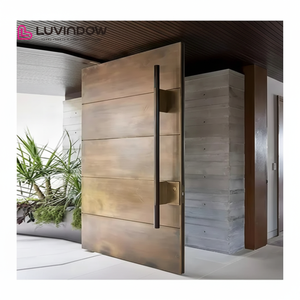
American Style Contemporary Solid Wood Entry Main Entrance Wooden Doors Front Doors for Houses Modern Exterior Main Pivot Door
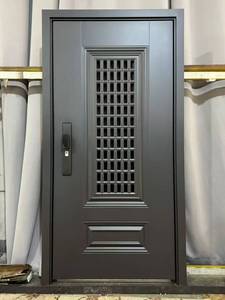
Secure Aluminum Entrance Door, Exterior Door, Aluminum Exterior Door With Smart Lock, Custom Size
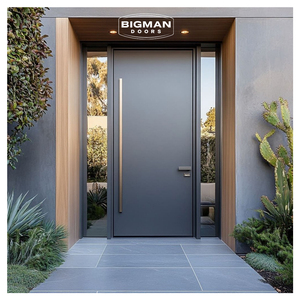
British Modern Minimalist Dark Grey Matte Security Pivot Door Heavy Metal Entry Door Anti-Theft Feature Exterior Villa Kitchen
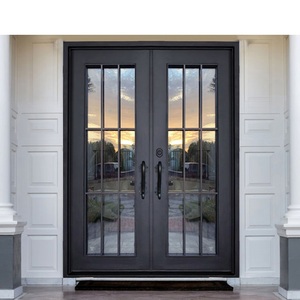
DERCHI Modern Exterior Security Metal Door Custom French Thermaly Broken Wrought Iron Double Entrance Door

Custom Made Aluminum Sliding Door System with Large Panel Glass for Luxury Villa and Resort Hotel Architecture Design
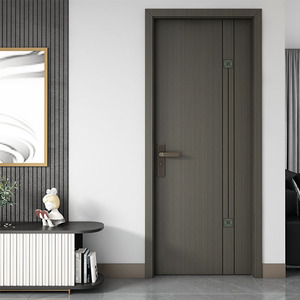
Corrosion Resistant Aluminum Honeycomb Door Complete Fittings Ready to Install for Villa and Mall Use
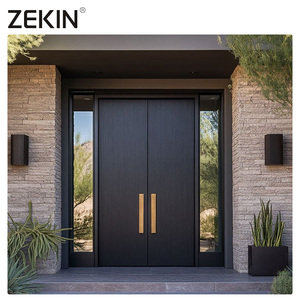
ZEKIN Custom Large Hous Metal Front Entrance Double Door Modern Security Design Armored Aluminum Exterior Door
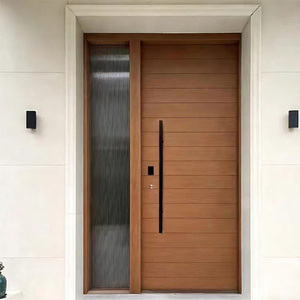
Hot Selling American and Australian Style Main Entrance Aluminum Alloy Safety Door Customized with Pictures
Selecting Reliable Custom OEM Secure Aluminum Front Door Manufacturers
In contemporary residential and commercial architectural projects, the main entrance is no longer merely a point of egress; it represents the primary envelope barrier governing building security, acoustic dampening, and microclimate thermal insulation. As global building energy codes tighten under international frameworks like NFRC, Passive House, and European CE directives, architectural specifiers, real estate developers, and hardware importers are shifting away from traditional wood and unreinforced hollow metal doors toward high-performance thermal break aluminum front door systems.
Selecting a qualified OEM manufacturer requires evaluating comprehensive industrial capabilities—spanning raw 6063-T6 aluminum extrusion processing, automated PA66 polyamide thermal barrier insertion, multi-point lock mechanical testing, and advanced powder-coating surface treatments. This guide outlines key manufacturing criteria, technical material selections, future procurement trends, and essential specifier checklists for global door procurement.
Key Engineering Benchmarks for Secure Doors
- Structural Alloy Grade: Precision extruded 6063-T6 or 6060-T6 architectural aluminum profiles with wall thickness up to 3.0mm.
- Thermal Break Insulation: PA66-GF25 (25% Glass Fiber Reinforced Polyamide) thermal barrier strips preventing thermal bridging.
- Anti-Intrusion Hardware: Multi-point gear-driven lock systems with hardened steel deadbolts rated for EN 1627 RC3/RC4 forced entry protection.
- Corner Joint Technology: Laser cold-welded seams combined with heavy-duty corner keys to prevent sash sag over 25+ years of operational cycles.
- Acoustic Isolation: Insulated aluminum panel cores or double/triple Low-E IGUs achieving sound attenuation up to Rw 44 dB.
Why Partner With Crestor Door Manufacturing Co., Ltd.
A vertically integrated manufacturing system bridging R&D engineering in Beijing with a 100,000 m² smart production base in Dongying, Shandong.
Fully Integrated Fabrication
Founded in 1997, our facility handles profile machining, powder coating, insulating glass unit (IGU) processing, and final assembly under one roof—eliminating vendor fragmentation.
- 160,000 m² combined plant area
- In-house PVDF & anodizing lines
- Single-source quality accountability
Laser Cold-Welded Corners
We deploy advanced laser cold-welding corner assembly technology combined with high-precision CNC machining (tolerances within ±0.05 mm) to ensure lifetime frame squareness.
- 219+ patented technology solutions
- 12 mm sash overlap engineering
- Triple EPDM gasket sealing system
Verified Export Certifications
Our window and entry door assemblies are tested at national window test centers, holding prestigious international licences and quality system validations.
- AS 2047 StandardsMark™ Licence (SMK41686)
- ISO 9001:2015 certified management
- Full CE conformity & NFRC readiness
Future Procurement Trends in Secure Entry Door Manufacturing
Key technological shifts shaping global B2B door sourcing, material specifications, and architectural integration over the next decade.
1. Seamless Smart Lock & Biometric Integration
The market for luxury residential front doors is rapidly transitioning from mechanical keyways to fully integrated smart access hubs. Modern OEM specifications require concealed wiring channels, electromagnetic strikes, 3D facial recognition cameras, motorized multi-point lock actuators, and Tuya/Zigbee/Matter smart home compatibility directly built into the aluminum sash during factory assembly.
2. Ultra-Low U-Value & Passive House Standards
With stringent energy efficiency codes enforced across North America and Europe, entrance doors must eliminate cold bridges. Sourcing preferences are shifting toward door leaves filled with high-density polyurethane (PU) or aerogel insulation cores, paired with multi-chamber thermal breaks. Future-proof front doors must achieve overall thermal transmittance values of U ≤ 0.9 W/m²K.
3. Monolithic & Oversized Architectural Pivot Systems
Architects are favoring grand entrance statements featuring oversized single-leaf pivot doors up to 4 meters in height and 2 meters in width. OEM manufacturers must possess heavy-duty offset pivot hardware capabilities capable of supporting door leaf weights exceeding 300 kg while maintaining effortless finger-touch rotation and airtight weather-sealing.
4. Aluminum Honeycomb Composite Structural Core
Traditional solid wood panels suffer from warping and moisture swelling, whereas solid sheet metal increases weight significantly. The adoption of high-rigidity aluminum honeycomb panel cores bonded between dual structural aluminum skins provides exceptional flatness, thermal resistance, anti-impact protection, and zero warp over extended operational lifespans.
Comparative Performance Matrix: Entry Door Core Technologies
Objective technical evaluation of structural front door materials to assist architectural specifiers and OEM project managers.
| Performance Parameter | Thermal Break Aluminum Honeycomb | Solid Hardwood Door | Hollow Steel Door | UPVC / Composite Door |
|---|---|---|---|---|
| Structural Rigidity & Flatness | Superior (Zero Warp) | Moderate (Prone to swelling) | High (Prone to denting) | Low (Flexes under heat) |
| Thermal Insulation (U-Value) | U ≤ 0.9 - 1.2 W/m²K | U ≈ 1.8 - 2.4 W/m²K | U ≈ 2.2 - 3.0 W/m²K | U ≈ 1.3 - 1.6 W/m²K |
| Weather & Corrosion Resistance | 25+ Yrs PVDF / Anodized | Requires regular sealing | Rusts in coastal air | UV yellowing over time |
| Forced Entry Security Rating | EN 1627 RC3 / RC4 Rated | RC2 Equivalent | RC2 - RC3 Rated | RC1 - RC2 Rated |
| Acoustic Isolation (Soundproof) | Up to Rw 44 dB | Rw 28 - 32 dB | Rw 30 - 35 dB | Rw 32 - 36 dB |
| Smart Hardware Customization | 100% Integrated OEM | Limited retrofit | Surface mount only | Standard multi-point |
End-to-End OEM Custom Production Protocol
How we ensure millimeter-precise compliance from original CAD drawings to export container loading.
Drawings & BOQ Engineering Review
Our technical team reviews architectural elevation drawings, opening schedules, required wind-load thresholds, and target regional energy codes to issue detailed CAD shop drawings.
Sample Validation & Mockup
Buyers can order corner cutaway samples or a full-size operable sample door unit to audit surface finish textures, gasket compression, handle ergonomics, and lock smoothness prior to batch release.
Precision CNC Extrusion Machining
Aluminum profiles are cut and routed on multi-axis CNC machining centers to a tolerance of ±0.05 mm. Thermal break strips and aluminum honeycomb cores are assembled under controlled pressure.
Automated Surface Coating
Components undergo multi-stage pretreatments prior to applying AkzoNobel/PPG powder coatings, PVDF fluorocarbon finishes, or high-definition sublimated woodgrain textures.
100% Quality Inspection
Every assembled front door undergoes rigorous factory acceptance testing (FAT): diagonal squareness checks, water spray testing, lock engagement verification, and optical finish inspection.
Heavy Export Packing & Logistics
Doors are fitted with protective corner guards, wrapped in scratch-resistant protective film, packed into fully enclosed fumigated wooden crates, and loaded into ocean containers.
OEM Secure Aluminum Front Door Sourcing FAQ
Detailed technical responses addressing common inquiries from importers, architects, and project managers.
What drawings or data are required to start a custom OEM door quote?
How do PA66 thermal breaks enhance secure front door energy ratings?
Can we request corner samples or a full-scale sample before bulk production?
What forced-entry security features are incorporated into your front doors?
What is the distinction between OEM and ODM procurement models?
How does laser cold-welding compare to traditional mechanical corner crimping?
Which surface finishes provide maximum longevity in coastal or high-salinity zones?
What international quality test standards do your door products satisfy?
Ready to Specify Your OEM Secure Aluminum Entry Door Project?
Submit your project opening schedule, BOQ, or CAD drawings today. Our senior facade engineering team will review your specifications, prepare shop drawings, and issue a direct factory quote within 24 hours.