Factory-Customized Insulated Aluminum Entry & Storefront Systems
Configured for structural wind loads up to 5.0 kPa, thermal transmittance down to U ≤ 0.9 W/m²K, and precision CNC tolerances under ±0.05 mm for commercial and residential developments.
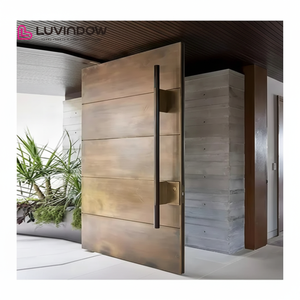
American Style Contemporary Solid Wood & Aluminum Hybrid Pivot Door
- Core: Polyurethane & PA66 Thermal Break
- Pivot: Heavy-duty 300kg concealed bearing
- Application: Luxury Villas & Main Entrances
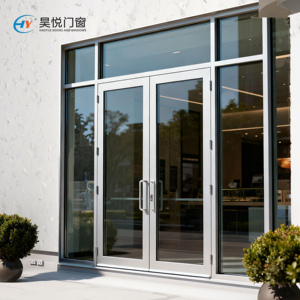
Customized Double Aluminum Alloy Insulated French Glass Entrance Door
- Glazing: Double Low-E Tempered Argon IGU
- Alloy: 6063-T6 multi-chamber profile
- Sealing: EPDM co-extruded compression
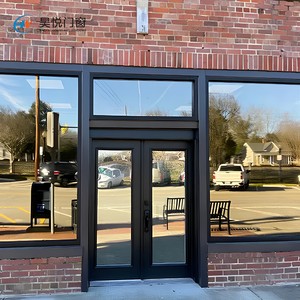
Custom Commercial Heavy-Duty Storefront Entry Door with Continuous Hinges
- Hardware: Geared continuous aluminum hinge
- Glass: 12mm clear safety tempered
- Cycle: Tested to 500,000 opening cycles
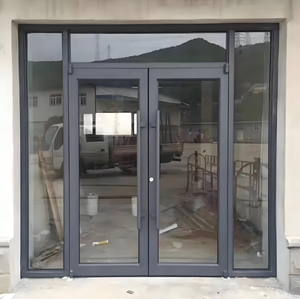
Hurricane Impact Insulated Storefront Glass Door with Smart Glass Tech
- Resistance: 5.0 kPa extreme wind load
- Glass: SGP laminated impact insulation
- Compliance: High Velocity Hurricane Zone
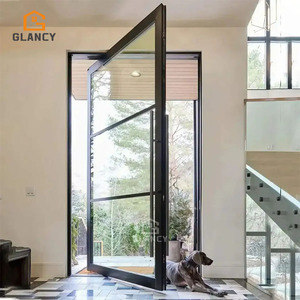
Architectural External Glass Pivot Door for Luxury Residential Villas
- Standard: AS 2047 & CE Certified
- Thermal: PA66 insulated barrier strip
- Size: Custom single panels up to 3500mm
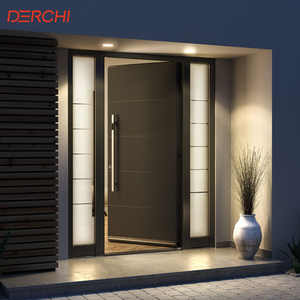
Smart Aluminum Keyless Access Exterior Security Entry Door System
- Locking: Multi-point motorized biometric
- Acoustic: Sound attenuation Rw 42 dB
- Core: Fire-resistant mineral acoustic foam
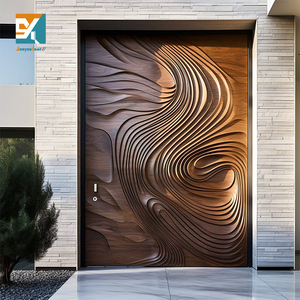
Oversized 3D Architectural Aluminum & Composite Armored Entrance Door
- Finish: Fluorocarbon woodgrain & anodized
- Tech: Laser cold-welded corner seam
- Security: Anti-crowbar continuous rebate
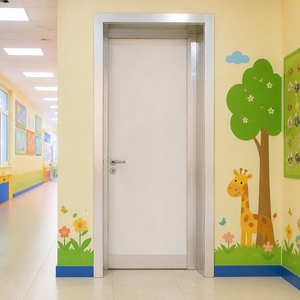
Anti-Corrosion Thermal Break Fire-Rated Aluminum Security Door
- Rating: EI30 / EI60 Fire integrity integrity
- Protection: Seaside-grade powder coating
- Insulation: High-density rockwool core
Thermal Decoupling, Metallurgical Precision, and Building Physics
An engineering analysis of modern custom OEM insulated aluminum entrance systems for architectural contractors, fenestration distributors, and commercial envelope consultants.
The specification of high-performance architectural entryways has transitioned from superficial aesthetic selection to an exacting discipline governed by building physics, thermodynamic efficiency, and structural envelope mechanics. In high-exposure residential envelopes and heavy-footfall commercial facades, standard hollow-core aluminum doors suffer catastrophic thermal bridging, resulting in interior condensation, air leakage, and elevated HVAC cooling/heating cycle loads. Custom OEM insulated aluminum front doors resolve this systemic failure through advanced structural thermal isolation—integrating precision-engineered glass-fiber reinforced polyamide strips (PA66 GF25) that mechanically isolate the exterior aluminum alloy face from the interior structural leaf.
Manufactured in our centralized 160,000 m² smart production base in Dongying, Shandong, our fenestration engineering incorporates proprietary laser cold-welding corner technology. Unlike conventional mechanical corner cleats fastened with crimping screws that loosen under repeated wind-load cyclic deflection, laser cold-welded miters form a continuous molecular metal bond. Coupled with CNC automated machining held strictly within ±0.05 mm tolerances, the resultant structural sash completely neutralizes air leakage, water infiltration, and diagonal sagging across spans as tall as 3,500 mm.
PA66 GF25 Thermal Barriers
Our profiles utilize 24mm to 34mm multi-cavity polyamide struts reinforced with 25% glass fiber. This matches the thermal expansion coefficient of 6063-T6 aluminum (23.2 × 10⁻⁶/K), eliminating shear stress cracking across extreme temperature deltas (-40°C to +80°C).
Triple-Seal Co-Extruded EPDM
Air tightness Grade 8 and Water tightness Grade 6 (700 Pa) are achieved via continuous automotive-grade vulcanized EPDM gaskets. A 12 mm sash overlap with 3-barrier continuous compression lines stops draft turbulence and water penetration at hurricane wind pressures.
Multizone Acoustic Polyurethane
Internal chambers are vacuum-injected with high-density polyurethane (PUR) insulation foam and fire-resistant rockwool. This acoustic decoupling achieves an acoustic dampening capacity of up to Rw 44 dB, neutralizing traffic, airport, and metropolitan noise.
End-to-End In-House OEM/ODM Infrastructure Since 1997
Founded nearly three decades ago, Crestor Door Manufacturing Co., Ltd. operates a vertically integrated production ecosystem. By maintaining proprietary extrusion machining, fluorocarbon PVDF powder coating lines, insulating glass unit (IGU) lamination, and final robotic assembly under one roof, we eliminate subcontractor variances and guarantee traceable quality from billet extrusion to sea freight containerization.
- R&D Center in Shunyi, Beijing
- 200+ Senior Fenestration Engineers
- 219+ Registered National Patents
- AS 2047 StandardsMark™ Licenced
- ISO 9001:2015 Audited QMS
- 100% Pre-Shipment Shop Drawings
Global B2B Procurement Trends Shaping the Aluminum Door Industry
How tier-1 real estate developers, architectural specifiers, and building material importers are adapting to decarbonization codes, supply chain modernization, and automated access.
1. Stringent Whole-Envelope U-Value Limits
Global energy mandates (such as the EU Energy Performance of Buildings Directive and US ASHRAE 90.1) require entrance portals to match wall thermal values. Sourcing is pivoting entirely away from standard non-thermal aluminum toward composite multi-cavity thermal doors achieving whole-unit U-values ≤ 0.9 W/m²K.
2. Factory-Direct Tier-1 OEM Integration
Wholesalers are bypassing trading intermediaries to work directly with integrated plants capable of full-scale custom extrusions. This reduces lead times by 30%, eliminates markups, and provides direct access to structural engineering teams for certified shop drawings and BIM integration.
3. Concealed Motorized Biometric Access
Mechanical deadbolts are rapidly ceding market share to concealed multi-point motorized smart locks. Modern procurement briefs specify 3D facial recognition, biometric capacitive sensors, and encrypted BACnet/Tuya/Zigbee smart building integration directly pre-wired into the insulated leaf.
4. Ultra-Oversized Pivot & Slim Sightlines
Architectural demand for monumental grand entrances has made 3.5m+ oversized pivot doors standard. Sourcing prioritizes offset hydraulic floor springs, balanced axis pivots, and structural carbon-fiber reinforced leaf spars that prevent deflection under seasonal exterior temperature variations.
Engineering Benchmark: Generic Commercial vs. Crestor Insulated System
Certified laboratory metrics evaluated in accordance with GB/T 31433, AS 2047, and international fenestration standards.
| Performance Attribute | Standard Commercial Aluminum | Crestor OEM Multi-Zone Insulated Door | Architectural Impact & Specifier Benefit |
|---|---|---|---|
| Thermal Insulation (Whole Door U-Value) | U ≥ 3.5 to 4.2 W/m²K (Severe heat loss) | U ≤ 0.9 to 1.2 W/m²K Passive Tier | Prevents perimeter thermal bridging, stops interior condensation, and slashes building HVAC energy usage. |
| Corner Joint Construction | Mechanical crimped corner cleats & screws | Laser Cold-Welded Continuous Molecular Fusion | Eliminates diagonal sagging over 30 years; joints remain permanently 100% airtight and hermetically watertight. |
| Structural Wind Load Capacity | 1.5 to 2.5 kPa (Restricted low-rise) | 5.0 kPa (Grade 9 Top Class) | Permits specification in High Velocity Hurricane Zones (HVHZ) and exposed coastal high-rise building facades. |
| Water Tightness Under Driving Rain | 150 to 300 Pa (Prone to storm ingress) | 700 Pa (Grade 6 Top Class) | Engineered sub-sill stepped drainage and 3-stage continuous vulcanized EPDM compression stops rain infiltration. |
| Acoustic Attenuation (Sound Dampening) | Rw 25 - 28 dB (Street noise penetrates) | Up to Rw 44 dB Acoustic Barrier | Multi-density polyurethane foam core and acoustic laminated IGU isolate metropolitan traffic and airport noise. |
| Surface Coating Longevity | Standard industrial powder coat (5-7 yrs) | AAMA 2605 3-Coat PVDF / Qualicoat Seaside | Guaranteed 25+ years resistance against high-salinity marine air, extreme UV blistering, and chalking degradation. |
Technological Horizons: What the Next Era of Entrance Doors Entails
Anticipating engineering milestones across smart vacuum insulating glazing, aerogel composites, and structural metallurgy.
The fenestration sector is experiencing an unprecedented convergence of material science and electronic building envelopes. The next generation of custom insulated aluminum entry systems is actively moving away from traditional thick multi-pane IGUs toward Vacuum Insulated Glass (VIG). By maintaining an internal vacuum pressure below 0.1 Pa separated by micro-spacers, a 10.3 mm VIG unit delivers a center-of-glass U-value of 0.45 W/m²K—outperforming standard 40 mm triple glazing while halving sash weight. This structural weight reduction dramatically alleviates rotational stress on pivot hardware, enabling architects to design seamless 4-meter panels with effortless push-pull ergonomics.
Simultaneously, thermal insulation core fillers are incorporating nanoporous silica aerogels. These aerogel-infused PA66 strips provide thermal conductivity ratings as low as 0.015 W/m·K, virtually cutting frame heat flux to zero without expanding sightline profiles. From a surface longevity perspective, the industry is seeing wide adoption of high-resolution sublimation vacuum wood-grain texturing overlaid with ceramic clear coats. This yields the tactile warmth of walnut, oak, and teak alongside the structural fireproof integrity, moisture resistance, and dimensional stability of 6063-T6 marine-treated aluminum.
Commercial Questions Importers & Contractors Ask Before Ordering
Direct answers based on practical manufacturing workflows, export compliance, and engineering guidelines.
Connect Directly with Factory Fenestration Engineers
Have architectural schedules, opening schedules, or customized project specifications? Bypass sales brokers and consult directly with our technical team in Beijing and Dongying to validate profiles, receive thermal modeling, and get direct factory pricing.