High-Security OEM Door Systems & Custom Configurations
Explore our precision-engineered entrance systems designed for luxury villas, resort hotels, multi-family housing, and high-security commercial projects.

Custom Made Aluminum Sliding Door System with Large Panel Glass for Luxury Villa and Resort Hotel Architecture Design
Ultra-slim architectural sightlines featuring heavy-duty stainless steel rollers, double-glazed Low-E insulated glass, and structural weather-sealing.
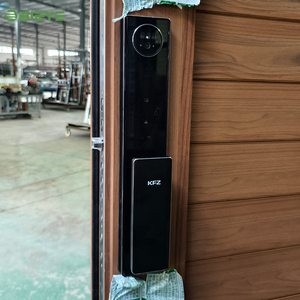
Thermal Break 85 Aluminum Offset Pivot Door Double Glazed Low E Glass for High End House Front Entry Decoration
Engineered with German floor springs, heavy-load offset pivot hinges, multi-point lock mechanisms, and thermal PA66 insulation strips.
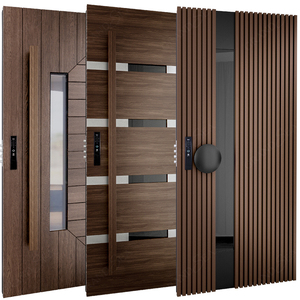
Residential: Exterior Aluminum Security Entrance Door Aluminum Blast Front Door With Security Features For Villas
EN 1627 RC3/RC4 forced entry compliant entrance door reinforced with steel-plate inner core, shear-bolts, and tamper-proof locking cylinder.
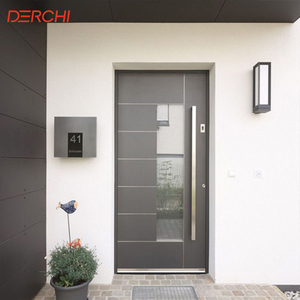
Exterior Aluminum Entry Door Front Door Security Door for Homes Villas and Apartments Custom Size
Versatile OEM customizable entry door featuring corrosion-resistant anodized or PVDF finishes, concealed hinges, and sound barrier core.
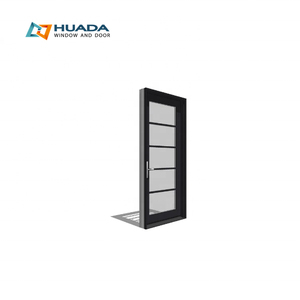
HuaDa CSA Approved Customized Casement Aluminium Alloy Glass Door Exterior Security Entrance Steel Main Doors
Certified for North American and European standards; featuring structural T6 aluminum extrusions, safety laminated glass, and dual EPDM gaskets.
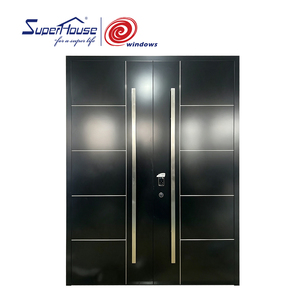
Modern Style Aluminum Double Entry Door Custom Design Exterior Front Door With Smart Lock Long Pull Handle for Luxury Villa
Grand double entry door system integrated with 3D biometric fingerprint recognition, facial scanning smart lock, and vertical LED pull handles.
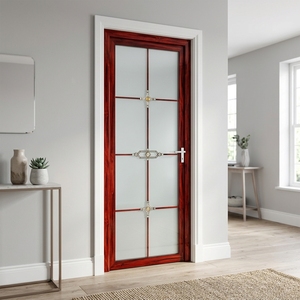
Commercial Classic Style Waterproof Anti Corrosion Aluminum Villa Indoor Use Bathroom Door
Zero-moisture swelling, anti-microbial powder coat finish, frosted privacy tempered glass, and long-life acoustic silent lock latch.
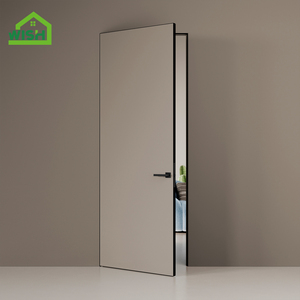
Modern Minimalist Design MDF Finished Soundproof door Door Interior Wood Paint-Free for Living Room Bedroom Apartment Villa Hotel
Paint-free ecological interior door engineered with sound-dampening honey-comb core, moisture-barrier edge banding, and concealed drop-down seal.
Executive Overview: The Evolution of Custom OEM High Security Entry Doors in Modern Architecture
In contemporary architectural engineering, the perimeter entry door is no longer evaluated merely as a decorative physical barrier or building access point. Modern high-rise residential complexes, luxury estates, and high-footfall commercial spaces demand entrance systems that harmoniously combine structural anti-intrusion security, severe weather resistance, passive-house thermal efficiency, and smart IoT automation. As a leading specialized manufacturer operating since 1997, Crestor Door Manufacturing Co., Ltd. has led this industry transition by developing advanced thermal break aluminum profiles, laser cold-welded door frames, and custom OEM/ODM solutions tailored for global B2B procurement networks.
When international buyers—ranging from fenestration distributors and facade contractors to real estate developers—source custom security entry doors from primary OEM factories, the procurement decision hinges on precise engineering metrics rather than superficial design claims. This whitepaper provides a comprehensive technical overview of high-security entrance door manufacturing, analyzing structural metallurgy, forced-entry resistance standards (EN 1627 RC2 to RC4), thermal break mechanics (PA66 GF25 insulation), hardware integration, and global supply chain optimization protocols.
Structural Security & Metallurgy
Manufactured using high-tensile 6063-T6 or 6061-T6 aluminum alloys with minimum wall thicknesses of 2.0mm to 3.0mm, reinforced by internal shear-bolts and steel core armor plates.
Thermal & Acoustic Envelope
Integrated PA66 polyamide thermal barrier strips combined with Low-E triple glazing filled with 90% Argon gas, achieving U-values as low as 0.9 W/m²K and sound reduction up to Rw 44 dB.
Smart Access Control Integration
Concealed wiring tracks for motorized multi-point locking systems, supporting 3D facial recognition, biometric fingerprint scanning, RFID, and smart home automation protocols.
Engineering Deep-Dive: Core Structural & Security Standards
To qualify as a genuine high-security entry door, an assembly must undergo rigorous mechanical testing against violent physical intrusion, tool-assisted prying, and environmental stress. OEM manufacturing at Crestor adheres to international standards including European EN 1627-1630 (Resistance Classes RC2, RC3, and RC4), Australian AS 2047, and North American NFRC/ASTM benchmarks.
1. Anti-Intrusion & Forced Entry Protection (EN 1627 Standard)
Burglar resistance is achieved through a multi-layered defence system embedded directly into the aluminum extrusion profiles and lock housings:
- Resistance Class 2 (RC2): Designed to withstand attacks using simple tools such as screwdrivers, pliers, and wedges for up to 3 minutes of direct contact time.
- Resistance Class 3 (RC3): Features reinforced profile walls, heavy-duty anti-pry pins, and hardened steel plates that resist heavy crowbars, pipe wrenches, and hand drilling tools for over 5 minutes.
- Resistance Class 4 (RC4): Incorporates armored steel insert plates within the aluminum chambers, anti-drill cylinder guards, and high-torque electric multi-point locks designed to defeat experienced intruders using heavy power drills, chisels, and angle grinders.
2. Advanced Metallurgy & Frame Fabrication
Standard architectural aluminum profile walls (typically 1.2mm to 1.4mm) are inadequate for heavy security applications. Crestor's custom OEM entry doors utilize structural extrusions with primary structural wall thicknesses ranging from 2.0mm to 3.5mm. Furthermore, our production facility utilizes proprietary laser cold-welding corner technology rather than traditional mechanical corner cleats. Laser welding eliminates structural flex, prevents diagonal frame sagging over time, and provides an airtight, seamless joint that prevents moisture ingress and corrosion.
Verified Performance Data: Crestor OEM Entry Door Benchmark
The following performance matrix reflects official test laboratory metrics verified by national fenestration testing institutes in accordance with GB/T 31433, AS 2047, and ISO standards:
| Performance Parameter | Tested Laboratory Metric | Certified Grade Level | Engineering Impact on Project Design |
|---|---|---|---|
| Wind Load Resistance | 5.0 kPa (P3 pressure rating) | Grade 9 (Top Class) | Engineered for high-rise facades and coastal storm zones where extreme negative pressure occurs. |
| Water Tightness | 700 Pa static water head | Grade 6 (Top Class) | Prevents water penetration during severe driving rain conditions and hurricane-force storms. |
| Air Tightness | q1 ≤ 0.5 m³/(m·h) | Grade 8 (Top Class) | Eliminates draft air infiltration, significantly reducing building heating/cooling energy loads. |
| Thermal Insulation | U ≤ 0.9 W/m²K (Whole Unit) | Grade 10 (Passive Ready) | Utilizes PA66 thermal strips and Low-E Argon glass units to meet net-zero carbon building standards. |
| Acoustic Isolation | Rw = 44 dB / STC 45 | High Acoustic Grade | Dampens ambient city noise, airport flight paths, and highway traffic sound to interior quiet levels. |
Future Sourcing & Architectural Procurement Trends (2025–2030)
As real estate developers and commercial architects adapt to changing building codes and consumer demands, the global supply chain for entry doors is undergoing four structural shifts. B2B buyers seeking long-term competitive advantage must align their OEM manufacturing partnerships with these industry trends:
Trend 1: Smart Biometric Access & Invisible Hardware Integration
Traditional mechanical keys are rapidly being replaced by integrated smart locking systems. Modern entry door manufacturing requires internal cable routing channels, electromagnetic strike plates, and hidden power transfer hinges. Crestor's engineering team directly integrates leading motorized locks (such as GU, Siegenia, and Hoppe) with biometric access devices (fingerprint scanners, 3D facial recognition modules, and smartphone Bluetooth/Zigbee protocols) during factory assembly, ensuring zero field wiring mistakes.
Trend 2: Ultra-Large Format Pivot Doors & Oversized Glazing
Grand architectural entrances now feature grand single-panel pivot doors exceeding 1.5 meters in width and 3.5 meters in height. Operating these massive panels requires offset pivot hardware engineered to support door leaf weights up to 500 kg without smooth operation decay. OEM manufacturers must employ structural finite element method (FEM) analysis to ensure frame rigidity under immense structural loads.
Trend 3: Net-Zero Carbon & Passive House Compliance
With strict climate regulations taking effect across North America, Europe, and Australia, energy-efficient building envelopes are mandatory. Entry doors must eliminate thermal bridging completely. The future belongs to hybrid profiles that incorporate multi-chamber PA66 GF25 polyamide insulation strips, expanded polyolefin (PE) insulation foams inside aluminum profile cavities, and warm-edge glass spacers.
Trend 4: Fully Customized Agile Supply Chains & Digital Twin CAD/BIM Workflows
Distributors and general contractors no longer accept long static product development cycles. Modern B2B procurement relies on digital workflows where architectural CAD/BIM files are directly converted into automated CNC machining code. Crestor’s digital shop-drawing approval system guarantees 100% dimensional accuracy prior to physical material extrusion, minimizing lead times and eliminating job site rework.
Crestor Enterprise Advantage: World-Class Manufacturing Infrastructure
Founded in 1997, Crestor Door Manufacturing Co., Ltd. has grown from a specialized aluminum processor into a global leader in high-performance fenestration systems. Our operations are divided strategically between our advanced R&D Headquarters in Beijing and our massive 100,000 m² Smart Manufacturing Base in Dongying, Shandong Province.
Unlike assembly-only suppliers who purchase third-party components, Crestor maintains complete vertical integration over every critical phase of manufacturing:
- Aluminum Alloy Profile Extrusion & CNC Machining: Precision multi-axis CNC machining centers guarantee hole-punching, lock-housing milling, and corner mitering tolerances within ±0.05 mm.
- In-House Surface Finishing: Automated PVDF fluorocarbon spraying, powder coating, and anodizing lines offer over 200 custom RAL colors, wood-grain heat-transfers, and high-salinity anti-corrosion sea-front treatments.
- Insulating Glass Processing: Fully automated glass washing, tempering, Low-E coating application, argon-gas filling, and structural silicone sealing occur within controlled cleanrooms.
- System Assembly & Pre-Delivery Rig Test: Every door unit is completely assembled, fitted with specified hardware, and tested for latching smoothness, drop alignment, and seal compression prior to export packaging.
OEM & ODM Collaboration Framework for B2B Partners
Whether you are an established window and door brand looking to expand manufacturing capacity or a project developer requiring custom facade hardware, Crestor provides flexible partnership models tailored to your business goals:
OEM (Original Equipment Manufacturing)
You provide the CAD drawings, system specifications, hardware preferences, and target performance metrics. Crestor manufactures strictly to your design specifications with complete intellectual property (IP) non-disclosure protection.
ODM (Original Design Manufacturing)
Select from Crestor’s extensive library of pre-tested, certified entrance door and window systems. We customize the branding, frame profiles, glass specifications, and private-label export packaging for immediate market distribution.
Frequently Asked Questions (FAQ) for OEM Door Sourcing
What engineering documentation is required to initiate a custom OEM entry door order?
To begin technical evaluation, buyers need only provide architectural elevation drawings, a Schedule of Quantities (BOQ), or raw rough opening dimensions along with target performance requirements (e.g., wind load, U-value, security level). Our engineering team converts your project parameters into detailed 2D/3D shop drawings, hardware allocation lists, and cross-section profiles for written approval prior to tooling or production.
How does Crestor guarantee structural quality control and pre-shipment verification?
Quality control operates under our ISO 9001:2015 certified management system. Every production lot undergoes incoming aluminum alloy composition testing, powder coat thickness adhesion checks, and glass seal dew-point verification. Prior to packing, 100% of finished door units are mounted on inspection test-rigs to verify sash squareness, latch engagement, seal compression, and smooth hardware operation.
Can corner samples or full-scale mock-ups be provided before mass production?
Yes. We strongly encourage sample validation for large-scale commercial or residential developments. B2B clients can request 300mm x 300mm profile corner samples showing thermal breaks and surface finishes, or order a fully functional 1:1 scale sample door to verify aesthetic appearance, lock operation, and structural weight in hand before placing container-level orders.
What international certifications and test reports are available for compliance review?
Crestor holds an Australian AS 2047 StandardsMark™ Licence (Licence No. SMK41686) for our 76M window/door series, ISO 9001:2015 accreditation, and full European CE conformity certification. National accredited test lab reports covering GB/T 31433 wind pressure, air permeability, water tightness, and sound insulation (up to Rw 44 dB) are available in digital PDF format upon request.
What protective packaging standards are used for long-distance ocean freight shipping?
Export door units are packed to withstand heavy sea-freight transit. Each unit features protective blue polyethylene protective film across all metal surfaces, heavy-duty molded rubber corner guards, moisture-absorbing silica gel packs, wrapped in multi-layer bubble film, and secured inside fully enclosed heat-treated fumigation-free plywood crates with internal timber bracing.
What glass configurations and hardware options can be customized?
Glazing choices include double or triple insulated glass units (IGU), Low-E soft coatings, laminated anti-shatter security glass, bullet-resistant glass specs, sound-dampening acoustic PVB interlayers, and tinted or frosted privacy glass. Hardware options encompass German Siegenia, Hoppe, Sobinco, GU, or domestic top-tier locking hardware, handles, hidden hinges, and smart electronic access devices.
Partner with a Primary High-Security Entry Door Manufacturer
Whether you need engineering support for ongoing architectural tenders, custom profile development, or factory-direct pricing for bulk procurement, our engineering sales team responds within 24 hours.
Get Catalog