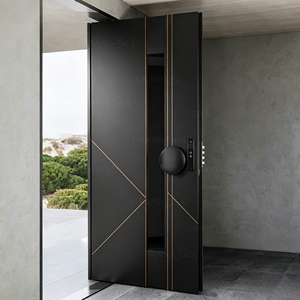
Direct Factory Catalog
Featured Custom Contemporary Front Entry Doors & Systems
Explore high-performance pivot, thermal break aluminum, artistic textured solid wood, and architectural security entry doors manufactured for global OEM/ODM project supply.
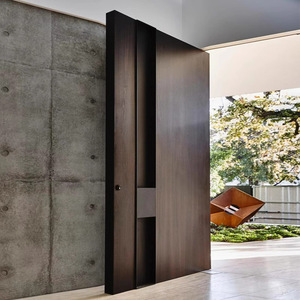
High Security Exterior Main Entrance Doors Customized Made Model Wooden & Aluminum Pivot Front Entry Door
Get a Quote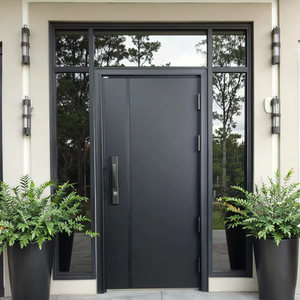
Exterior Gate Door External Door Security Entry Front Door for House External Entrance Exterior Entrance Outdoor Security
Get a Quote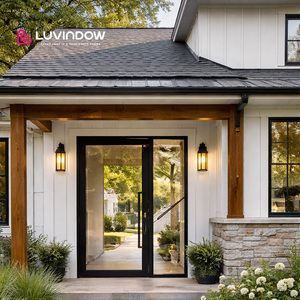
Soundproof Aluminum Glass Exterior Door Tempered Double Glazed Anti-theft For American Residential Project
Get a Quote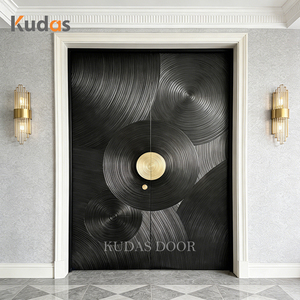
High-End Residential Luxury Artistic 3D Texture Solid Wood Double Entry Door Black Gold Design Exterior Wooden Entrance Door
Get a Quote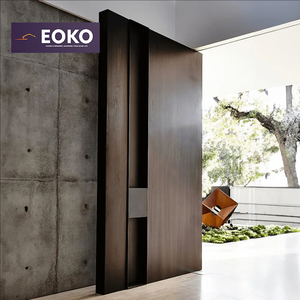
EOKO Custom Wooden Grain Front Entry Main Security Aluminum Decorous Exterior Pivot Door for America House Entrance Doors
Get a Quote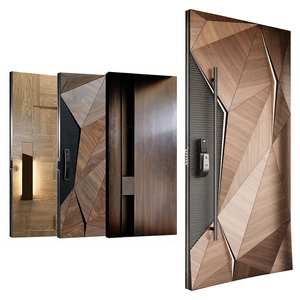
Modern Aluminum Pivot Entrance Door Luxury Villa Security Front Entry Exterior Door Custom Size
Get a Quote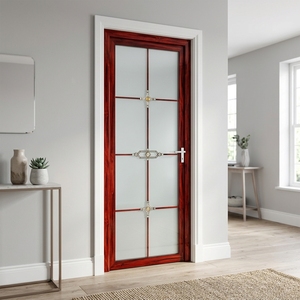
Commercial Classic Style Waterproof Anti Corrosion Aluminum Villa Indoor Use Bathroom Door
Get a Quote1. Executive Whitepaper Overview: The Evolution of Architectural Front Entry Doors
In contemporary luxury residential architecture, high-end commercial real estate, and modern villa construction, the front entry door has evolved far beyond a simple security barrier. It serves as the primary focal statement of the architectural envelope, establishing the emotional tone, security integrity, and environmental insulation efficiency of the entire building structure. As global building codes adopt stringent decarbonization targets and thermal insulation mandates (such as NFRC, CE Mark, and Australian AS 2047 fenestration standards), procurement managers, architects, and real estate developers are shifting away from traditional single-material timber or hollow steel doors toward engineered, multi-material composite systems.
Custom Original Equipment Manufacturer (OEM) contemporary front entry door factories stand at the center of this transformation. Modern OEM entry door manufacturing requires deep integration of metallurgical engineering, precision CNC profile machining, thermal barrier extrusion, advanced surface chemistry (such as PVDF fluoropolymer and electro-sublimated wood grain finishes), multi-point electro-mechanical locking security, and oversized structural pivot hardware capable of supporting leaf weights exceeding 500 kilograms.
Key Market Drivers Shaping B2B Sourcing Intent:
- Structural Oversizing & Architectural Grandeur: Increasing architectural preference for floor-to-ceiling entrance doors with heights exceeding 3,000 mm to 4,000 mm and widths up to 2,000 mm, demanding heavy-duty offset pivot hardware and zero-warpage structural cores.
- High-Performance Thermal Separation: Integration of glass-fiber-reinforced PA66 polyamide thermal break strips into extrusions, enabling whole-door U-factors down to 0.9 W/m²K to prevent thermal bridging in sub-zero and tropical climate zones.
- Acoustic Isolation Requirements: Urban noise pollution abatement standards require multi-chamber seals and laminated dual/triple insulating glass units (IGUs) achieving sound reduction performance up to Rw 44 dB.
- Smart Smart-Home Security Integration: Demand for concealed motorized multi-point locks compatible with biometric fingerprint scanning, RFID access control, and smart home automation protocols (Matter, Zigbee, Z-Wave).
2026–2030 Strategic Horizon
Future B2B Procurement Trends in Custom Entry Door Manufacturing
Insights for volume importers, window brands, and general contractors navigating technical specifications and factory selection.
Thermally Broken Composite Structures
Future-proof procurement prioritizes extruded T6 6063-grade aluminum alloy profiles combined with structural PA66 polyamide insulating strips. This engineering prevents profile deformation, mitigates interior condensation, and ensures structural rigidity under thermal differential pressures.
Concealed Multi-Point Smart Locking
Mechanical keys are rapidly yielding to concealed electronic multi-point lock systems. Importers require OEM factories to pre-wire and pre-machine sashes for European-style mortise locks featuring motorized automatic locking bolts and anti-prying hooks.
Architectural Pivot Hardware Integration
Traditional side-hinged doors face mechanical stress limits at large scales. Heavy-duty concealed floor pivots featuring adjustable closing speeds, hydraulic damping, and 90-degree hold-open functions are becoming mandatory for contemporary villa entry doors.
PVDF Fluoropolymer & Eco Finishes
With coastal weathering and UV exposure degrading standard coatings, buyers now insist on 3-coat PVDF (Polyvinylidene Fluoride) finishes and Qualicoat-certified powder coatings guaranteed against chalking, fading, and salt-spray corrosion for over 25 years.
Digital BIM & CAD Shop Drawing Protocols
Leading OEM factories must offer full parametric BIM/Revit models and shop drawing validation workflows. Pre-production digital twin verification eliminates spatial fitting errors and speeds up architectural sign-offs.
2. Engineering Material Benchmarks for Front Entry Doors
Selecting the optimal material specification depends on project geography, target price point, structural load requirements, and design complexity. The table below compares technical parameters across common architectural entrance door construction methods based on rigorous laboratory testing data.
| Performance Metric | Thermal Break T6 Aluminum | Solid Hardwood (Oak/Teak) | Aluminum-Wood Composite | Structural Steel Plate |
|---|---|---|---|---|
| Structural Tensile Strength | 230–260 MPa | 45–90 MPa | 180–220 MPa | 350–450 MPa |
| Thermal Transmittance (U-Value) | 0.9 – 1.4 W/m²K | 1.6 – 2.2 W/m²K | 0.8 – 1.2 W/m²K | 2.8 – 4.5 W/m²K |
| Moisture Expansion / Warpage Risk | Zero (0.0%) | High (3.5%–6.0%) | Low (< 0.5%) | Zero (Corrosion Risk) |
| Wind Load Resistance Class | Grade 9 (5.0 kPa) | Grade 5 (3.0 kPa) | Grade 8 (4.5 kPa) | Grade 9 (5.0 kPa) |
| Acoustic Isolation Rating (Rw) | 38 – 44 dB | 30 – 35 dB | 40 – 46 dB | 32 – 38 dB |
| Maintenance & Recoating Cycle | 25+ Years (PVDF) | 2 – 5 Years | 10 – 15 Years | 5 – 8 Years |
*Data synthesized from tested configurations under national fenestration standards (GB/T 31433, AS 2047, and ISO 9001 quality validation benchmarks).
Why Partner With Crestor
Crestor Door Manufacturing Co., Ltd.
Founded in 1997, Crestor operates a premier 160,000 square meter smart manufacturing base in Dongying, Shandong, backed by a dedicated R&D engineering center in Beijing. With nearly 30 years of specialized fenestration production, our integrated facility handles profile extrusion machining, laser cold-welding corner assembly, powder coating, insulating glass processing, and final assembly under one unified quality management system.
- ISO 9001:2015 Certified System
- AS 2047 Licence SMK41686
- CE Conformity & NFRC Ready
- 219+ Granted Patents
- 200+ Experienced Engineers & Staff
- Laser Cold-Welded Seamless Corners
3. OEM Custom Manufacturing & Quality Control Workflow
Executing zero-defect custom orders for high-value architectural doors requires strict adherence to standardized manufacturing gates. Below is our engineered six-stage production workflow designed to eliminate communication errors, guarantee dimensional accuracy to ±0.05 mm, and ensure safe international delivery.
01
Drawing & BOQ Review
Our engineering sales team evaluates architectural drawings, Bill of Quantities (BOQ), and wind-load calculations to determine profile wall thickness, glass build-up, and hardware suitability.
02
Shop Drawing Sign-Off
Pre-production CAD shop drawings detailing profile cross-sections, thermal barrier locations, glass rebates, and anchor positions are submitted for architect and buyer sign-off.
03
Sample Validation
Corner samples or full-size prototype doors are assembled for verification of surface finish, grain matching, corner weld integrity, and seal compression before mass fabrication.
04
In-House CNC Machining
Profiles undergo automated CNC cutting, milling, and laser cold-welding. Thermal break PA66 strips and multi-chamber EPDM weather gaskets are installed along with Low-E IGUs.
05
Quality Inspection
Every finished door unit undergoes dimensional verification, water tightness spray testing, diagonal squareness tolerance checks, and hardware cycle testing prior to packing.
06
Heavy Export Packaging
Doors are fitted with reinforced corner protectors, wrapped in scratch-resistant protective film, and packed into fumigated steel-belted plywood crates for sea freight protection.
Buyer Knowledge Base
Frequently Asked Questions by B2B Entry Door Buyers
Technical guidance and sourcing solutions for global importers, window brand OEMs, and project developers.
What architectural details are required to initiate a custom door quote?
To provide an accurate technical proposal and bill of materials (BOM) quote, we require wall opening dimensions (width x height), structural wall depth, target thermal insulation (U-value) or glass specifications, desired hardware configuration (pivot vs. hinge, manual vs. electronic multi-point lock), surface finish preferences, and any local building code requirements (e.g., AS 2047, CE Mark, or NFRC rating).
How do custom aluminum pivot doors perform against wind and water infiltration?
Our engineered contemporary pivot entry doors feature a continuous three-seal EPDM rubber gasket system combined with drop-down automatic bottom seals. When tested at China's national fenestration test centers, our high-end entrance door systems achieved Grade 9 wind load resistance (up to 5.0 kPa pressure) and Grade 6 water tightness (700 Pa rating), preventing leaks even under extreme storm conditions.
What is the difference between your OEM and ODM customization services?
Under our Original Equipment Manufacturing (OEM) service, buyers provide custom extrusion profiles, proprietary drawings, and specific hardware sets, which we fabricate under strict IP non-disclosure agreements. Under our Original Design Manufacturing (ODM) service, clients choose from our pre-tested, certified product library (including pivot, bi-fold, and sliding door models) and customize finishes, glass configurations, handles, and private-label branding for rapid market entry.
Can you supply entrance doors with wood grain finishes suitable for severe outdoor climates?
Yes. For projects requiring the warmth of timber without the maintenance or warpage risks, we utilize vacuum heat-transfer sublimation technologies combined with weather-grade outdoor powder coatings. This process embeds real wood texture deep into the anodized or powder-coated aluminum substrate, creating a UV-resistant, scratch-resistant surface that requires zero repainting or oiling.
What glass options are integrated into your contemporary glass entry doors?
We process insulating glass in-house using toughened safety glass meeting international standards (ANSI Z97.1, EN 12150). Available configurations include double or triple-pane Low-E insulated glass filled with 90%+ argon gas, laminated burglar-resistant security glass (PVB/SGP interlayers), frosted/acid-etched privacy glass, and tinted ceramic-fritted architectural glass.
How does your factory ensure safe ocean container shipping without transport damage?
All finished entry doors are wrapped in protective polyethylene scratch film, fitted with impact-absorbing rubber corner guards, and fully encased in custom-built fumigated plywood crates. Crates are loaded into ocean containers using specialized heavy-duty nylon webbing and timber bracing to prevent shifting or vibration damage during sea freight transit.
Ready to Request Shop Drawings & OEM Factory Pricing?
Connect directly with our engineering sales team. Submit your architectural CAD drawings, BOQ, or project parameters for an immediate technical evaluation and transparent factory-direct pricing quote.