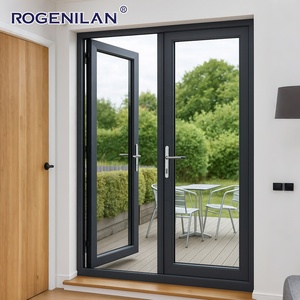
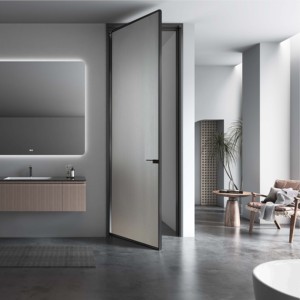
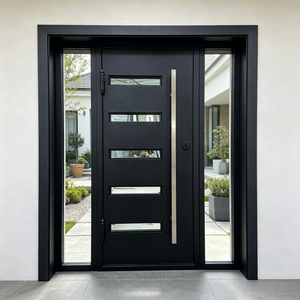
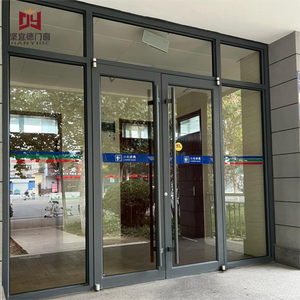
Featured Wholesale Modern Glass Front Doors
Engineered for architectural projects, residential luxury villas, and commercial entrances. Every unit is manufactured with precision thermal break extrusions, safety tempered glazing, and multi-point locking hardware.
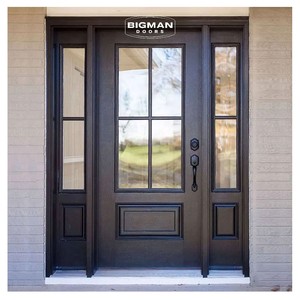
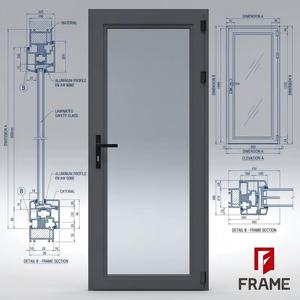
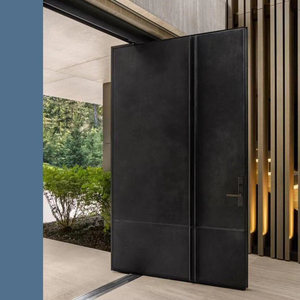
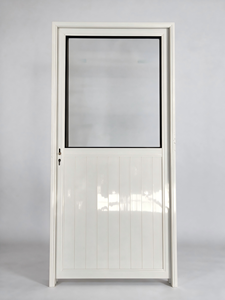
Sourcing Modern Glass Front Doors: Engineering Standards & Market Dynamics
In contemporary architectural design, the main entry portal serves as both the visual centerpiece of a structure and its primary defense against environmental elements. The global shift toward minimalist aesthetics, paired with stringent building energy codes (such as NFRC in North America, CE EN 14351-1 in Europe, and AS 2047 in Australia), has transformed the manufacturing specifications for exterior glass front doors. Sourcing directly from certified Chinese OEM/ODM factories allows international developers, wholesalers, and general contractors to reconcile high design demands with cost-efficient project execution.
Structural Load
Tested up to Grade 9 wind pressure (5.0 kPa) under GB/T 31433, preventing frame deflection in coastal hurricane zones and high-rise applications.
Thermal envelope
Whole-door U-values as low as ≤ 0.9 W/m²K achieved via low-emissivity argon-filled double/triple insulating glass units (IGUs).
Security & Hardware
Integrated multi-point gear locking mechanisms, anti-burglary pin hinges, and options for biometric access integration.
Crestor Door Manufacturing Co., Ltd.: Complete In-House Control
Founded in 1997, Crestor Door Manufacturing Co., Ltd. has grown from a specialized aluminum profile fabricator in Beijing into a premier global fenestration powerhouse. Operating a state-of-the-art 100,000 m² (part of a 160,000 m² total manufacturing footprint) smart production base in Dongying, Shandong, Crestor eliminates supply chain vulnerabilities by executing profile extruding, powder coating, IGU glass processing, laser cold-welding, and final door assembly entirely in-house.
| Manufacturing & Test Metric | Certified Performance Grade | Technical Specification & Standard | Project Value for Global B2B Buyers |
|---|---|---|---|
| Wind Load Resistance | Grade 9 · 5.0 kPa | Tested to GB/T 31433 & AS 2047 requirements | Eliminates structural failure risk in extreme coastal high-wind environments. |
| Water Tightness | Grade 6 · 700 Pa | Continuous EPDM triple-gasket perimeter seal | Prevents wind-driven rain penetration and costly interior moisture claims. |
| Air Infiltration Rate | Grade 8 Top Class | 12 mm frame-to-sash seal overlap design | Maximizes HVAC energy efficiency and meets strict Passive House standards. |
| Acoustic Isolation | Up to Rw 44 dB | Asymmetric laminated double/triple IGU glass | Dampens exterior traffic, airport, and urban noise in luxury residential developments. |
| Machining Precision | ±0.05 mm CNC | German-imported multi-axis CNC machining centers | Ensures perfect frame squareness, effortless pivot operation, and zero air gaps. |
R&D Engineering Depth
Headquartered in Beijing, Crestor’s engineering department holds over 219 patented technologies. Every custom order is verified via detailed CAD/BIM shop drawings prior to raw material cutting, eliminating on-site fitting discrepancies.
Export Accreditation
Crestor holds an active AS 2047 StandardsMark™ Licence (SMK41686) for flagship systems, ISO 9001:2015 Quality System Certification, and full CE conformity for European Union building code compliance.
Protection & Packaging
Heavy-duty export packaging features custom corner guards, scratch-resistant film wrap, and fumigated timber crating built for international ocean container transit.
Future Procurement Trends in Wholesale Glass Front Doors
As global architectural trends evolve toward seamless indoor-outdoor living and zero-carbon building footprints, procurement managers must anticipate technological and regulatory shifts. Below are the key procurement trends reshaping the B2B glass door market over the next decade.
1. Oversized Pivot Systems
Demand for grand entrance doors exceeding 3 meters in height and 1.8 meters in width is accelerating. Procurement is shifting toward heavy-duty aluminum pivot doors equipped with floor-concealed hydraulic self-closing mechanisms capable of carrying door sashes weighing up to 500 kg smoothly.
2. Low-Carbon Aluminum
Environmental Product Declarations (EPDs) are becoming mandatory in Western jurisdictions. Buying entities are prioritizing factories that utilize hydro-powered aluminum smelting and recycled aluminum billets (such as 6063-T5/T6 alloys) to satisfy LEED and BREEAM sustainability ratings.
3. Smart Glass Integration
The integration of switchable Polymer Dispersed Liquid Crystal (PDLC) privacy glass and electrochromic solar-control glazing into front entry doors allows occupants to alter glass opacity instantly via home automation networks, eliminating the need for traditional blinds.
Technological & Design Evolution in Glass Entry Doors
Modern manufacturing is breaking through traditional trade-offs between visual glass expanse and thermal isolation. Key engineering innovations developed at China's leading fenestration hubs are resetting industry benchmarks.
Laser Cold Fusion Welding
Replaces mechanical corner cleating with automated laser welding. Creates seamless frame corners without visible miter joints, drastically enhancing frame squareness, waterproofing, and surface powder coating uniformity.
Vacuum Insulating Glass (VIG)
Emerging as the ultimate glazing upgrade, VIG replaces gas-filled spaces with a 0.1 mm high-vacuum gap. This allows a slim 8.3 mm glass panel to deliver thermal performance equivalent to a 1.5-meter-thick solid brick wall (U-value 0.60 W/m²K).
Architectural PVDF Coatings
Advanced Fluoropolymer (PVDF) electrostatic surface treatments provide exceptional salt-spray, UV, and scratch resistance, ensuring anodized and metallic door finishes maintain color fidelity for over 25 years in harsh marine climates.
Frequently Asked Questions for B2B Importers & Contractors
Direct answers to crucial commercial, technical, and logistical questions encountered during overseas sourcing of custom glass front entry doors.
What technical data must be provided to initiate a factory quotation?
To receive an accurate shop drawing and quotation, buyers should provide structural wall opening dimensions (width x height), structural wind load requirements, target U-value or glass specification (e.g., 6mm Low-E + 12Ar + 6mm Clear Tempered), frame color preference (RAL or PVDF code), and hardware lock specifications. CAD architectural elevation drawings accelerate the quotation process significantly.
How do OEM and ODM sourcing models differ for door importers?
Under the OEM model, Crestor manufactures entry doors strictly according to your proprietary CAD designs, custom die-extrusion profiles, and brand-specific hardware configurations under strict IP non-disclosure agreements. Under the ODM model, clients select pre-engineered, fully certified door systems from Crestor’s proven product library, customized with private-label logo branding and customized packaging for rapid market deployment.
How is quality verified prior to mass production container loading?
Quality assurance follows a rigorous 3-step verification process: First, corner samples or a full-scale prototype unit are built and validated for hardware operation, seal compression, and finish consistency. Second, during mass assembly, digital coordinate measuring machines verify CNC frame tolerances within ±0.05 mm. Third, pre-shipment water tightness testing and random IGU dew-point testing are conducted on factory test rigs.
Which international fenestration standards do Crestor doors meet?
Crestor’s entry systems are configured to meet target market regulations globally. Key accreditations include Australia’s AS 2047 (SMK41686 Licence) for structural wind load and water penetration, European CE EN 14351-1 conformity, ISO 9001:2015 quality management certification, and system options configured to satisfy North American NFRC energy performance and thermal transmittance targets.
What is the typical production lead time and ocean packaging protocol?
Standard factory production lead time is 25 to 35 days following CAD shop drawing approval and deposit receipt. For export transport, every door panel is wrapped in protective PE anti-scratch film, corner-shielded with high-density EPE foam guards, and packed inside fully enclosed fumigated plywood crates equipped with interior tie-down straps to prevent ocean freight shifting.
Can custom glass coatings and heavy hardware be specified?
Yes. Custom glass configurations include double/triple glazed Low-E, acoustic laminated interlayers (PVB/SGP), self-cleaning titania coatings, tinted solar-control glass, and frosted privacy patterns. Hardware options encompass German-engineered GU/Hoppe/ROTO multi-point locks, invisible hydraulic hinges, and smart electronic keypad/biometric handles.
Ready to Partner with China's Premier Entry Door Manufacturer?
Connect directly with Crestor’s engineering sales team to request CAD shop drawings, factory-direct wholesale pricing, or technical product samples for your upcoming residential or commercial development.
Inquire Now