Engineering-Grade Entry Door Systems
Direct factory configurations for luxury villas, commercial developments, and high-security architectural projects worldwide.
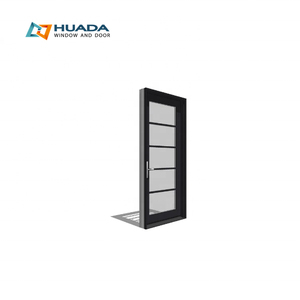
HuaDa CSA Approved Customized Casement Aluminium Alloy Glass Door Exterior Security Entrance Steel Main Doors
Contact Us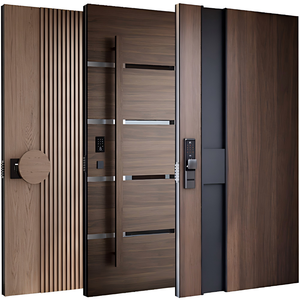
Chinese High-end Brands Armored Metal Security Front Door Security Aluminum Pivot Door Bulletproof Anti Theft Main Door
Contact Us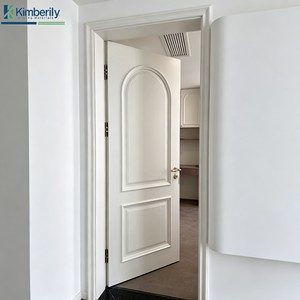
European Standard French Design Thermal Break Aluminum Alloy Casement Door For Outdoor Villa Apartment And Warehouse
Contact Us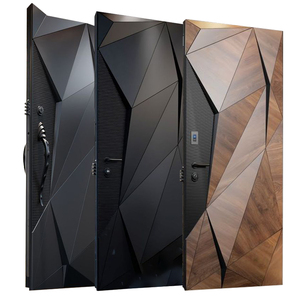
Hot Sale Custom Luxury Design Front Entry Stainless Steel Security Door Modern Aluminum Home Door for Villas
Contact Us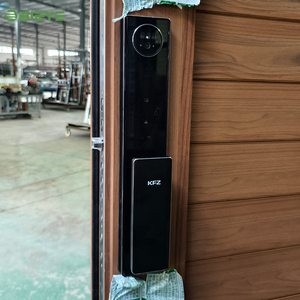
Thermal Break 85 Aluminum Offset Pivot Door Double Glazed Low E Glass for High End House Front Entry Decoration
Contact Us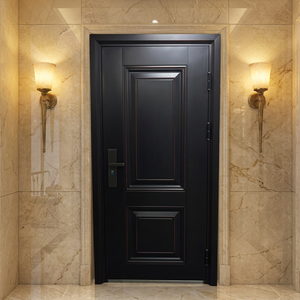
Luxury Cast Steel Anti-Theft Security Door Bulletproof Explosion Proof Villa Exterior Main Entry Door Custom Finished
Contact Us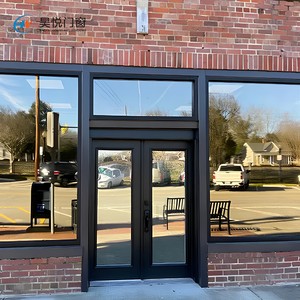
Custom Design Glass Commercial Entry Door Aluminum Alloy Store Front Aluminum Tempered clear Glass Continuous Hinges Front Door
Contact Us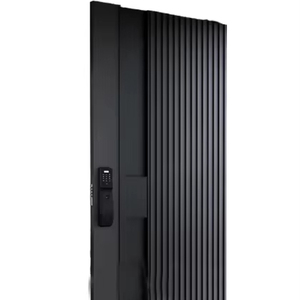
BST Ex-01 Modern Aluminium Anti-Theft Security Exterior Entry Door with 5 Year Warranty for Residential & Hotel Use
Contact UsThe Evolution of Architectural Entrance Systems: Why China Pivot Front Doors Lead Global B2B Sourcing
An in-depth evaluation of structural integrity, thermal break mechanics, and security engineering in contemporary fenestration manufacturing.
In modern high-end architectural design, the entry door has transitioned from a simple structural partition into a primary design statement and high-performance building envelope component. Among all exterior entrance typologies, oversized aluminum pivot front doors have emerged as the gold standard for luxury residential estates, boutique hotels, and landmark commercial headquarters. Unlike conventional butt-hinged doors that transfer structural weight entirely to the lateral side frame, pivot entrance doors rotate on a offset vertical axis mounted at the top head and bottom floor sill. This fundamental mechanical shift allows architects to specify single-panel doors exceeding 3.5 meters in height and 2.2 meters in width, with panel weights upwards of 400 kilograms operating with effortless fingertip motion.
China's manufacturing ecosystem for specialized doors has undergone a technological revolution. Leading enterprise facilities—such as Crestor Door Manufacturing Co., Ltd., operating from a 160,000 m² smart manufacturing base in Dongying and an advanced engineering center in Beijing—have elevated domestic manufacturing to meet stringent international building codes including Australia's AS 2047, North America's NFRC testing, and European CE compliance. By integrating continuous vertical supply chain capabilities—spanning raw aluminum profile machining, in-house powder coating, automated double/triple insulating glass processing, and robotic assembly—Chinese manufacturers deliver precision engineering at competitive direct-factory price points.
Structural Mechanics & Offset Axis Engineering
The core structural advantage of a premium pivot door lies in its load-bearing hinge architecture. Standard hinges suffer from gravity-induced deflection over time when supporting wide heavy panels. Heavy-duty pivot systems engineered in China incorporate hydraulic bottom pivot boxes with adjustable closing speed, latching action, and 90-degree hold-open functions. These hinges are anchored directly into the structural concrete slab, transferring vertical dead loads directly into the sub-floor structure rather than exerting twisting torque on the side jambs. Coupled with CNC precision machining to ±0.05 mm tolerances, the frame alignment maintains perfect reveal gaps across decades of continuous operation.
Factory Direct Capabilities & Structural Superiority
Why leading global architects, developers, and door brand importers partner with China's top pivot door manufacturing facilities.
Vertical In-House Manufacturing
From aluminum profile extrusion and CNC machining to PA66 thermal barrier insertion and IG units production, 100% of core processes happen inside our owned 100,000+ m² facilities, eliminating vendor markups and subcontractor delays.
Laser Cold-Welding Technology
Utilizing patented laser cold-welding corner assembly technology across profile joints. This creates monolithic structural corner strength, preventing seam expansion, joint leakage, and finish degradation under severe wind stress.
Certified National Test Center Results
Independently tested at China's national fenestration centers, achieving top-class performance under GB/T 31433: 5.0 kPa Wind Load Resistance (Grade 9), 700 Pa Water Tightness (Grade 6), and Air Tightness Grade 8.
PA66 Thermal Break Insulation
Engineered with high-density PA66 polyamide thermal barrier strips breaking cold bridges across interior and exterior profile faces. Achieves whole-window U-values down to U ≤ 0.9 W/m²K for Passive House targets.
Complete OEM/ODM Private Labeling
Comprehensive engineering drawing services (CAD/BIM), custom profile die extrusion, specialized surface finishes (PVDF, anodized, architectural powder coating, fine wood grain transfer), and customized export packaging.
Performance Specifications & Testing Matrix
Standardized test data derived from national window & door testing centers under GB/T 31433 and international benchmarks.
| Performance Metric | Tested Benchmark Result | National Standard Grade | Application Significance for Buyers |
|---|---|---|---|
| Wind Load Resistance | P3 = 5.0 kPa | Grade 9 (Highest) | Resists storm-force wind pressures on exposed coastal villas and high-rise structures without permanent frame deflection. |
| Water Tightness | ΔP = 700 Pa | Grade 6 (Highest) | Prevents wind-driven rainwater ingress even under extreme horizontal storm conditions. |
| Air Infiltration Tightness | q1 ≤ 0.5 m³/(m·h) | Grade 8 (Top Class) | Eliminates energy-robbing drafts, ensuring compliance with strict building envelope air-tightness codes. |
| Thermal Transmittance (U-Value) | U ≤ 0.9 W/(m²·K) | Grade 10 (High Efficiency) | Paired with Low-E triple glazing & argon fill to drastically reduce HVAC operational energy expenditure. |
| Acoustic Damping (Sound Reduction) | Rw = 44 dB | Acoustic Grade | Dampens high-frequency urban traffic, airport, and environmental ambient noise for interior tranquility. |
Product Development Trends in High-End Pivot Front Doors
Key technological advancements shaping the next generation of luxury residential and commercial entrance systems.
1. Biometric & Smart IoT Access Integration
Modern luxury entry doors are quickly moving past traditional mechanical keys. Modern pivot entrance systems manufactured in China are built to integrate motorized multi-point locks seamlessly connected with 3D facial recognition, hidden fingerprint scanners embedded in flush pull handles, keypad access, and smart home automation systems (Zigbee, Z-Wave, KNX). Power and signal lines are routed invisibly through the pivot hinge pin, ensuring clean visual lines without exposed cabling.
2. Multi-Material Armor & Explosion-Proof Composites
High-net-worth residential projects increasingly request armored security profiles without sacrificing aesthetic refinement. Modern production combines heavy-gauge extruded aluminum outer skins (6063-T6 or 6060 alloy) with interior armor-grade steel core plates, bullet-resistant ceramic layers, and high-density polyurethane thermal insulation cores. The result is a door panel providing EN 1627 RC3/RC4 burglar resistance and UL 752 bulletproof performance wrapped in sleek anodized metallic or natural stone skin.
3. Thermally Broken Slim Frame Profiles
Historically, large pivot doors suffered from high thermal loss due to massive frame aluminum mass. Next-generation designs feature ultra-slim sightlines with multi-chamber thermal breaks utilizing fiberglass-reinforced polyamide (PA66 GF25) strips. Coupled with warm-edge glass spacers and argon-filled Low-E double or triple laminated safety glass, modern pivot doors satisfy low-energy building codes across cold North American and European climates.
4. Concealed Drop-Down Weather Sealing Systems
Because pivot doors swing across a central axis, conventional perimeter weatherstripping can bind against the floor threshold. Leading Chinese manufacturers solve this with automatic concealed drop-down air/water gaskets embedded in the top and bottom panel edges. When the door closes, a mechanical plunger against the frame triggers spring-loaded EPDM double seals that drop down to seal tightly against the sill, achieving water tightness levels up to 700 Pa.
Future Sourcing Trends for B2B Importers & Contractors
Navigating international fenestration supply chains: Quality assurance, lead time optimization, and compliance management.
As global construction timelines shrink and energy compliance codes tighten, foreign buyers—ranging from regional door distributors and window brands to master general contractors—are fundamentally altering their procurement models with Chinese manufacturers. Key market dynamics include:
1. Shift Toward "Design-Ready" Engineering & BIM Integration
Importers no longer accept generic off-the-shelf product catalogs. Buyers demand full shop drawing support (CAD elevation, floor plans, horizontal/vertical installation section details) within 48 to 72 hours of inquiry. Leading Chinese manufacturers now integrate 3D BIM modeling into their preliminary engineering workflow, allowing general contractors to drop accurate door assemblies straight into project Revit models for clash detection prior to production approval.
2. Demand for Pre-Assembled Modular Tested Units
On-site labor costs in North America, Western Europe, and Australia have reached historic highs. To mitigate field installation errors and minimize job-site assembly hours, B2B procurement is shifting toward completely pre-hung unitized pivot door kits. Frames are pre-drilled, hardware pivots pre-calibrated, drop seals pre-tested at the factory, and panels packaged in steel-reinforced ocean freight wooden crates. Upon delivery, installation crews simply anchor the outer frame, drop the panel onto the lower pivot spindle, and micro-adjust alignment bolts.
3. Carbon Compliance & Sustainable Material Transparency
With environmental regulations like Europe's CBAM (Carbon Border Adjustment Mechanism) gaining traction, international real estate developers require Environmental Product Declarations (EPD) for architectural aluminum products. Tier-1 manufacturers in China are incorporating low-carbon recycled aluminum extrusion billets, eco-friendly solvent-free powder coatings, and energy-efficient factory operations, ensuring procurement compliance with global green building standards such as LEED and BREEAM.
Frequently Asked Procurement & Technical Questions
Direct answers addressing project specifications, factory capabilities, shipping security, and warranty support.
What technical drawings or project details are required to get an accurate manufacturing quote?
To provide an exact engineering estimate and profile recommendation, our technical team requires: 1) Rough opening dimensions (width x height x frame depth), 2) Preferred door operation (offset pivot, center pivot, casement swing), 3) Glass specifications (double glazed Low-E, laminated security glass, frosted or tinted finish), 4) Target performance standards (wind load requirements, acoustic dB ratings), and 5) Architectural elevation drawings or BOQ (Bill of Quantities) if available. If formal architectural drawings are not yet finalized, structural opening dimensions are sufficient for our engineers to issue preliminary shop drawings.
How do pivot entry doors achieve weather sealing and water tightness against severe rain?
Unlike standard casement doors with continuous perimeter rebated gaskets, pivot doors require specialized engineering due to their rotating axis. Our pivot doors utilize a dual-defense sealing strategy: 1) Multi-layer EPDM rubber compression seals running along the vertical jambs, and 2) High-performance automatic drop-down bottom weather seals. When the door panel reaches the fully closed position, an internal mechanical actuator engages, extending dual EPDM seal blades firmly against the recessed floor sill to block wind-driven rain up to 700 Pa water tightness grade.
Can I order a sample or sample corner before placing a high-volume project order?
Yes. We strongly encourage quality verification prior to mass production. We offer two sample validation paths: 1) Structural Profile Corner Samples showcasing profile cross-sections, PA66 thermal breaks, surface finishes, corner laser cold-welding joints, and glass seal assemblies, or 2) Full-Scale Prototype Doors built to your custom size and hardware spec. Full prototype units allow your project team to audit hinge operation, keyless locking integration, finish quality, and packaging integrity prior to bulk container loading.
What is the distinction between your OEM and ODM production models?
With our **OEM (Original Equipment Manufacturer)** service, you supply proprietary profile dies, hardware specifications, and design guidelines; we manufacture strictly to your intellectual property standards under non-disclosure protection. With our **ODM (Original Design Manufacturer)** service, you leverage our pre-tested, certified product library (such as our AS 2047 certified 76M system or 85 series thermal break pivot doors); we customize dimensions, surface colors, glass builds, branding logos, and custom export crating under your private brand label for a fast, cost-effective market launch.
What certifications are available to verify door system quality for export markets?
Our manufacturing systems operate under **ISO 9001:2015** quality management certification. Our core thermal break window and door series hold official **AS 2047 StandardsMark™ Licenses (SMK41686)** verified for Australia and New Zealand. Additionally, product lines can be engineered and certified to meet European **CE compliance** and North American **NFRC/AAMA** thermal and structural standards upon project request. Complete national laboratory test reports covering wind load (5.0 kPa), water resistance (700 Pa), and acoustic insulation (Rw 44 dB) are available for compliance review.
How are oversized glass pivot doors packaged to prevent damage during ocean transit?
Export packaging is engineered for rough ocean shipping conditions. Every door panel is encased in scratch-resistant protective film, fitted with high-density EPDM corner guards, and wrapped in moisture-barrier bubble wrap. Heavy oversized units are packed inside fully enclosed, fumigated solid wooden crates or reinforced steel-frame crates equipped with internal rubber-cushioned tie-down straps. Crates are sized specifically for seamless side-loading or end-loading into 20GP or 40HQ shipping containers, preventing lateral movement during sea transit.
Ready to Elevate Your Architectural Door Sourcing?
Connect directly with our engineering sales office in Beijing and smart manufacturing facility in Shandong. Receive detailed shop drawings, technical specifications, and factory-direct pricing within 24 hours.
Contact Us