Featured High-Performance Pivot & Entry Door Systems
Engineered for luxury residential, commercial storefronts, and high-security architectural openings. Available for custom OEM/ODM fabrication.
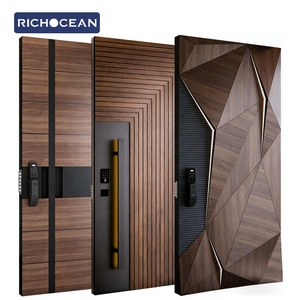
Richocean Luxury Bulletproof Lamborghini Front Entry Door Aluminum Storm Security Voordeur Residential Doors
Get Catalog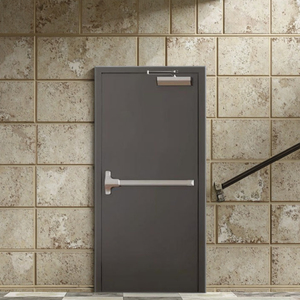
Front Door Workshop Commercial Security Single Explosion Fireproof Cast Aluminum Steel Door Hollow Metal Modern Finished
Get Catalog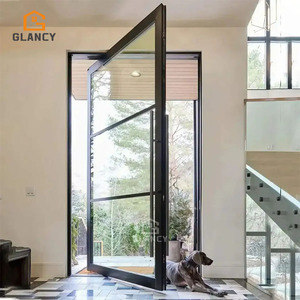
Customized Size Modern Pivot Doors Aluminium External Glass Door Single Patio Door Glass Outdoor For Houses Villa US Australia
Get Catalog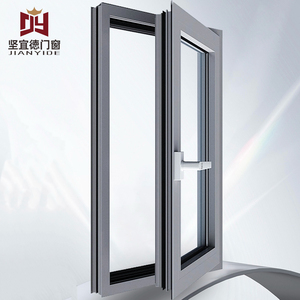
OEM ODM Manufacturer's Modern Double Glazed Security Aluminum Swing Windows & Doors Windproof Feature For Home/Apartment Use
Get Catalog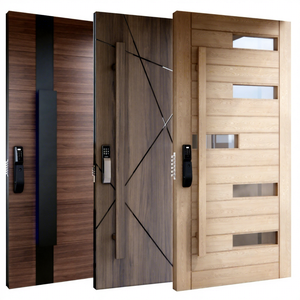
Manufacturer-direct Supply Waterproof Fire-resistant Security-rated Engineered Wood Pivot Doors for Modern Luxury Residential
Get Catalog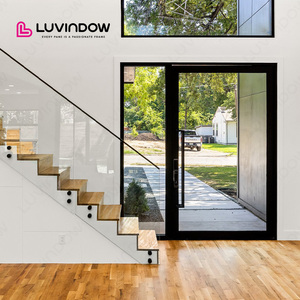
Modern Style Main Entrance Door Heat Insulated Aluminum Double Glazed Glass Pivot Door
Get Catalog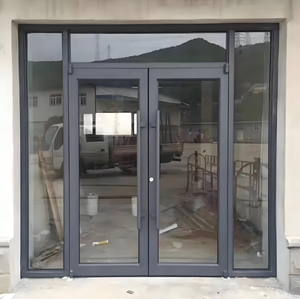
Commercial Aluminium Smart Glass Storefront Door Exterior Doors for Commercial Buildings Hurricane Impact Storefront Glass Doors
Get Catalog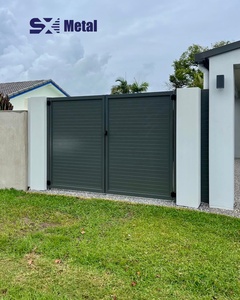
Modern Luxury Aluminum Gate Electric Driveway Swing Door for Houses Eco-Friendly Outdoor Swing Entrance Sleek 3D Modeling
Get CatalogExecutive Sourcing Guide: Strategic Evaluation of China's Pivot Door Manufacturing Sector
Understanding structural load mechanics, thermal break profile engineering, and single-source factory integration for high-value architectural procurement.
The global architectural landscape has experienced a monumental paradigm shift over the past decade. Modern residential estates, high-end hospitality projects, and prestigious commercial headquarters have increasingly abandoned conventional standard-sized swing doors in favor of modern, grand-format architectural pivot entry doors. Capable of spanning widths exceeding 2,500 mm and heights up to 6,000 mm, pivot doors create an uninterrupted, dramatic spatial transition. However, manufacturing an oversized door panel that maintains structural flatness, resists violent wind loads, prevents air/water infiltration, and operates effortlessly requires extraordinary industrial precision.
As global real estate developers, contractors, and architectural hardware importers seek direct manufacturing partnerships in China, distinguishing between low-tier assemblers and true system manufacturers is critical. Top-tier Chinese manufacturers have moved far beyond basic profile processing. Industry leaders such as Crestor Door Manufacturing Co., Ltd. (founded in 1997, with a 100,000 m² smart fabrication base in Dongying, Shandong, and an advanced R&D center in Beijing) have integrated extrusion engineering, automated thermal break insertion, precision CNC machining, laser cold-welding, surface finishing, and double/triple-glazed insulated glass unit (IGU) processing under one centralized quality control framework.
Structural Engineering Anatomy of Heavy-Duty Pivot Door Systems
Key technical modules required to ensure dimensional stability, hurricane resistance, and smooth physical motion.
6063-T6 Extrusion Carcass
Extruded using high-purity primary aluminum alloy billets with primary structural wall thicknesses ranging from 2.5 mm to 3.5 mm. Internal multi-cavity reinforcement ribs prevent structural deflection under extreme wind loads.
Hydraulic Offset Pivot Hardware
Seamless integration with top-tier hydraulic pivot systems (such as FritsJurgens System M+ or heavy-duty concealed floor springs). Features adjustable closing dampening, latching speed control, and 90°/180° hold-open indexing.
PA66 GF25 Thermal Barriers
Polyamide 66 reinforced with 25% fiberglass thermal break strips isolate interior and exterior aluminum profiles, effectively breaking heat conduction and stopping thermal bridging across door framing.
A frequent failure point in lower-grade pivot doors is panel bowing caused by differential thermal expansion (the "Bi-Metal Effect"). When the exterior surface of a dark aluminum door panel is exposed to intense direct sunlight ($70^\circ\text{C}+$) while the interior side is air-conditioned ($20^\circ\text{C}$), the exterior aluminum expands at a faster rate than the interior face. Without engineered thermal expansion gaps, continuous polyamides, and pre-stressed tensioning rods built into the door sash, the panel will warp, resulting in air leakage and latch misalignment. China’s premier manufacturers utilize specialized anti-bi-metal polyamide strips and internal mechanical tensioners that allow independent micro-expansion, ensuring the door panel remains completely flat across all seasons.
Direct Manufacturing Competence: In-House Production vs. Assembly Houses
Why single-source vertical integration is mandatory for high-spec international architectural projects.
When evaluating Chinese pivot door suppliers, overseas buyers must scrutinize the manufacturer's vertical integration depth. Many trading entities and small assembly workshops source aluminum profiles from third-party extruders, purchase glass units from local processors, and attempt manual assembly in rented warehouses. This fragmented supply chain introduces quality variances, loose tolerances, delayed lead times, and uncoordinated warranty accountability.
Crestor 100,000 m² Integrated Manufacturing Base
Founded in 1997, Crestor operates a massive 100,000 m² smart production base in Dongying, Shandong, backed by a dedicated R&D center in Beijing. Housing over 200 engineers and master technicians, the factory executes profile machining, automated powder coating, insulating glass processing, and final assembly entirely in-house under strict ISO 9001:2015 quality control protocols.
Laser Cold-Welding & 219+ Patented Technologies
Utilizing proprietary laser cold-welding corner connection technology, Crestor door frames eliminate traditional mechanical screw joint looseness. Corner joints achieve seamless structural rigidity, preventing seal degradation and structural sag. Backed by 219+ national patents and AS 2047 StandardsMark™ Licence (SMK41686), Crestor sets the benchmark for export quality.
Future Procurement Trends in Architectural Pivot Door Systems (2025–2030)
Analysis of emerging specification demands from architects, builders, and luxury real estate buyers globally.
As energy codes become stricter and architectural aesthetics favor clean, minimalist geometry, procurement criteria for pivot doors are rapidly changing. Procurement teams should align their engineering specifications with the following four mega-trends:
1. Passive-House Thermal Efficiency ($U \le 0.9 \text{ W/m}^2\text{K}$)
Historically, pivot doors were viewed as energy-inefficient due to perimeter perimeter seal gaps. Modern procurement mandates triple-glazed Low-E units filled with 90%+ Argon gas, warm-edge spacers, multi-chamber PA66 thermal breaks, and dynamic drop-down magnetic perimeter seals, allowing pivot systems to achieve Passive House performance levels.
2. Smart Biometric & Motorized Automation Integration
Mechanical keys are being replaced by multi-point motorized locking gear units (e.g., Winkhaus blueMotion or KFV) synced with facial recognition, biometric fingerprint scanners, keypad entry, and home automation systems (KNX, Control4, Crestron). Electric automatic opening actuators enable hands-free entry for massive architectural doors.
3. Extreme Security & Armored Material Hybridization
High-net-worth residential and commercial developments are specifying bulletproof (UL 752 / EN 1063) and explosion-resistant door panels. Manufacturers now fuse cast aluminum decorative plates, armored steel cores, ballistic fiberglass laminates, and real engineered wood veneers into composite, indestructible pivot panels.
4. Zero-Threshold Flush Transitional Drainage
To achieve seamless barrier-free transitions between interior marble floors and exterior patios, modern pivot doors incorporate subterranean recessed drainage tracks with continuous linear slots. High-grade EPDM compression seals automatically drop upon closure, preventing water ingress while keeping floor transitions perfectly level.
Verified Performance Benchmarks & Testing Specifications
Data audited and certified under national and international standard test protocols (GB/T 31433, AS 2047, ISO 9001, CE).
| Performance Property | Tested Engineering Standard | Achieved Performance Grade | Operational Value for Project Specifiers |
|---|---|---|---|
| Wind Pressure Resistance | GB/T 7106 / ASTM E330 | 5.0 kPa (Grade 9 - Top Class) | Withstands extreme typhoon and coastal gale pressures; certified for high-rise building façades. |
| Water Tightness | GB/T 7106 / ASTM E331 | 700 Pa (Grade 6 - Top Class) | Prevents water penetration during severe driving rain conditions when paired with continuous sub-floor drainage. |
| Air Permeability | EN 12207 / AS 2047 | Class 4 / Grade 8 | Eliminates draft air infiltration, protecting indoor air conditioning and heating energy conservation. |
| Thermal Insulation (U-Factor) | ISO 12567-1 / NFRC 100 | U ≤ 0.9 - 1.2 W/m²K | Configurable with triple-glazed Low-E argon IGUs to meet stringent net-zero and Passive House energy targets. |
| Acoustic Sound Attenuation | ISO 10140-2 / ASTM E90 | Rw Up to 44 dB | Blocks heavy urban noise, airport traffic, and highway hum for quiet interior spaces. |
| Hardware Mechanical Lifecycle | EN 1191 / ANSI/BHMA | 500,000 Open/Close Cycles | Ensures decades of smooth, sag-free operation for heavy architectural panels up to 500 kg+. |
Frequently Asked Technical Questions (B2B Procurement & Engineering Sourcing)
Clear, authoritative answers to help developers, importers, and architects evaluate pivot door orders.
Ready to Elevate Your Architectural Projects?
Connect directly with Crestor's senior fenestration engineering team. Send us your architectural drawings, project schedules, or custom OEM/ODM requirements for immediate CAD shop drawing support and competitive factory-direct pricing.
Get Catalog