Featured Modern Aluminum Entry & Interior Door Systems
Precision-engineered for luxury residential villas, high-end apartment complexes, and commercial architectural projects. Sourced directly from Crestor's advanced manufacturing base.
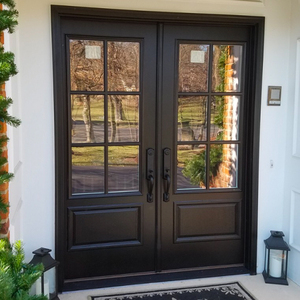
Custom Villa Main Entrance Thermal Break Aluminum Casement Door
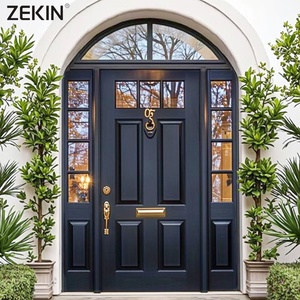
Modern Luxury Exterior Solid Aluminum Pivot Door with Smart Biometric Lock
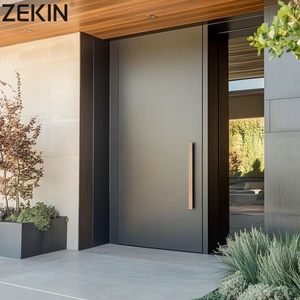
Architectural Back-Painted Glass & Cast Aluminum Security Pivot Door
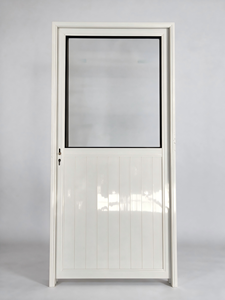
CE Certified Anti-Corrosion Aluminum Alloy Waterproof Interior Swing Door
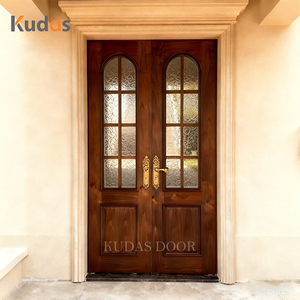
High-End Hybrid Wood-Aluminum Double Exterior Entry Door with Glass Insert
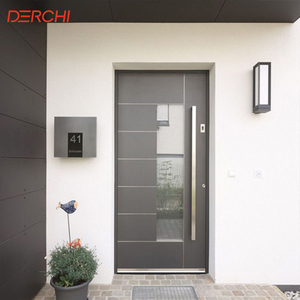
Custom Size Exterior Security Aluminum Entry Door for Villas & Apartments
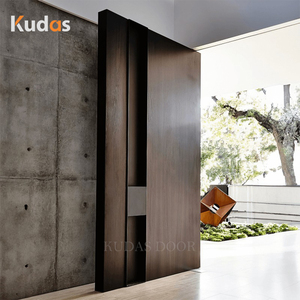
Architectural Walnut Wood Finish Aluminum Armor Modern Single Pivot Door
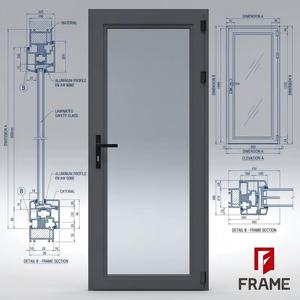
High-Performance Aluminium Single/Double Glazed Casement Swing Door
Crestor Door Manufacturing: 30 Years of Fenestration Excellence
Founded in 1997, Crestor Door Manufacturing Co., Ltd. operates a vertical, state-of-the-art aluminum profile machining and assembly ecosystem. We bridge the gap between custom architectural design and industrial mass production.
Integrated Vertical Manufacturing Pipeline
Unlike trading agencies or fragmented assemblers, Crestor executes every critical production step inside our own 100,000+ m² modern facility in Dongying, Shandong, backed by our centralized R&D headquarters in Shunyi District, Beijing. Our unified footprint guarantees complete accountability across four core steps:
Precision cutting, milling, and corner punching utilizing CNC centers calibrated to tolerances within ±0.05 mm.
In-house Qualicoat Class 2 vertical powder coating and PVDF fluorocarbon spraying lines for extreme climate resistance.
Automated glass cutting, Low-E coating, warm-edge spacer insertion, and argon gas injection for maximum thermal rating.
Patented corner joint cold-welding technology ensuring seamless aesthetics, structural integrity, and zero water leakage.
Structural Physics & Verified Performance Metrics
Modern exterior aluminum entry doors must resolve complex structural physics challenges: balancing large glass sightlines with thermal insulation, storm-driven water tightness, and anti-burglary physical security.
| Performance Parameter | Tested Laboratory Result | National / Global Standard Grade | Architectural Engineering Significance |
|---|---|---|---|
| Wind Pressure Resistance | 5.0 kPa | GB/T 31433 Grade 9 (Highest Level) | Resists hurricane-force structural loads; recommended for high-rise residential towers and exposed coastal villas. |
| Water Tightness | 700 Pa | GB/T 31433 Grade 6 (Top Tier) | Prevents water penetration during extreme rainstorms combined with high velocity winds. |
| Air Permeability | Grade 8 | Top National Energy Class | Eliminates envelope draft loss, significantly lowering building HVAC energy consumption. |
| Thermal Transmittance (U-Value) | U ≤ 0.9 W/m²K | Grade 10 / Passive House Standard | Utilizes PA66-GF25 polyamide thermal barriers and argon-filled Low-E triple glazing for ultra-low thermal loss. |
| Acoustic Attenuation (Rw) | Up to 44 dB | High Acoustic Class | Dampens high-frequency ambient city noise, highway traffic, and airfield noise for indoor tranquility. |
PA66-GF25 Thermal Break Engineering
Standard uninsulated aluminum profiles exhibit high thermal conductivity ($K \approx 160\text{ W/m}\cdot\text{K}$). Crestor front entry door systems utilize 24mm to 34mm PA66-GF25 (Polyamide reinforced with 25% fiberglass) thermal barriers ($K \approx 0.3\text{ W/m}\cdot\text{K}$). This complete mechanical isolation eliminates thermal bridging, prevents interior frame condensation, and reduces heat transfer by up to 65%.
Multi-Point Mechanical & Biometric Security
To meet international anti-burglary norms (EN 1627 RC2/RC3 grades), our front entry systems feature heavy-duty gear-driven multi-point locking hardware. Hardened stainless steel hook bolts lock into high-tensile frame strikes across top, middle, and bottom locations. Options integrate 3D facial recognition, encrypted fingerprint sensors, and smart home IoT access controllers.
Weatherproofing & EPDM Gasket Cavities
Air and water leaks typically occur at sash-to-frame seals under wind stress. Crestor engineers designed a triple-seal continuous gasket system manufactured from automotive-grade EPDM (Ethylene Propylene Diene Monomer). Combined with internal pressure-equalized drainage tracks, water intrusion is fully blocked up to 700 Pa wind-driven pressure.
Future Sourcing & Development Trends in Architectural Aluminum Doors
As global energy regulations tighten and modern architectural aesthetics shift toward minimalist, large-span openings, front door procurement is undergoing a paradigm shift. Buyers must align with four macro trends.
1. Net-Zero Carbon & Passive House Alignment
Global energy codes (such as the EU's EPBD directive and North American IECC standards) demand continuous envelope thermal resistance. Modern aluminum front door manufacturers are moving beyond double glazing to triple and quadruple glass units filled with 90%+ Argon or Krypton gas, incorporating warm-edge composite spacers (e.g., Technoform) to push total system U-values down below 0.8 W/m²K.
2. Oversized Pivot Doors & Grand Sightlines
Traditional residential swing doors are increasingly replaced in luxury architectural specs by grand pivot entrance doors exceeding heights of 3.5 meters and widths of 2.0 meters. Sourcing these oversized structures requires specialized heavy-duty floor spring pivot hardware, internal structural aluminum tensioners to prevent heat warping, and ultra-precise perimeter weather seals.
3. Smart Ecosystems & Biometric Automation
Door handle key cylinders are rapidly evolving into concealed digital touchpoints. Sourcing trends favor suppliers capable of embedding motorized multi-latch locks directly into profile channels, pre-wired for seamless integration with Zigbee, Z-Wave, or Apple HomeKit smart home ecosystems, complemented by concealed door openers and video intercom systems.
4. Advanced PVDF & Wood-Grain Electro-Fusion
Importers are demanding zero-maintenance exterior finishes that simulate natural timber without organic rotting or fading. Suppliers now utilize 3D wood-grain sublimation and 3-coat/2-bake fluorocarbon PVDF finishes backed by 25-to-30-year warranty ratings against salt spray corrosion, UV radiation, and chalking.
B2B OEM/ODM Procurement Protocol & Quality Assurance
Sourcing custom aluminum front doors from China requires clear engineering alignment, strict sample validation, and secure export logistics to prevent costly field delays.
Step 1: Drawing Approval
Buyers submit architectural elevation drawings or opening schedules. Crestor's engineering team generates 2D CAD and 3D cross-sectional shop drawings within 48 hours, detailing profile alloys, thermal breaks, hardware mortises, and glass build-ups for formal client sign-off.
Step 2: Sample Validation
To mitigate volume production risks, buyers can request corner sample mock-ups showing profile cross-sections and surface coatings, or order a full-size working sample door unit to test latch operation, gasket compression, and frame assembly quality prior to mass manufacturing.
Step 3: Export Logistics SOP
Finished doors are wrapped in PE protective film, fitted with high-density polyurethane corner guards, and sealed inside fumigated solid plywood crates. Container loading is fully engineered to ensure zero lateral movement during sea transit to North America, Europe, Australia, or the Middle East.
Frequently Asked Procurement Questions
Essential technical and commercial details importers, contractors, and architects ask before initiating custom aluminum entry door orders.
Ready to Elevate Your Architectural Entrance Openings?
Connect directly with Crestor's senior fenestration engineers. We provide complimentary CAD shop drawing reviews, structural wind load calculations, and competitive factory-direct pricing for your project.