Featured Insulated Exterior & Pivot Entry Door Systems
Direct factory-engineered entrance systems designed for extreme climatic stability, thermal break performance, structural integrity, and architectural luxury.
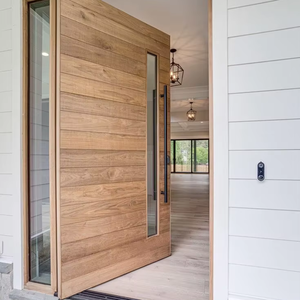
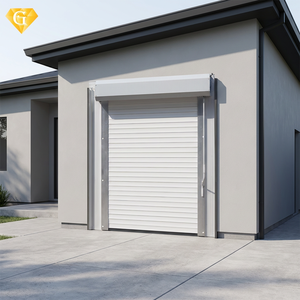
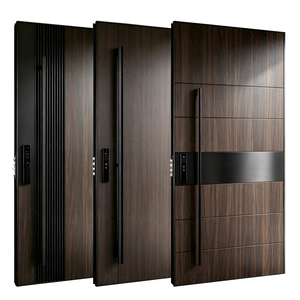
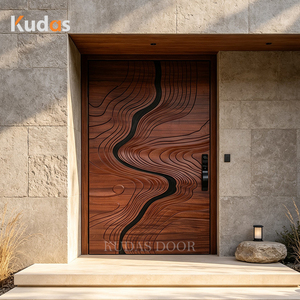

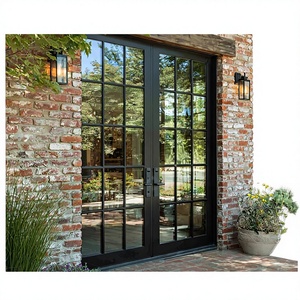
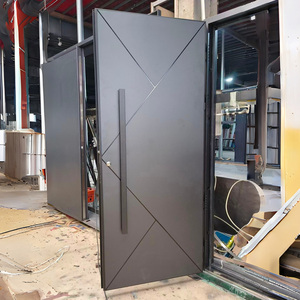
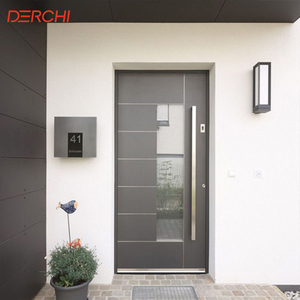
Industrial Scale Engineering & Precision Fenestration Manufacturing
Founded in 1997, Crestor Door Manufacturing Co., Ltd. has established itself as an authoritative leader in thermal break aluminum and composite entry door engineering, serving global distributors, real estate developers, and architectural procurement teams.
Operating with a centralized R&D headquarters in Beijing and a sprawling smart manufacturing base in Dongying, Shandong, Crestor maintains absolute end-to-end quality control. Unlike basic assembly shops, Crestor operates fully integrated vertical lines including raw extrusion profile machining, automated powder coating, insulating glass unit (IGU) fabrication, and laser-guided assembly.
Thermal Insulation Architecture: U-Factor & Structural Integrity
Understanding the thermodynamics of exterior entrance systems for commercial and luxury residential envelopes.
The thermal efficiency of an entry door is primarily dictated by its overall heat transfer coefficient, measured as the U-factor (W/m²K). Modern architectural building codes—such as Europe's EPBD and North America’s IECC—require entrance systems to achieve ultra-low U-factors without sacrificing structural rigidity or aesthetic elegance.
Polyamide PA66 GF25 Struts
Our thermal break door frames incorporate 25% glass-fiber reinforced Polyamide (PA66 GF25) thermal barriers. These struts structurally sever the exterior and interior aluminum profiles, dramatically curtailing thermal bridge conduction.
Aerogel & Polyurethane Core Fill
For extreme cold weather zones (Zone 6-8), door leaf cavities are pressure-injected with high-density polyisocyanurate (PIR) foam or nanoporous aerogel blankets, achieving door leaf thermal resistance values exceeding R-10.
EPDM Triple-Seal Gasket Matrix
Custom multi-chambered Ethylene Propylene Diene Monomer (EPDM) continuous weather-stripping prevents air leakage around perimeter jambs and drop-down bottom sills, certified up to Class 8 Air Tightness (GB/T 31433).
Certified Physical Performance Metrics (National Window Test Center Grade)
| Performance Parameter | Tested Standard Value | GB/T 31433 Grade Classification | Operational Impact for Importers |
|---|---|---|---|
| Wind Load Resistance | 5.0 kPa (P3 Rating) | Grade 9 (Top Class) | Prevents structural deflection on coastal high-rise villas exposed to typhoon-grade pressures. |
| Water Tightness | 700 Pa (Delta P) | Grade 6 (Top Class) | Eliminates risk of water ingress during heavy wind-driven torrential rain events. |
| Air Permeability | q1 ≤ 0.5 m³/(m·h) | Grade 8 (Top Class) | Dramatically lowers building HVAC energy consumption, complying with passive house criteria. |
| Overall Thermal Transmittances | U ≤ 0.90 W/(m²·K) | Grade 10 (Top Class) | Ensures compliance with strict EU CE and North American Energy Star energy codes. |
| Acoustic Insulation (Rw) | Rw = 44 dB (with IGU glass) | Acoustic Class IV | Provides superior sound dampening for urban luxury residences and airport noise zones. |
Future Procurement Trends in Global Entrance Door Systems
Key technological, regulatory, and architectural shifts redefining global entry door procurement over the next decade.
1. Zero-Carbon Mandates & Whole-Life Embodied Carbon Tracking
Global real estate developers and general contractors are shifting procurement focus toward products with verified Environmental Product Declarations (EPDs). Importers are actively prioritizing manufacturers capable of sourcing recycled low-carbon aluminum billets processed via hydroelectric power to meet strict ESG metrics.
2. Oversized Modern Heavy-Duty Pivot Door Systems
Architectural demand for oversized entrance portals—reaching heights of up to 4 meters and widths up to 2 meters—is surging globally. Procurement strategies now heavily weigh heavy-duty concealed German pivot hardware capable of supporting door leaves weighing up to 500 kg with featherlight fingertip operation.
3. Integrated Smart Electromechanical Locking Protocols
Traditional mechanical single locks are rapidly being replaced by multi-point motorized smart locks featuring biometric fingerprint recognition, facial scanning, RFID, and smart home IoT automation (Zigbee/Matter). Future-proof entry door factories must offer pre-wired internal raceways for seamless installation.
4. Hybrid Material Aesthetics (3D Carved Wood & Aluminum Synergy)
Modern buyers refuse to compromise between the natural warmth of real timber and the weatherproof durability of heavy-gauge aluminum. The market is leaning towards hybrid insulated doors: exterior-facing weather-resistant anodized aluminum skins combined with interior solid teak or oak 3D relief carvings.
Technological Innovations in Entry Door Manufacturing
How advance tooling, laser cold-welding, and automated surface treatment elevate standard doors into architectural masterpieces.
To maintain competitive advantage in global B2B supply chains, leading Chinese export manufacturers like Crestor have moved past traditional mechanically screwed corner joints. Modern high-tier door manufacturing leverages Laser Cold-Welding Technology, which unifies profile corners at a molecular level, preventing corner seam separation, water ingress, and structural sagging over decades of use.
CNC Precision Profile Milling
Profile cutting and hardware mortising are executed on 5-axis German CNC machining centers achieving micro-tolerances within ±0.05 mm. This guarantees smooth operation of intricate multi-point lock rods and drop seals.
Fluorocarbon PVDF & Anodizing
Exterior surfaces undergo multi-layer PVDF spraying or 25-micron hard-anodizing, passing 3,000-hour neutral salt spray (NSS) testing to ensure color fastness against intense UV and coastal marine salt corrosion.
Vacuum Insulating Glass (VIG)
Integrating tempered vacuum double-glazing into door vision panels delivers center-of-glass thermal insulation of U ≤ 0.4 W/m²K, giving glass-insert entry doors thermal parity with solid insulated walls.
Why Global Importers Partner with Crestor Door
Bridging the gap between factory-direct pricing and European system-brand engineering rigors.
Sourcing exterior doors directly from China requires balancing unit cost with compliance verification and technical execution. Crestor eliminates international sourcing risk through a series of foundational operational guarantees:
Complete In-House Manufacturing Control
Many trading intermediaries subcontract fabrication across fragmented workshops. Crestor processes every step internally in our 100,000 m² plant—from aluminum profile extrusion, thermal break assembly, to insulating glass processing. This ensures single-point accountability for every order shipped.
International Market Certifications
Crestor systems hold verifiable global credentials including the Australian AS 2047 StandardsMark™ Licence (SMK41686), ISO 9001:2015 Quality Management certification, European CE compliance, and test readiness for North American NFRC thermal performance metrics.
Full CAD/BIM Shop Drawing Engineering Support
Before mass production commences, Crestor’s 200+ engineering team converts architectural BOQs or structural rough opening sizes into detailed 2D/3D shop drawings. Profile connections, glass thickness, threshold details, and anchor points are signed off by the client to avoid jobsite installation issues.
Export-Grade Heavy Packaging & Logistics Integrity
To survive ocean transport across global routes, every door frame and leaf is protected with non-marking scratch film, heavy rubber corner guards, bubble wrap, and loaded inside fully enclosed fumigated wooden crates or steel-frame STILLAGE racks for forklift safety.
Frequently Asked Questions (FAQ) for Importers & Buyers
Clear, actionable answers addressing technical specs, custom ordering procedures, and international logistics.
To issue an exact quotation and engineering recommendation, we require architectural elevation drawings, schedule of openings (BOQ), required thermal target (U-factor/R-value), glass specifications (e.g., Low-E triple glazing), wind load requirement (kPa), surface finish preference (PVDF/Powder Coating), and destination port.
Our heavy-duty pivot entry doors utilize multi-chambered thermally broken aluminum extrusions fitted with PA66 GF25 structural polyamide struts. The door cores are filled with high-density PIR insulation, while the top and bottom pivot axes feature continuous perimeter EPDM seals to prevent thermal short-circuiting.
Yes. We encourage global distributors and project developers to evaluate sample corner cut-aways or full-size prototype sample doors. Samples allow your technical teams to inspect weld quality, thermal strip insertion, corner tight-seaming, hardware smoothness, and finish durability hands-on.
We partner with top-tier hardware manufacturers (including German Dormakaba, GU, and proprietary Crestor heavy-duty lines). Our standard floor-mounted and concealed top-pivot systems support door leaf weights ranging from 200 kg up to 500 kg with dynamic structural safety factors of 2.5x operational load.
For projects within 5 km of oceanic shorelines, we strictly recommend 3-coat PVDF (Fluorocarbon) coatings or Qualicoat Class 2/3 marine-grade powder coating with pre-anodization pretreatment. This prevents filiform corrosion and blistering from harsh sea salt fog exposure.
We provide complete national test center reports (covering wind pressure, water tightness, air permeability, and sound insulation). If specialized third-party testing (such as NFRC thermal simulation or Intertek hurricane impact testing) is needed, our engineering team can custom-build prototype specimens specifically tuned to pass your regional test protocols.
Ready to Upgrade Your Entrance Door Procurement Pipeline?
Connect directly with Crestor’s senior fenestration engineers to request technical datasheets, shop drawing reviews, or direct factory pricing for your upcoming commercial or residential developments.