Coastal & All-Weather
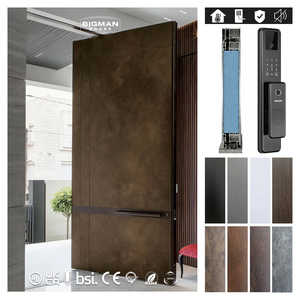
Tested under ISO 9227 / ASTM B117 standards for aggressive C4 & C5 marine atmospheric exposures.
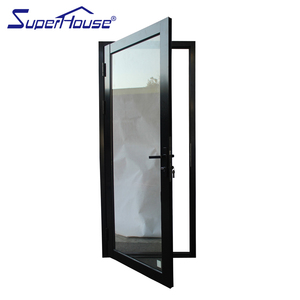
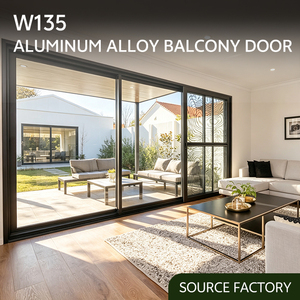
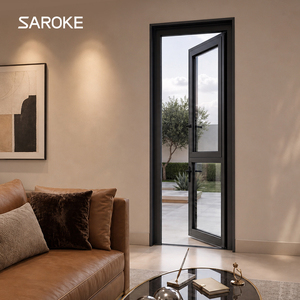
In modern architectural fenestration, marine environments (C4 and C5-M atmospheric exposure classifications according to ISO 12944) present extreme electrochemical challenges. Standard architectural door profiles exposed to airborne chlorides, sulfur oxides, and micro-droplet moisture rapidly suffer from pitting corrosion, filiform degradation, and galvanic cell formation near stainless steel hardware interface points. For procurement directors, general contractors, and facade engineers, specifying high-durability aluminum entrance and patio doors requires moving beyond surface aesthetics to audit fundamental metallurgical composition, extrusion temper quality, and surface passivation engineering.
China has established itself as the global hub for advanced architectural aluminum processing. Top tier door factories in China have transitioned from basic mechanical assembly to integrated chemical passivation, automated electrostatic fluorocarbon coating, and precision laser cold-welding. This technical whitepaper establishes the procurement benchmarks, test metrics, and structural innovations that separate top-tier Chinese manufacturers from mid-tier assembly workshops.
A rigorous comparative analysis of alloy selection, anodizing depth, and fluorocarbon resin density.
Top manufacturers use high-purity primary ingot extrusions with controlled Magnesium (0.45–0.9%) and Silicon (0.2–0.6%) ratios. T6 heat tempering maximizes tensile yield strength while maintaining grain boundary resistance against stress corrosion cracking (SCC).
Specified for AAMA 2605 compliance, 70% PVDF resin coatings provide maximum UV-radiation defense and chemical inertness against salt fog and acid rain, achieving over 3,000 continuous hours of ASTM B117 salt spray endurance without surface chalking.
Electrolytic oxidation forms an integral, ceramic-grade aluminum oxide surface layer. Sealed with nickel acetate, Class 1 anodized profiles (25 microns minimum thickness) offer superior scratch resistance and absolute immunity to filiform corrosion in high-salinity zones.
| Surface Treatment / Technology | Coating Thickness | ASTM B117 Salt Fog Test | Corrosion Resistance Class (ISO 12944) | Recommended Application Zone |
|---|---|---|---|---|
| 3-Coat PVDF Fluorocarbon (AAMA 2605) | 40 - 50 µm | 3,000 - 4,000 Hours | C5-M Heavy Marine | Oceanfront Villas, Offshore Buildings, Chemical Plants |
| Class 1 Architectural Anodizing | 25 µm minimum | 2,500 - 3,000 Hours | C5-I Industrial | Coastal Ports, High-Humidity Bathrooms, Urban Facades |
| Qualicoat Class 2 Super-Durable Powder | 60 - 80 µm | 1,500 - 2,000 Hours | C4 Coastal / Urban | Commercial Storefronts, Residential Entrance Systems |
| Standard Polyester Powder Coating | 40 - 50 µm | 500 - 800 Hours | C2 Rural / Inland | Low-Cost Interior Partition Doors & Standard Frames |
Founded in 1997, Crestor Door Manufacturing Co., Ltd. has evolved into one of China's premier engineering and manufacturing enterprises dedicated to thermal break aluminum window and door systems. Operating an expansive 100,000+ m² intelligent manufacturing base in Dongying, Shandong, and a dedicated R&D Engineering Center in Beijing, Crestor integrates the complete production lifecycle in-house—from precision profile CNC machining and automated powder coating to insulating glass processing (IGU) and structural assembly.
Seamless frame corner jointing eliminates water capillary paths and prevents joint oxidation, delivering 300% greater corner shear strength than mechanical crimping.
Holds StandardsMark™ Licence SMK41686 for the 76M system, certified to ISO 9001:2015, CE conformity, and NFRC thermal standards.
Pioneering thermal barrier designs using PA66 GF25 polyamide insulation strips, triple EPDM gaskets, and concealed stainless steel drainage channels.
By maintaining total vertical integration, Crestor eliminates intermediary quality risks. Every door assembly undergoes 100% shop drawing validation, ultrasonic seal checking, and hardware cycle testing before export packaging in reinforced wooden crates with edge guards and vapor-barrier shrink wrapping.
Market intelligence for project managers, architectural specifiers, and global importers.
Global decarbonization mandates are driving procurement toward low-embodied-carbon aluminum extrusions (produced using hydroelectric smelting) and post-consumer recycled alloys. European and North American buyers increasingly require EPD (Environmental Product Declaration) certificates alongside corrosion guarantees.
Corrosion resistance is no longer evaluated in isolation. Modern entrance and patio doors must combine high-salinity resistance with extreme thermal performance. Future door procurement centers on multi-chamber PA66 strips filled with aerogel insulation, delivering total system U-values ≤ 0.9 W/m²K.
B2B buyers are specifying doors pre-wired for motorized smart access, biometric entry, and concealed automatic drop-down weather seals. Hardware components must be crafted from electro-passivated 316-grade stainless steel to prevent galvanic corrosion within motorized lock pockets.
The global architectural metal industry is experiencing a phase shift driven by material science and digital fabrication. Key technical developments shaping the next generation of corrosion-resistant door production include:
Advancements in super-durable thermosetting powders incorporate ceramic micro-particles that heal micro-scratches during thermal expansion cycles, preventing moisture ingress from triggering sub-film oxidation.
Direct contact between aluminum frames and stainless steel hinges creates micro-galvanic cells. Modern door engineering integrates high-density EPDM dielectric shims and nylon sleeves around all structural fasteners to eliminate electrochemical potential differences.
To reduce job-site labor and ensure factory-sealed weatherproofing, Chinese factories are shipping fully integrated door frames with pre-tested gaskets and concealed drainage systems, linked directly to architectural BIM models.
Essential technical and commercial clarity for international importers and engineering contractors.
Connect directly with Crestor's facade engineers in Beijing and factory production leads in Shandong to receive custom CAD drawings, performance certifications, and direct-factory quotation proposals within 24 hours.
Send an Inquiry