Thermal Break
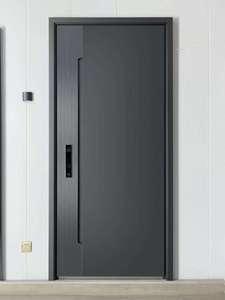
High-Quality Custom Aluminum Entrance Doors (Soundproof & Fireproof)
PA66 Thermal Strip
Rw 44 dB Soundproof
Get Catalog
Architectural-grade entry, pivot, armored, and thermal-break security doors manufactured under ISO 9001:2015 control, rigorously tested to international standards for residential villas and luxury commercial projects.
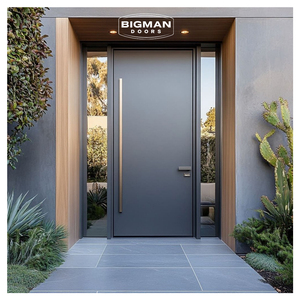
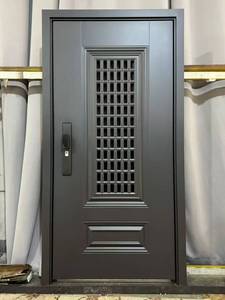
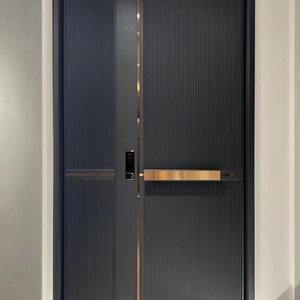
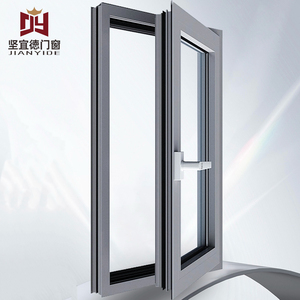
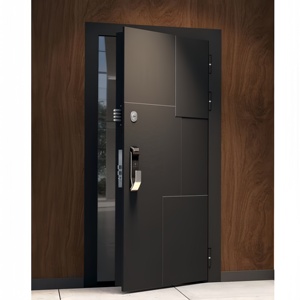
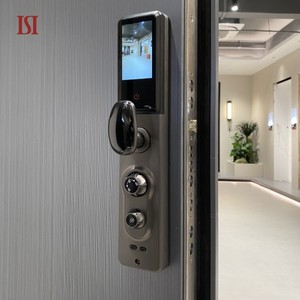
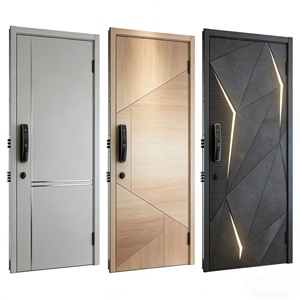
Founded in 1997, Crestor Door Manufacturing Co., Ltd. operates a vertically integrated 160,000 m² smart manufacturing ecosystem in Dongying, Shandong, supported by an advanced fenestration R&D center in Beijing. We provide end-to-end quality control from raw 6063-T6 billet extrusion to final crate export.
Unlike assembly-only workshops, Crestor maintains full in-house mastery over all critical processing phases: Profile Machining, PA66 Thermal Strip Insertion, PVDF/AkzoNobel Powder Coating, Double/Triple Insulating Glass Unit (IGU) Assembly, and Laser Cold-Welded Corner Jointing. This vertical integration enables CNC machining tolerances of ±0.05 mm and guarantees that every security door shipped to North America, Europe, Australia, or the Middle East satisfies strict structural and thermal performance criteria.
The global security door industry is undergoing a paradigm shift from heavy, rust-prone steel and high-maintenance timber toward high-strength, thermal-break extruded aluminum alloys and cast aluminum composites.
Modern security doors utilize primary 6063-T6 or 6061-T6 aluminum alloys with profile wall thicknesses ranging from 2.0mm to 3.0mm. Integrated steel armor core plates and internal hook deadbolts allow doors to achieve EN 1627-1630 Resistance Class 3 (RC3) and Class 4 (RC4) anti-burglary standards, standing up to dynamic impact, crowbars, and mechanical drilling tools.
By incorporating multi-chamber PA66 GF25 (25% glass fiber reinforced polyamide) thermal break strips between inner and outer extruded aluminum profiles, high-end security doors eliminate thermal bridging. Paired with triple-pane argon-filled Low-E tempered glass, systems achieve thermal transmittances down to U ≤ 0.9 W/m²K and sound reduction up to Rw 44 dB.
Contemporary security entry doors seamlessly integrate biometric 3D structured-light facial recognition cameras, encrypted capacitive fingerprint sensors, motorized multi-bolt locking systems, and Zigbee/Wi-Fi smart home protocols. Automatic concealed drop-down bottom weather seals engage upon door closure to block draft, dust, and insects.
High-pressure cast aluminum panels (8mm–12mm thickness) welded or composite-bonded onto the door leaf deliver sculptural, three-dimensional aesthetic textures. Coated with fluorocarbon (PVDF) or hyper-durable powder finishes, these doors exhibit exceptional UV resistance, non-fading color, and C5-M marine-grade anti-corrosion protection even in aggressive coastal environments.
Architectural grand entry pivot doors utilize heavy-duty stainless steel pivot hinges capable of carrying leaf weights exceeding 800 kg. Features include floor-concealed hydraulic closers, 90-degree hold-open positioning, and multi-point perimeter magnetic sealing strips that eliminate operational noise while maintaining structural alignment.
Abandoning traditional mechanical corner cleating that fails over time, modern Chinese factories utilize automated CNC corner crimping injected with two-component polyurethane corner adhesive, combined with continuous laser cold-welding. This delivers airtight, watertight joints with maximum torsional shear resistance under storm wind loads.
Crestor aluminum security door systems undergo rigorous validation at China's National Window & Door Test Centers and third-party laboratories (intertek, SGS). Below are verified physical property parameters graded under GB/T 31433, AS 2047, and EN 1627 standards.
| Performance Characteristic | Crestor Tested Parameter | Standard / Rating Class | Engineering Benefit for Developers & Buyers |
|---|---|---|---|
| Wind Load Resistance | 5.0 kPa (P3 Design Pressure) | Grade 9 · Top Class | Resists typhoon-force wind loads; engineered for coastal villas, high-rise luxury towers, and exposed structures. |
| Water Tightness | 700 Pa Static Water Head | Grade 6 · Top Class | Prevents water ingress under violent driving rain storms, eliminating water damage claims on interior flooring. |
| Air Infiltration Rate | q1 ≤ 0.5 m³/(m·h) | Grade 8 · Top Class | Eliminates envelope air leakage, significantly reducing HVAC heating/cooling energy losses for green building compliance. |
| Thermal Transmittance (U-Value) | U ≤ 0.9 W/m²K (Whole Door) | Grade 10 · Passive House | Maintains extreme interior comfort in sub-zero winters or desert climates; compatible with NFRC and Energy Star standards. |
| Acoustic Isolation | Rw 44 dB / STC 45 | Acoustic Shield | Dampens ambient urban traffic noise, airport frequencies, and neighborhood disturbances to create serene living spaces. |
| Anti-Burglary Protection | EN 1627 RC3 / RC4 Certified | High Security | Withstands targeted attacks by experienced burglars using heavy leverage tools, electric drills, and heavy impact hammers. |
Strategic purchasing managers, real estate developers, and building material importers must align their procurement strategies with four macro shifts in the international aluminum door manufacturing landscape.
Global green building frameworks (LEED, BREEAM, DGNB) increasingly require Environmental Product Declarations (EPD) for facade components. Leading Chinese manufacturers are transitioning to hydro-powered primary aluminum billets and certified recycled aluminum content (up to 75% recycled scrap), dramatically lowering the embodied carbon footprint of exported security doors without sacrificing alloy yield strength.
In luxury residential markets, traditional solid wood entry doors suffer from warping, swelling, and sunlight checking, while steel entry doors are susceptible to rust and severe thermal bridging. High-end procurement is rapidly shifting to thermal-break cast aluminum security doors, offering lifetime dimensional stability, zero maintenance, and superior thermal isolation performance.
Overseas architectural practices now demand Design for Manufacture and Assembly (DfMA) integration. Top Chinese manufacturers supply native Revit BIM families, 3D DWG cad blocks, and digital twin models. Automated shop drawing approval portals shorten the engineering sign-off phase from weeks to days, preventing costly job-site installation errors.
International buyers are reducing supplier fragmentation by partnering with manufacturers holding multi-market certifications. Crestor maintains AS 2047 (Licence SMK41686), ISO 9001:2015, CE compliance, and NFRC-ready system configurations—allowing distributors to stock a unified profile platform compliant across Australia, Europe, the Americas, and the Middle East.
Direct technical answers to common questions asked by developers, general contractors, and door brand importers before initiating custom OEM/ODM security door contracts.
Whether you are an established global fenestration brand seeking high-volume contract manufacturing or a regional distributor looking for ready-to-market certified door lines.
Send us your architectural system profiles, hardware schematics, and brand guidelines. We manufacture exclusively under your brand name with strict Non-Disclosure Agreements (NDAs) and intellectual property protection.
Select from Crestor’s library of pre-tested, certified aluminum security entry doors. We customize hardware locks, sash sizes, and surface finishes for rapid commercial deployment without R&D delays.
Send your architectural openings, project schedule, or BOQ directly to our senior engineering team. Receive detailed CAD shop drawings and an itemized factory direct proposal within 24 hours.
Get Catalog