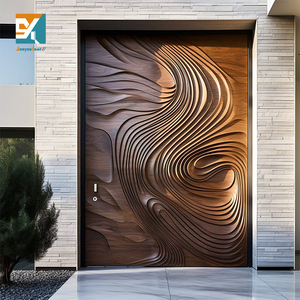
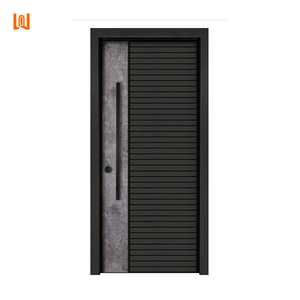
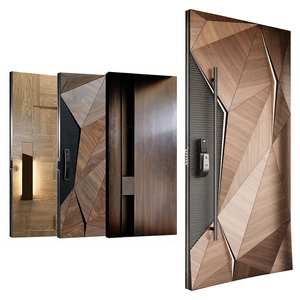
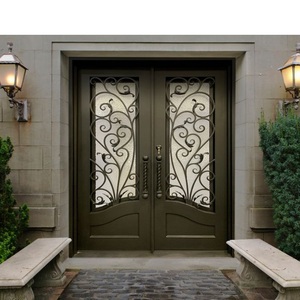
In contemporary luxury residential and commercial architecture, the entrance door has evolved from a functional portal into a primary design statement. Modern architectural trends emphasize grand proportions—heights exceeding 4,000 mm and widths spanning over 2,000 mm—which present substantial structural engineering challenges when using traditional side-hinged door frames. As a leading China aluminum pivot door manufacturer, Crestor Door Manufacturing Co., Ltd. addresses these engineering constraints through advanced kinematics, structural metallurgy, and high-performance thermal break technology.
Traditional hinged doors concentrate dynamic and static loads entirely on side door jambs. As leaf weight exceeds 150 kg, side-mounted hinges experience extreme cantilevered shear forces, leading to frame sag, seal misalignment, and premature mechanical wear. In contrast, heavy-duty aluminum pivot doors transfer structural loads directly down into the sub-floor substrate via heavy-duty floor-mounted hydraulic pivot spindles. This load distribution physics permits sashes weighing up to 800 kg to rotate smoothly around a vertical axis with minimal operational friction.
Key Structural Insight: Floor-loaded pivot hinges shift the primary weight vector from horizontal pulling force (jamb stress) to direct vertical compression into the concrete floor slab, eliminating long-term frame sagging even on sashes up to 6 meters in height.
Metallurgical Integrity: 6063-T6 Extrusions & Thermal Breaking
To ensure structural rigidity across expansive door sashes without excessive dead weight, Crestor utilizes primary 6063-T6 architectural grade aluminum alloy profiles. Extruded to precise wall thicknesses ranging from 2.5 mm to 4.0 mm, these profiles provide exceptional tensile strength and deflection resistance under severe wind loads.
However, metal profiles naturally act as thermal bridges. To comply with modern energy conservation mandates (such as NFRC, CE, and Australian NCC requirements), our thermal break pivot doors incorporate structural PA66-GF25 (Polyamide 66 reinforced with 25% glass fiber) thermal barriers. These strips isolate interior and exterior aluminum profiles, reducing systemic thermal conductivity and preventing condensation while maintaining structural shear resistance across broad temperature differentials.
Future Global Procurement Trends in Aluminum Pivot Doors (2025–2030)
As international real estate developers, facade contractors, and door distributors refine their sourcing criteria, the global market for aluminum pivot doors is undergoing significant technological and aesthetic shifts. Sourcing managers must align their procurement strategies with five major industry vectors:
1. Super-Sized Openings & Load Distribution
Architects are pushing threshold dimensions beyond traditional limits. Sourcing requirements now mandate floor-concealed hydraulic pivots with integrated soft-closing dampers, hold-open functions at 90 degrees, and multi-axis alignment adjustments to accommodate slab deflection.
2. Smart Access & Motorized Multi-Point Locking
Mechanical keys are giving way to integrated smart automation. Modern pivot systems embed motorized multi-point lock bodies (such as German KFV or GU assemblies) synchronized with biometric fingerprint scanners, facial recognition, and home automation control protocols (KNX, Zigbee, Crestron).
3. Passive House Energy Compliance
Thermal insulation requirements are tightening globally. Sourcing demands have shifted toward triple-glazed Low-E insulated glass units (IGU) filled with 90%+ Argon gas, paired with multi-layer EPDM perimeter gaskets and drop-down automatic floor bottom seals to achieve whole-door U-values ≤ 0.9 W/m²K.
4. Material Hybridization & 3D Cast Finishes
Monolithic flat panels are being replaced by tactile, layered finishes. Global buyers are prioritizing cast aluminum alloy relief panels, sintered stone cladding, ceramic porcelain faces, and PVDF fluorocarbon coatings that resist extreme UV radiation and coastal salt spray corrosion.
5. Direct Factory OEM Sourcing & BIM Integration
To reduce project lead times and markup costs, tier-1 contractors work directly with integrated Chinese manufacturers capable of providing complete CAD shop drawings, BIM models for Revit, and validated AS 2047 / ISO 9001 certification packages prior to tooling.
Engineering Performance & Technical Specification Matrix
Tested performance metrics provide empirical proof of structural reliability. Crestor aluminum pivot doors are subjected to rigorous physical testing at national fenestration centers according to international standards (GB/T 31433, AS 2047, EN 14351-1):
| Performance Metric |
Testing Standard |
Quantified Result |
Engineering Significance |
| Wind Load Resistance |
GB/T 7106 / AS 2047 |
5.0 kPa (Grade 9) |
Resists extreme storm pressures & coastal typhoons without profile deformation. |
| Water Tightness |
GB/T 7106 / ASTM E331 |
700 Pa (Grade 6) |
Prevents rain ingress under severe wind-driven storms via recessed drainage channels. |
| Air Infiltration |
GB/T 7107 / ASTM E283 |
Grade 8 (Top Class) |
Eliminates drafts, protecting conditioned space and lowering HVAC operational loads. |
| Thermal Insulation (U-Value) |
EN ISO 10077-2 / NFRC |
U ≤ 0.9 W/m²K |
Achieved via PA66 thermal breaks & triple Low-E Argon-filled IGUs for Passive House designs. |
| Acoustic Attenuation |
ISO 10140-2 / ASTM E90 |
Rw 44 dB |
Dampens ambient city noise, airport proximity rumbles, and heavy street traffic sound. |
| Cycle Durability |
EN 1191 / EN 12400 |
300,000 Cycles |
Ensures decades of smooth operational life under high-frequency commercial foot traffic. |
Why Sourcing From Crestor Ensures Project Success
Founded in 1997, Crestor Door Manufacturing Co., Ltd. brings nearly three decades of engineering authority to global architectural fenestration. Operating a state-of-the-art 160,000 m² smart manufacturing base in Dongying, Shandong, alongside a dedicated R&D Center in Beijing, our enterprise integrates the entire production cycle under one quality management framework.
Vertical In-House Production
Unlike assemblers who outsource profile coating and insulating glass unit (IGU) manufacturing, Crestor executes precision CNC profile machining, laser cold-welding corner joints, automated powder/PVDF coating, and double/triple IGU glass assembly in-house. This single-source accountability ensures consistent dimensional tolerances within ±0.05 mm.
Certified Compliance & Standards
Our systems carry international certification credentials, including the AS 2047 StandardsMark™ Licence (SMK41686) for our 76M window series, ISO 9001:2015 quality management compliance, and CE conformity certification. Full national test center reports are supplied to developers for immediate municipal plan approvals.
OEM & Private Label Services
We provide full OEM and ODM cooperation models for established window brands and distributors worldwide. OEM clients benefit from custom die-extrusion manufacturing, proprietary profile designs, and strict IP protection. ODM clients leverage our pre-tested, certified product library for rapid market deployment under private labeling.
B2B Procurement & Technical Ordering Workflow
To eliminate field measurement discrepancies and ensure flawless site installation, Crestor operates a structured six-stage procurement engineering workflow for overseas projects:
Stage 1: Architectural Drawing Review
Send CAD elevations, floor plans, or BOQ schedules to our engineering department. Our facade engineers evaluate rough opening dimensions, structural wind pressures based on geographic building location, and thermal compliance targets.
Stage 2: CAD Shop Drawing Authorization
Our engineering office generates detailed 1:1 cross-sectional CAD shop drawings illustrating profile series, thermal break placement, glass build-up, threshold drainage details, and anchor point locations for formal architect sign-off.
Stage 3: Sample & Mock-Up Validation
Before launching mass production, clients may order corner cutaway samples or full-scale physical mock-up doors to verify mechanical latching, hydraulic pivot damping, surface finish texture, and weather seal compression in-person.
Stage 4: Automated Precision Fabrication
Approved shop drawings feed directly into CNC double-head cutting saws and 5-axis machining centers. Profiles undergo high-precision milling, corner cold-welding, glass glazing, and multi-point lock alignment under ISO 9001 supervision.
Stage 5: Factory Quality Acceptance
Every assembled pivot door undergoes rigorous factory acceptance testing (FAT): air-tightness smoke chamber checks, laser squareness verification, hydraulic closure speed adjustment, and surface coating thickness checks via digital gauge.
Stage 6: Export Heavy Packaging & Shipping
Door leaves and frames are protected with PE protective film, rigid corner guards, and vacuum-sealed plastic wrapping before being secured into heavy-duty fumigated wooden crates or steel-framed export containers for sea transit.