Featured Architectural Aluminum Entry Door Systems
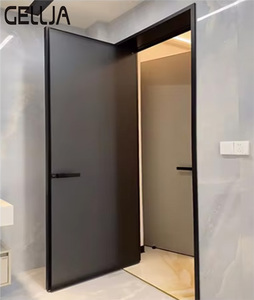
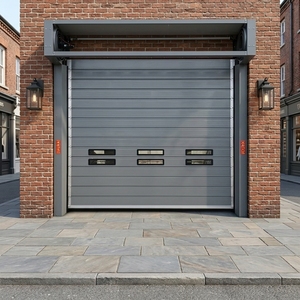
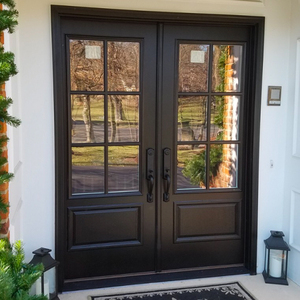
Engineered for commercial storefronts, luxury villas, high-rise developments, and hospitality projects worldwide. Select a configuration below to initiate technical shop drawing validation.
Architectural Industry Whitepaper: The Evolution of Custom Aluminum Entry Doors
In modern architectural fenestration, the exterior entry door is no longer merely a aesthetic threshold; it serves as a critical high-performance envelope barrier. Specifying high-grade architectural entry doors from premier Chinese manufacturers requires a thorough understanding of extrusion metallurgy, thermal decoupling mechanics, glass package structural integrity, and multi-point security hardware integration.
As global building energy codes tighten—such as the European Union's EPBD directives, Australia's NCC Section J requirements, and North America's IECC standards—the international procurement landscape for custom entrance doors has shifted dramatically toward high-density thermal break aluminum profile systems. Chinese manufacturers, led by enterprise pioneers like Crestor Door Manufacturing Co., Ltd. (operating extensive production infrastructure in Dongying, Shandong, and centralized R&D in Beijing), have redefined global market standards through heavy automated CNC machining, proprietary laser cold-welding corner assembly, and stringent AS 2047 and ISO 9001 quality compliance.
Core Technical Anatomy & Metallurgical Standards
Understanding the internal structural engineering of custom aluminum entrance doors is imperative for general contractors, architectural specifiers, and real estate developers seeking long-term structural reliability without callbacks.
1. 6063-T6 & 6060-T66 Extrusions
High-performance entry doors utilize primary, non-recycled aluminum alloy extrusions with wall thicknesses ranging from 2.0mm to 3.0mm. T66 heat treatment yields exceptional tensile strength and resistance to wind shear up to 5.0 kPa.
2. PA66-GF25 Thermal Barriers
Thermal decoupling is achieved via 24mm to 34mm Polyamide (PA66) structural strips reinforced with 25% glass fiber. This stops thermal bridging, preventing interior condensation while dropping U-values below 0.9 W/m²K.
3. Laser Cold-Welded Joints
Replacing weak mechanical corner cleats, precision laser cold-welding creates a seamless, monolithic corner joint. This ensures zero water penetration under 700 Pa rain pressure and structural rigidity over 30+ year life cycles.
Independent laboratory testing metrics evaluating structural, thermal, and security parameters across primary entrance door material categories.
| Material Engineering System | Whole-Door Thermal U-Value | Water Tightness (Pa) | Wind Load Resistance | Acoustic Damping (Rw) | Maintenance & C5 Marine Resistance |
|---|---|---|---|---|---|
| Thermal Break Aluminum (Crestor System) | U ≤ 0.9 W/m²K | 700 Pa (Grade 6) | 5.0 kPa (Grade 9) | Up to 44 dB | Zero rot; PVDF 30-yr finish; C5 Extreme Certified |
| Solid Hardwood Entry Doors | U ≈ 1.6 - 2.2 W/m²K | 250 - 350 Pa | 2.5 kPa | 30 - 34 dB | High vulnerability to warping, moisture, refinishing required |
| Standard Armored Steel Doors | U ≈ 1.8 - 2.5 W/m²K | 300 Pa | 3.5 kPa | 32 - 36 dB | Prone to rust at weld points; heavy thermal bridging |
| UPVC / Vinyl Front Doors | U ≈ 1.3 - 1.7 W/m²K | 450 Pa | 2.8 kPa | 28 - 32 dB | Thermal expansion issues; UV discoloration over time |
Global B2B Sourcing Trends: The 2025-2030 Architectural Door Market
Strategic buyers, property developers, and window/door importers are shifting their procurement criteria when sourcing custom aluminum entry doors from China. To maintain competitive advantage, B2B specifiers must align with four overarching technological trends:
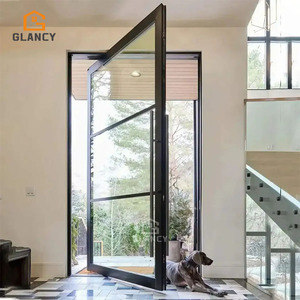
Trend 1: Super-Sized Architectural Pivot Doors
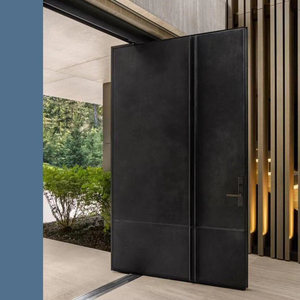
Modern luxury residential design demands grand entrance statement pieces. Heavy-duty aluminum pivot doors with single-panel heights reaching 6,000mm and weights up to 500kg are replacing traditional double swing doors. These systems require custom German pivot hinges with hydraulic dampening and multi-point perimeter drop seals.
Trend 2: Integrated Biometric & Smart Access Control
Mechanical keyways are rapidly yielding to concealed electronic access control. Top Chinese OEM manufacturers are embedding concealed motorized multi-point locks (e.g., Winkhaus, GU, or Siegenia), integrated biometric fingerprint scanners, facial recognition cameras, and home automation connectivity directly within the aluminum door profile extrusion.
Trend 3: Passive House & Zero-Carbon Energy Compliance
With building envelope energy efficiency taking priority, entrance door specifications now require triple-pane insulated Low-E glass units (IGU) filled with 90%+ Argon gas, warmth-edge Swiss spacers, and multi-chambered thermal break profiles. This achieves Passive House level performance without sacrificing sleek, narrow sightlines.
Why Partner With Crestor Door Manufacturing Co., Ltd.?
Established in 1997, Crestor Door Manufacturing Co., Ltd. stands as a premier direct factory manufacturer specializing in high-end thermal break aluminum window and door systems. Operating an expansive 100,000 square meter smart manufacturing base in Dongying, Shandong, paired with a specialized architectural R&D center in Beijing, Crestor bridges Chinese industrial manufacturing scale with stringent Western engineering standards.
Complete In-House Production
From raw profile precision CNC machining and automated powder coating/PVDF fluorocarbon line processing to insulating glass unit (IGU) fabrication and final assembly—100% of manufacturing takes place under direct engineering supervision.
Rigorous Global Certification
Crestor products hold verified international credentials including Australia's AS 2047 StandardsMark™ Licence (SMK41686) for the 76M tilt & turn series, ISO 9001:2015 Quality Management certification, and full CE conformity for European Union building projects.
OEM & ODM Flexibility
Whether you require private-label ODM production based on pre-tested profile libraries or full OEM custom extrusion design backed by strict Intellectual Property protection agreements, Crestor delivers seamless B2B execution.
Frequently Asked Questions (B2B Procurement & Engineering)
Clear, authoritative technical answers addressing common structural, thermal, logistical, and customization inquiries from overseas importers and specifiers.