Featured Architectural Entrance Systems
Explore our top-tier CE-marked exterior front entry systems engineered for high-end residential villas, commercial landmarks, and luxury architectural developments.
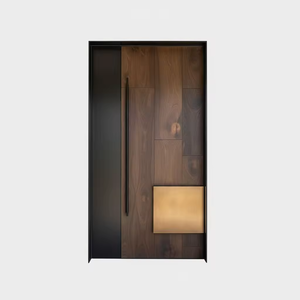
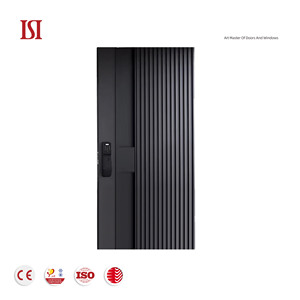
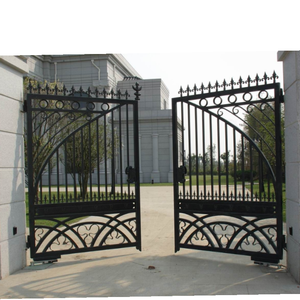
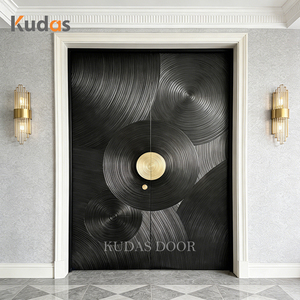
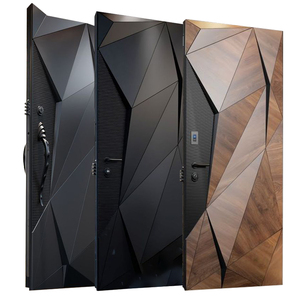
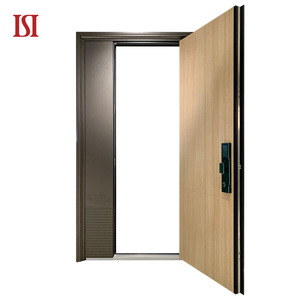
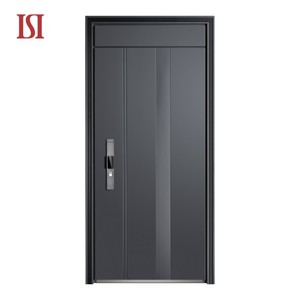
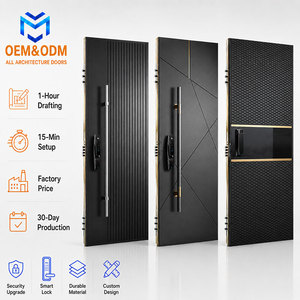
State-of-the-Art Engineering for Global Sourcing
As a pioneer in fenestration manufacturing since 1997, Crestor Door Manufacturing Co., Ltd. combines heavy-duty thermal break aluminum technology, precision laser welding, and strict compliance with European and global building standards.
CE Compliance & EN 14351-1 Standards
Every luxury exterior entrance door manufactured in our facility adheres strictly to European Union CE conformity standards governed by EN 14351-1. We issue complete Declarations of Performance (DoP), verifying structural stability, air permeability, water tightness, and acoustic attenuation required by architects and importers across EU territories.
In-House Manufacturing Infrastructure
Spanning over 160,000 m² of smart manufacturing capacity in Dongying, Shandong, and supported by our R&D engineering center in Beijing, Crestor operates a vertically integrated production line. From profile machining, PA66 thermal strip insertion, PVDF coating, and insulating glass unit (IGU) fabrication to final assembly, quality is verified under ISO 9001:2015 management.
CNC Precision & Laser Cold-Welding
Utilizing multi-axis CNC profile machining to tolerances within ±0.05 mm and proprietary laser cold-welding corner technology, our door sashes eliminate frame distortion, air gap infiltration, and corner joint cracking over decades of intensive operation.
Thermal Bowing Mitigation Tech
Dark-colored exterior doors exposed to intense solar radiation often suffer from bimetallic thermal bow. Crestor integrates specialized flexible thermal break shear webs and multi-chambered polyamide insulation strips, guaranteeing effortless latching and zero sash binding even in extreme temperature deltas.
Independent Test Bench Performance Summary
Tested at national accreditation centers in accordance with GB/T 31433, EN 14351-1, and AS 2047 benchmark criteria. Real engineering metrics delivered to specifying architects and procurement managers.
| Performance Property | Tested Value / Result | Standard Classification | Architectural Application Benefit |
|---|---|---|---|
| Wind Pressure Load | 5.0 kPa (5000 Pa) | Grade 9 (Top Class) | Engineered for high-rise residential towers and exposed coastal luxury villas subject to extreme typhoon winds. |
| Water Tightness | 700 Pa Static Pressure | Grade 6 (Top Class) | Triple continuous EPDM seal barrier prevents wind-driven rain penetration under tropical storm conditions. |
| Whole-Door Thermal Insulation | U ≤ 0.9 W/m²K | Grade 10 (Passivhaus Ready) | Combines 34mm PA66 thermal strips with Low-E triple glazing to maximize HVAC energy retention. |
| Acoustic Attenuation | Up to Rw 44 dB | Class 5 Acoustic Barrier | Multi-layer laminated glass configurations isolate interior spaces from urban noise and aircraft flight paths. |
| Burglary Resistance | EN 1627 RC3 / RC4 | High Security Standard | Features heavy-duty stainless steel multi-point hook locks and anti-pry strike plates for supreme anti-theft defense. |
Future B2B Procurement Trends in Luxury Entry Systems
Global architectural procurement is undergoing a paradigm shift driven by stringent carbon mandates, smart home integration, and modern structural aesthetic requirements.
1. Carbon Neutrality & EPD Verification
International real estate developers and commercial importers increasingly require Environmental Product Declarations (EPD). Procurement priorities are pivoting toward low-embodied-carbon aluminum alloys smelted using hydroelectric energy, paired with 100% recyclable polyamide thermal breaks to satisfy LEED v4.1 and BREEAM sustainability standards.
2. Invisible Smart Access & IoT Integration
Mechanical keyways are rapidly being superseded by fully concealed biometric and smart access control solutions. Modern procurement specifications demand entry doors pre-wired with 3D facial recognition sensors, capacitive fingerprint scanners embedded inside vertical pull handles, and electromechanical multi-point locks compatible with KNX, Zigbee, and Matter smart home automation systems.
3. Grand Oversized Pivot Openings
Architectural designs favor massive single-panel pivot entrance doors spanning heights up to 4.0 meters and widths up to 2.2 meters. Sourcing managers require specialized heavy-duty hydraulic floor pivots capable of supporting sash weights exceeding 500kg with adjustable self-closing dynamics, soft dampening, and hold-open functionality.
4. Severe Coastal Corrosion Defense
With luxury villa developments rising in coastal regions, buyers demand doors treated with Qualanod anodized pre-treatments and triple-layer PVDF fluoropolymer finishes capable of resisting over 3,000 hours of continuous salt-spray testing without blistering, chalking, or edge delamination.
Product Development Trends in Luxury Front Doors
How material science, structural engineering, and design aesthetics are transforming the next generation of architectural entry systems.
Hybrid Material Synthesis
Manufacturers are combining structural aluminum frames with exterior surface skins made of ultra-thin 3D sintered ceramic stone, real copper patinas, carbon fiber sheets, and thermo-treated natural solid wood. This hybrid construction ensures extreme structural rigidity while giving architects total creative freedom.
Aerogel Thermal Cavity Insulation
To exceed ultra-low U-value targets in polar and high-altitude climates, next-gen profile cavities are injected with nano-porous silica aerogel insulation blankets. This breakthrough cuts thermal bridge conductivity by an additional 40% compared to traditional polyurethane foam fill.
Concealed Sub-Frame & Flush Drainage
Modern door design leans heavily toward frameless minimalism. Future systems incorporate fully concealed sub-frames, hidden 3D adjustable 180-degree hinges, and magnetic drop-down bottom weather seals that retract flush into the sash when open, eliminating zero-threshold tripping hazards while preventing water ingress.
Frequently Asked Questions for B2B Importers & Contractors
Get authoritative answers on compliance, structural engineering, custom OEM parameters, and transoceanic shipping protocols.
Ready to Specify or Import CE Certified Luxury Entrance Doors?
Partner directly with Crestor Door Manufacturing Co., Ltd. Submit your architectural drawings, BOQ, or project specifications today. Our senior fenestration engineers will review your requirements and provide detailed shop drawings and factory-direct pricing within 24 hours.
Send an Inquiry