CE Certified Premium Aluminum Glass Entry Systems
Engineered for extreme structural resistance, acoustic attenuation, and thermal efficiency across commercial and high-end residential applications.
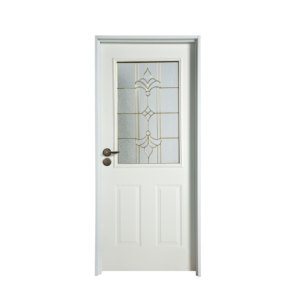
New Arrival Contemporary Front Door Right Hand Inswing Exterior French 9 Lite Low-E Glass Fiberglass Outdoor for Villas
Inquire Specification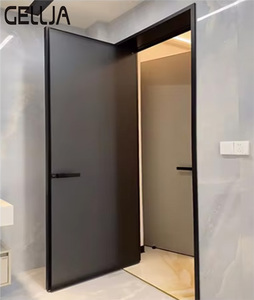
Metal Door Frame Doors Modern Indoor Contemporary Style Aluminium Alloy Showerroom Casement Glass Door Suitable For Hotels
Inquire Specification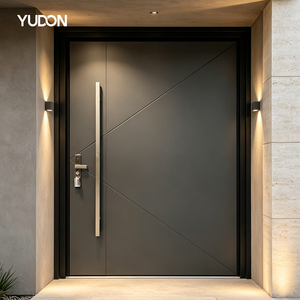
YUDON DOOR Main Entrance Pivot Door Entry Door Pivot Door with Frame Matte Gray Finish Custom Size Soundproof for Villa
Inquire Specification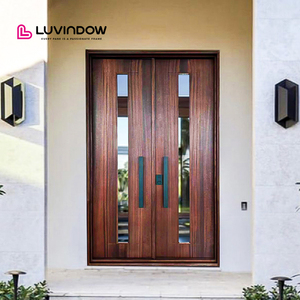
Luvindow Custom USA Villa Modern Design Exterior Solid Wood Main Entry French Door Pivot Aluminum Entry Doors For House
Inquire Specification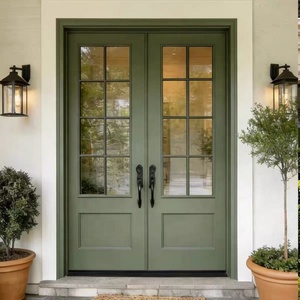
Factory Outlet Aluminum Entrance Security Door Main Swing Double Entry Door Modern Aluminum Exterior Front Door With Glass Panel
Inquire Specification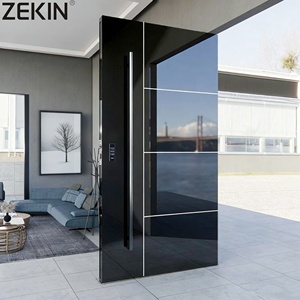
ZEKIN Foshan Modern Design Aluminum Front Entry Doors Company Luxury Security Pivot Door with Smart Locks for Home
Inquire Specification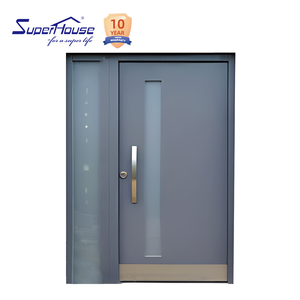
Luxury Aluminum Hurricane Impact Front Entry Door NOA FPA AAMA NFRC Certified High Wind Resistant Villa Exterior Hinged Door
Inquire Specification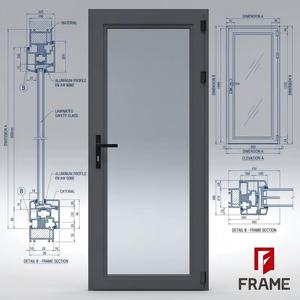
High Quality Aluminium Door Single Double Glass Indoor Single Casement Swing External Or Internal Doors
Inquire SpecificationArchitectural Engineering & Manufacturing Leadership Since 1997
As a global B2B buyer, contractor, or architectural specifier, procuring exterior fenestration systems requires an uncompromising focus on structural integrity, code compliance, and thermal physics. Crestor Door Manufacturing Co., Ltd. has established itself as an authoritative leader in OEM/ODM thermal break aluminum window and door manufacturing. Founded in 1997, our enterprise seamlessly integrates advanced research and development with large-scale industrial output.
Our operational infrastructure spans a 100,000 m² state-of-the-art smart manufacturing facility located in Dongying, Shandong, backed by a dedicated engineering and design center in Beijing. Housing over 200 skilled engineers, master technicians, and facade specialists, Crestor maintains absolute end-to-end control over the entire production cycle. Unlike assembly-only suppliers, we process raw aluminum extrusion alloy, execute precision multi-axis CNC machining, apply high-durability surface finishes, formulate insulated glass units (IGU), and perform final structural testing entirely in-house.
Patented Structural Technology & Laser Cold-Welding
A core differentiator of our CE certified aluminum glass entry doors lies in our proprietary joinery technology. Traditional aluminum door frames relying solely on mechanical corner crimping or standard brackets frequently develop micro-gaps over years of thermal expansion and wind-load cycling. Crestor utilizes advanced laser cold-welding corner technology across our structural door frames, creating a seamless, hermetically sealed corner joint that eliminates air infiltration and water ingress while elevating corner structural strength by up to 300%.
| Performance Criterion | Crestor Factory Standard | Test Standard / Regulatory Benchmark | Architectural Impact |
|---|---|---|---|
| Structural Wind Load | Up to 5.0 kPa (Grade 9 / E5000) | EN 12210 / GB/T 31433 | Withstands severe hurricane-zone wind pressure and high-rise shear loads. |
| Water Tightness | 700 Pa (Class 9A / Static & Dynamic) | EN 12208 / ASTM E331 | Prevents water penetration during extreme wind-driven torrential rainfall. |
| Thermal Transmittance ($U_f$) | $U_f \le 0.9 \text{ W/m}^2\text{K}$ | EN ISO 10077-2 / NFRC 100 | Exceeds Passivhaus energy efficiency guidelines for cold and hot climates. |
| Acoustic Attenuation ($R_w$) | Up to 44 dB (with PVB Acoustic IGU) | EN ISO 140-3 / ASTM E90 | Dampens ambient urban, traffic, and aviation noise for interior luxury acoustics. |
| Air Permeability | Class 4 (Highest Rating) | EN 12207 / ASTM E283 | Eliminates HVAC energy leaks and drafts under positive/negative building pressure. |
Our commitment to rigorous quality assurance is attested by certified compliance with ISO 9001:2015 quality management protocols, Australia’s rigorous AS 2047 StandardsMark Licence (SMK41686), and European Mandatory CE Certification under EN 14351-1. With 219+ active patents, Crestor doors provide international projects with validated, audit-ready technical compliance.
Technological Development Trends in Aluminum Glass Entry Doors
How material science, structural engineering, and smart mechatronics are redefining the next generation of architectural building envelopes.
Multi-Cavity PA66-GF25 Thermal Breaks
Modern architectural entry doors are shifting from simple thermal barriers to multi-cavity Polyamide 66 reinforced with 25% fiberglass (PA66-GF25). Co-extruded with insulating foam inserts, these thermal breaks isolate internal and external aluminum profiles, suppressing conductive heat transfer and preventing interior surface condensation under extreme temperature differentials ($\Delta T > 45^\circ\text{C}$).
Nanotechnology & Low-E Glazing Arrays
Glass integration has evolved into high-performance multi-layer Low-Emissivity (Double/Triple Low-E) coatings sputtered via Magnetron Vacuum Deposition. Combined with warm-edge composite spacers and 90%+ Argon gas fill, modern entrance doors achieve exceptional Solar Heat Gain Coefficients ($SHGC \le 0.22$) while retaining high Visible Light Transmittance ($VLT \ge 68\%$).
Mechatronic Smart Multi-Point Locks
Security engineering now pairs structural aluminum profiles with motorized multi-point gearboxes. Integrated biometric fingerprint sensors, encrypted RFID, and smart IoT building management system (BMS) connectivity enable automatic deadbolt engagement upon closure, tested to EN 1627 RC3/RC4 burglar resistance specifications without compromising sleek aesthetic profiles.
Future Procurement & Supply Chain Trends (2025–2035)
The global trade landscape for building materials is undergoing a structural transformation driven by climate mandates, digital specification workflows, and risk-mitigated supply chain strategies. Major architectural firms, commercial developers, and regional importers must align their procurement criteria with several macro trends:
1. Decarbonization & Circularity (Embodied Carbon Accounting)
European and North American building codes (such as the EU Energy Performance of Buildings Directive and LEED v4.1 standards) are rapidly codifying Environmental Product Declarations (EPD). Procurement decisions now heavily weigh the embodied carbon footprint of entry systems. Crestor utilizes primary low-carbon aluminum billets extruded using clean hydropower energy, along with up to 40% post-industrial recycled aluminum alloys, drastically reducing greenhouse gas emissions per square meter of finished fenestration.
2. BIM Integration & Digital Twin Specification
Paper-based shop drawing approvals are being superseded by Level of Detail (LOD) 350/400 Building Information Modeling (BIM) workflows. B2B buyers now demand parameterized 3D Revit and IFC models containing complete structural physics, thermal thermal-bridge calculations ($K_k$-values), and hardware kinematics. Direct integration between buyer design software and our factory's CNC CAM software ensures zero-tolerance manufacturing errors upon jobsite arrival.
3. Oversized Panoramic Openings & Heavy-Duty Pivot Hardware
Architectural design trends favor grand entrance footprints featuring single-leaf door panels exceeding 3.5 meters in height and 2.0 meters in width. Supporting leaf weights over 400 kg requires factory-engineered, floor-recessed hydraulic pivot spindles with adjustable closing speeds, 90-degree hold-open functions, and heavy-duty structural aluminum profiles capable of resisting dynamic wind gusts without structural deflection ($\le L/175$).
4. Factory Acceptance Testing (FAT) & Complete Unit pre-Assembly
To eliminate expensive jobsite modifications, Tier-1 global developers are shifting toward factory-tested, unitized entry door modules. At Crestor, 100% of custom door assemblies undergo pre-shipment alignment verification, pneumatic seal pressure testing, and hardware operational cycle checks prior to VCI anti-corrosion film wrapping and wooden crate container loading.
Frequently Asked Questions for B2B Importers & Specifiers
Detailed answers to critical engineering, compliance, and logistics questions concerning CE certified aluminum glass entry doors.
Q: What specific documentation is provided to verify CE certification under EN 14351-1?
Every shipment of Crestor aluminum entry doors is accompanied by an official Declaration of Performance (DoP) detailing tested results for wind load, water tightness, air permeability, thermal transmittance, and acoustic performance. Full Type Test Reports (ITT) conducted by accredited third-party notified bodies are available for municipal compliance submission.
Q: How does Crestor ensure structural integrity and thermal break stability in high-traffic commercial applications?
We employ EN AW-6063 T6 aircraft-grade aluminum alloy profiles with a minimum wall thickness of 2.0mm to 3.0mm for structural door frames. Thermal breaks utilize structural glass-fiber reinforced Polyamide 66 (PA66-GF25) mechanical locking strips, engineered to withstand high shear stress, thermal expansion differential, and frequent mechanical operation cycles up to 500,000 openings (EN 12400 Class 8).
Q: What is the difference between Crestor’s OEM and ODM procurement models?
Under our OEM (Original Equipment Manufacturer) service, clients provide architectural blueprints, custom die extrusion specs, and hardware specifications; we manufacture precisely to your proprietary design under strict non-disclosure IP agreements. Under our ODM (Original Design Manufacturer) service, buyers select from Crestor’s pre-engineered, fully tested library of door systems, allowing custom sizing, powder coat color matching, and private-label branding with significantly shortened lead times.
Q: What glazing configurations are available for impact resistance and acoustic dampening?
Our door leaves accommodate double and triple insulating glass units (IGU) ranging from 24mm to 52mm overall thickness. Options include toughened safety glass (EN 12150), hurricane impact-resistant laminated glass featuring Solutia Vanceva or DuPont SentryGlas (SGP) interlayers, Low-E coatings, argon gas injection, and acoustic PVB layers capable of achieving up to 44 dB noise reduction.
Q: How are doors packaged to prevent damage during long-distance maritime freight?
Finished door units undergo a multi-layer protective packaging protocol. Frames and glass are wrapped in protective anti-scratch film, fitted with reinforced corner guards, sealed inside VCI (Vapor Corrosion Inhibitor) moisture-proof bags, and cradled within fully enclosed, ISPM 15 compliant fumigated plywood crates with internal foam damping blocks designed for forklift handling.
Q: What surface finishing treatments are offered, and what is their weatherability rating?
We offer AkzoNobel and PPG certified architectural powder coatings, fluorocarbon PVDF coatings (AAMA 2605 compliant for coastal environments resisting salt spray up to 3,000 hours), hard-anodized finishes, and high-definition vacuum transfer wood-grain finishes. All coatings provide superior UV stability, color retention, and chalking resistance under extreme ambient solar exposure.
Partner with a Leading CE Certified Door Manufacturer
Whether you require custom OEM shop drawings for a commercial project, private-label ODM systems for regional distribution, or engineering validation for high-performance architectural openings, Crestor's engineering team is ready to assist.
Contact Us