[email protected] R&D Beijing · Factory Dongying, China
English
0%

Choosing an Aluminium Front Door is not only about creating a modern entrance. It is about balancing security, insulation, durability, and everyday comfort. A well-designed door can frame the hallway with slim sightlines, clean edges, and generous natural light.

John Leary, an experienced aluminium door fabricator, explains, “A good front door should protect the home without making the entrance feel heavy.” That balance matters. Aluminium is strong enough for large panels and narrow frames, while a quality thermal break can reduce cold transfer around the doorway. However, not every product performs equally well.

Look for tested security hardware, reliable weather seals, and clear thermal-performance information. The installation deserves equal attention. Even an excellent door may leak air if the frame is poorly aligned or the threshold is incorrectly sealed. Small details matter here. A loose handle. A weak gasket. Water near the sill.

Powder-coated aluminium can resist fading, peeling, and corrosion for many years, especially when maintained properly. A soft cloth and mild detergent are usually enough. Harsh chemicals can damage the finish.

There is no perfect material. Aluminium may cost more than basic uPVC, and poor-quality systems can feel cold or noisy. Still, a carefully specified Aluminium Front Door offers a strong, refined, and practical entrance. It can make a house feel safer. It can also make arriving home feel noticeably better.
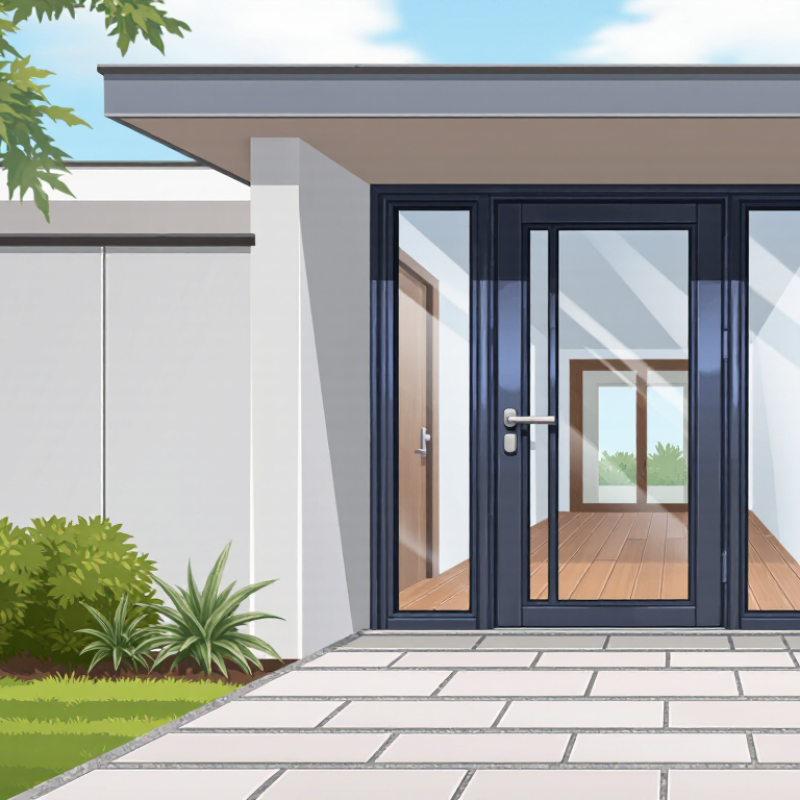
Why Choose an Aluminium Front Door for Your Home?

What Is an Aluminium Front Door?

An aluminium front door is an entrance door made from strong, lightweight aluminium profiles. These profiles form the outer frame, sash, and internal sections. Many modern doors also use a thermal break, which separates the cold exterior metal from the warmer interior surface. This design helps reduce heat transfer and interior condensation.

The door can include insulated panels, double glazing, or decorative glass. A powder-coated finish adds colour and protects the metal from rain, sunlight, and everyday scratches. It does not usually warp like timber. It also resists corrosion when properly finished and maintained. The result feels solid when closed, yet the frame remains relatively slim. That matters in homes with narrow entrances or large glass areas.

An aluminium front door is not maintenance-free. Hinges, seals, locks, and drainage channels still need regular checks. Poor installation can cause drafts, water ingress, or difficult locking, even with excellent materials. A dark finish may also become hot in strong sunlight. This detail is easy to overlook. From a practical assessment, the door should match the wall opening, local weather, security needs, and household habits. A low threshold may improve access, but it must still manage rainwater carefully. The best choice is not always the most expensive one; correct sizing and skilled fitting often matter more.

How Aluminium Front Doors Are Designed and Manufactured

Why Choose an Aluminium Front Door for Your Home?

An aluminium front door begins with accurate site measurements, not a catalogue image. Designers assess the opening, wall depth, threshold, drainage, and local weather exposure. They then select aluminium profiles with thermal breaks, usually made from reinforced polyamide. This interrupts heat transfer through the frame. Gaskets, hinges, locks, glazing, and drainage channels are specified together. A beautiful frame can still perform poorly if these parts do not align.

Manufacturing usually combines CNC cutting, precise corner joining, powder coating, and controlled assembly. Powder coating creates a tough surface with consistent colour, but surface preparation remains critical. Small alignment errors can cause air leakage or uneven closing. Factory teams therefore check frame dimensions, hardware movement, drainage, and seal compression. Testing may follow standards for air permeability, watertightness, and wind resistance. Results depend on the complete door set, not aluminium alone.

The International Aluminium Institute reports that recycling aluminium uses about 5% of the energy required for primary production. This supports careful material recovery after long service. Eurostat’s waste statistics identify construction and demolition as producing roughly 38% of European Union waste. Design choices should therefore consider repair and recycling, not only appearance. In practice, installation is often the weak point. A premium door cannot correct a poorly prepared opening, missing sealant, or careless threshold detail. That limitation deserves more attention.

Key Benefits of Aluminium Front Doors for Homeowners

Why Choose an Aluminium Front Door for Your Home?

Key Benefits of Aluminium Front Doors for Homeowners

An aluminium front door gives a home a clean, modern entrance. Its slim frame can allow more glass and natural light into the hallway. In practical installations, aluminium also feels firm when opened and closed. Quality frames resist warping, swelling, and cracking better than many timber alternatives. That matters during wet winters or hot summers.

Thermal performance depends on the whole door system. Look for a thermally broken frame, efficient glazing, and properly sealed edges. These features can reduce draughts and help maintain a steadier indoor temperature. A well-fitted door may also reduce outside noise, especially near busy roads. Still, aluminium is not flawless. A poorly adjusted frame can leak air, regardless of its material.

Maintenance is refreshingly simple. Wipe the surface with mild soapy water and inspect the hinges twice a year. Durable powder-coated finishes usually keep their colour without regular painting. Secure multi-point locks, laminated glass, and strong hinges can improve everyday security. However, hardware quality and installation matter as much as the door itself. Ask a qualified installer to check threshold levels, drainage, and local building requirements. Small errors can cause water to collect near the entrance. That detail is easy to miss.

Why Choose an Aluminium Front Door?

Typical service life of residential front-door materials

Aluminium front doors typically offer a service life of around 30–45 years when properly installed and maintained. Their corrosion-resistant finish, dimensional stability, and low maintenance requirements make them a durable choice for homeowners. Actual performance depends on product quality, climate, installation, and maintenance.

Indicative residential service-life ranges; actual results may vary.

How Aluminium Doors Compare with Other Front Door Materials

Aluminium front doors offer a different balance from timber, uPVC, and steel. Their slim frames create wider glass areas and a clean entrance, while powder-coated finishes resist peeling and everyday scratches. However, aluminium is not automatically warmer. Choose a thermally broken frame, insulated panel, and tested weather seals. Otherwise, a cold winter morning may reveal condensation around the threshold.

Compared with timber, aluminium needs less repainting and will not swell after repeated rain. Timber can feel warmer and suit traditional homes, but it demands regular maintenance. uPVC is often cheaper and provides good insulation, although its thicker frames may look less refined. Steel offers strong security and can be cost-effective, yet exposed edges may dent or corrode. The U.S. Department of Energy advises comparing door U-factors, because lower values indicate better insulation. Check the complete door assembly, not only the frame.

Tips: Ask for the certified U-value, air-leakage result, and security test standard. Inspect the sill design closely; poor drainage can undermine an excellent frame. The International Aluminium Institute reports that recycled aluminium requires about 5% of the energy used for primary aluminium production. That sounds impressive, but recycling depends on collection and manufacturing practices. I would not call every aluminium door the greener choice. Measure comfort, durability, maintenance, and whole-life impact together.

What to Consider Before Choosing an Aluminium Front Door

Why Choose an Aluminium Front Door for Your Home?

An aluminium front door can feel solid, precise, and surprisingly light. However, appearance should not lead the decision. Thermal performance deserves careful checking. The Passive House Institute sets 0.8 W/m²K as a demanding reference for high-performance doors. Ask for the complete door U-value, not only the frame rating. A poorly specified threshold can still create a cold strip near the floor.

Look closely at the thermal break, glass specification, seals, and installation method. The U.S. Department of Energy reports that windows and doors can account for significant household heat transfer, especially when air leakage is present. Exact losses vary with climate and construction. That detail matters. A warm frame cannot compensate for careless fitting. Request independent test evidence for air permeability, water resistance, and wind load. Security hardware should also suit the building, not merely look impressive.

Maintenance is usually simple, but the finish still needs inspection after harsh weather. Ask how the coating performs in coastal or polluted areas. Aluminium is recyclable, and the International Aluminium Institute reports that recycling uses about 5% of the energy required for primary aluminium production. That figure is encouraging, although recycled content depends on the supplier and product. I would not assume every “eco” claim is complete. Check the declared recycled percentage, expected service life, warranty terms, and end-of-life route before ordering.

Why Choose an Aluminium Front Door for Your Home? - What to Consider Before Choosing an Aluminium Front Door

Consideration Typical Aluminium Front-Door Characteristics What to Check Before Choosing Practical Significance
Material durability Aluminium does not rot, warp, or swell like untreated timber and is naturally resistant to corrosion. Powder-coated finishes provide an additional protective layer. Ask about the alloy, surface treatment, coating specification, and resistance to the local climate, especially in coastal areas. A suitable finish can help the door maintain its appearance and operation in changing weather conditions.
Thermal insulation Modern aluminium doors generally use thermally broken frames, which separate the exterior and interior aluminium sections to reduce heat transfer. Request the complete door U-value, including the frame, glazing, panel, and threshold. Do not rely only on the glass U-value. Lower U-values indicate better heat-retention performance, although local building regulations and climate should guide the target value.
Energy efficiency A well-fitted, insulated aluminium door can reduce draughts and unwanted heat exchange compared with an old or poorly sealed entrance door. Check weather seals, threshold design, installation quality, and the presence of an energy-performance declaration where required. The frame alone does not determine efficiency; sealing, glazing, panels, and installation are equally important.
Security Aluminium provides a rigid frame that can support multi-point locking systems, laminated glazing, reinforced panels, and security hardware. Look for independently tested door-set security performance, robust hinges, a protected cylinder, and a lock system appropriate for the property. Security depends on the complete installed door set rather than the aluminium frame alone.
Maintenance Routine care normally involves cleaning the surface with mild soapy water and keeping drainage channels, hinges, and locking points clear. Confirm the recommended cleaning method and whether moving parts require periodic lubrication or adjustment. Aluminium usually requires less surface maintenance than painted or untreated timber, but hardware still needs care.
Design flexibility Aluminium doors are available in many colours, glazing arrangements, panel designs, opening directions, and threshold configurations. Check colour availability, finish texture, glass privacy options, handle positions, and compatibility with the existing opening. The selected configuration affects appearance, daylight, privacy, ventilation, accessibility, and price.
Glazing options Double or triple glazing, laminated glass, toughened glass, obscure glass, and low-emissivity coatings may be available depending on the door design. Confirm safety-glass requirements, solar-control needs, privacy level, acoustic performance, and the overall glazed-area ratio. More glazing can increase daylight but may affect privacy, heat gain, weight, and cost.
Weather resistance A properly designed door set can provide resistance to wind-driven rain and air infiltration through compression seals, drainage, and a suitable threshold. Review tested air-permeability, watertightness, and wind-load classifications where available, and ensure the threshold suits local exposure. Installation and surrounding wall details are essential to prevent draughts and water ingress.
Acoustic performance Noise reduction depends mainly on the glazing, door panel, seals, frame joints, and installation rather than aluminium alone. Request the tested weighted sound-reduction value, usually expressed as Rw, for the complete door assembly. A higher tested rating may be useful for homes near busy roads, railways, or other noise sources.
Size and weight Aluminium can support large door leaves and slim sightlines, but larger or glazed doors may require stronger hinges, hardware, and structural support. Verify maximum tested dimensions, door-leaf weight, opening direction, clear passage width, and the condition of the surrounding structure. Correct sizing helps prevent sagging, sticking, seal failure, and premature hardware wear.
Accessibility Low or low-profile thresholds and suitable opening hardware can make an entrance easier to use for people with limited mobility. Check threshold height, clear opening width, operating force, handle position, drainage performance, and applicable local accessibility rules. The most weather-resistant threshold is not always the easiest to cross, so the design should balance both needs.
Environmental impact Aluminium is recyclable, and recycling aluminium generally requires much less energy than producing primary aluminium from ore. Ask about recycled content, responsible sourcing, coating durability, product service life, and end-of-life recycling arrangements. Environmental performance should be assessed across production, use, maintenance, and recycling—not from recyclability alone.
Cost and value The total price varies with dimensions, glazing, thermal specification, hardware, finish, threshold, installation, and any structural alterations. Compare complete installed quotations and confirm warranty coverage for the frame, finish, glass, hardware, seals, and installation. A lower purchase price may not represent better value if it includes weaker hardware, limited testing, or inadequate installation.

FAQS

Why should I choose an aluminium front door?

Aluminium doors can feel strong, precise, and surprisingly light. Thermal breaks reduce heat transfer through the frame. Appearance alone is not enough.

What should be measured before ordering?

Measure the opening, wall depth, threshold, drainage, and weather exposure. Small measurement errors can cause leaks or uneven closing. Site accuracy matters.

What is a thermal break?

A thermal break separates inner and outer aluminium sections with an insulating material. It helps reduce cold bridges and heat loss. The complete door still needs testing.

Which door performance details should I check?

Ask for the complete door U-value, not only the frame rating. Check air leakage, water resistance, and wind-load test evidence. Numbers can be incomplete.

How is an aluminium front door manufactured?

Production usually includes CNC cutting, corner joining, powder coating, and controlled assembly. Workers check dimensions, hardware movement, drainage, and seal compression. Tiny errors matter.

Can good materials fix poor installation?

No. A premium door cannot correct a badly prepared opening or missing sealant. The threshold needs careful detailing. Fit matters most.

What should I know about glazing and seals?

Glazing, gaskets, hinges, locks, and drainage channels must work together. A warm frame may still perform poorly with weak seals. That is easy to overlook.

Is an aluminium front door environmentally responsible?

Aluminium can be recycled using far less energy than primary production. Ask about recycled content, service life, repair options, and end-of-life recovery. “Eco” claims need checking.

How much maintenance does the finish require?

Maintenance is usually simple, but inspect the coating after harsh weather. Coastal air and pollution may affect the finish. I would not assume every coating performs equally.

How can I avoid choosing the wrong door?

Compare the complete door set, installation method, warranty, and independent test results. Request details for your local climate. I might still miss something, so review the threshold carefully.

Conclusion

An Aluminium Front Door is a modern entrance solution made from lightweight yet strong aluminium profiles, often combined with insulated panels and high-performance glass. Its design and manufacturing process typically involves precision engineering, durable powder coating, and careful assembly to create a door that is secure, weather-resistant, and visually appealing. Homeowners can choose from various colours, finishes, glazing options, and configurations to suit both contemporary and traditional properties.

The main advantages of an Aluminium Front Door include excellent durability, low maintenance, resistance to rust and warping, and reliable thermal performance. Compared with timber, aluminium requires less upkeep, while it generally offers greater strength and stability than many plastic-based alternatives. However, homeowners should consider installation quality, insulation ratings, security features, style, budget, and local climate before making a decision. With the right specifications, an aluminium entrance door can provide lasting performance, energy efficiency, and a clean, welcoming appearance.

Evelyn

Evelyn

Evelyn is a highly skilled marketing professional dedicated to helping businesses understand how thoughtful strategy, reliable products, and meaningful customer experiences can work together to create lasting value. With a strong knowledge of our company’s solutions, she brings clarity, insight,......