[email protected] R&D Beijing · Factory Dongying, China
English
0%

Choosing an Aluminium Entrance Door is more than selecting a modern colour and a polished handle. It affects security, insulation, weather protection, and the character of your home. A dependable door should close firmly, resist coastal moisture, and remain smooth after thousands of openings. Small details matter. Check the frame depth, threshold design, glazing specification, and locking system before comparing prices.

Aluminium fenestration consultant James D. Lowry says, “A good entrance door should protect the home quietly, without demanding constant attention.” That practical view shapes the ten tips in this guide. We will examine thermal breaks, powder coating, hardware quality, installation accuracy, maintenance, and supplier support. We will also consider accessibility and the door’s relationship with surrounding brickwork or render. A beautiful door can still perform poorly if the opening is measured incorrectly.

Experience teaches an uncomfortable lesson. The cheapest quotation is rarely the clearest choice. Some specifications hide weak hinges, limited warranties, or unclear glass ratings. I have seen homeowners focus on appearance and overlook drainage beneath the threshold. That mistake can become expensive. Not every recommendation suits every property. A busy family entrance needs different priorities from a rarely used garden-facing doorway. Weather exposure changes the decision too. Coastal homes demand stronger attention to finishes and corrosion resistance. These tips are designed to help you ask sharper questions, compare like with like, and choose an Aluminium Entrance Door that feels secure today and remains dependable years later. Mistakes are possible, even with careful planning. Good decisions leave room for inspection.
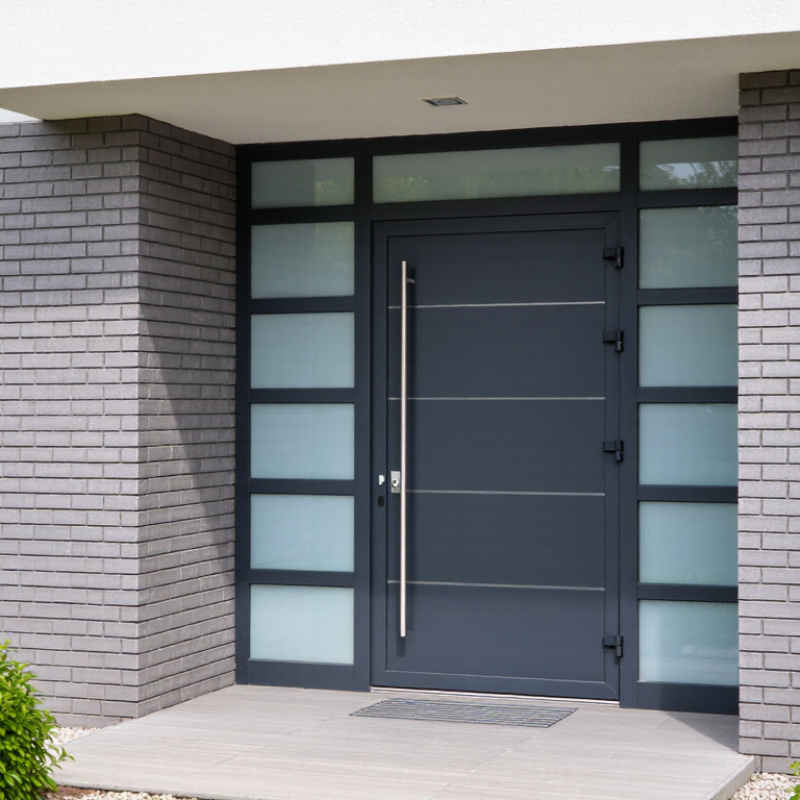
10 Tips for Buying an Aluminium Entrance Door

Define Your Doorway’s Size, Layout, and Opening Requirements

Before choosing an aluminium entrance door, measure the doorway carefully. Record the width at the top, middle, and threshold. Walls are not always perfectly square. I once measured only the widest point and overlooked a 6-millimetre difference near the floor.

Check the opening layout, including hinges, nearby walls, steps, and internal furniture. Decide whether the door should open inward or outward. Allow space for the handle, closer, and surrounding trim. A narrow hallway may need a different swing direction than the original door. Also inspect the threshold height, because a raised sill can affect access and drainage.

Tip: Draw the doorway from above. Mark the swing arc, frame depth, and clear walking area. Then share these measurements with a qualified installer for verification. Do not rely only on old building plans. They may not match the current opening. Leave practical tolerance for levelling and sealing, but avoid guessing. A frame that is too tight can bind during seasonal movement. One that is too loose may reduce security and weather resistance. I still find this stage easy to rush, especially during renovations. That is a mistake. Measure twice, photograph the corners, and note any uneven masonry before ordering.

Compare Aluminium Grades, Frames, and Structural Strength

When buying an aluminium entrance door, compare the alloy grade, not just the finish. Common profiles use 6063 aluminium because it extrudes cleanly and supports neat, detailed frames. 6061 aluminium offers higher strength, but it may cost more and provide fewer profile options. The temper also matters. T5 and T6 indicate different heat-treatment conditions, so ask for the exact specification.

A thick frame is not automatically a strong frame. Check the profile depth, wall thickness, corner joints, hinge reinforcement, and fixing points. A narrow frame may look elegant but flex under a heavy glazed panel. Thermal-break frames can reduce cold bridging and interior condensation. The break must be continuous, not a small plastic insert placed only in visible areas. Small details matter.

I once focused too heavily on aluminium grade. That was incomplete. The full door system matters more. Ask for air, water, wind-load, and operation test results. Confirm how the frame anchors into masonry or concrete. Look closely at the threshold, especially where rain can collect. For large doors, require reinforced hinge zones and properly supported glass. A strong-looking sample can still perform poorly when installation is weak. Check the installer’s method, not only the brochure.

10 Tips for Buying an Aluminium Entrance Door - Compare Aluminium Grades, Frames, and Structural Strength
Tip What to Compare Relevant Data and Typical Values What to Check Before Buying Why It Matters
1 Aluminium alloy and temper Common architectural alloys include EN AW-6063 and EN AW-6061. Typical 0.2% proof-stress values are approximately 110–160 MPa for 6063-T5/T6 and about 240–275 MPa for 6061-T6, depending on thickness, standard, and product form. Request the exact alloy and temper designation, such as 6063-T5, 6063-T6, or 6061-T6, together with the applicable material standard and test certificate. The alloy and heat treatment affect strength, machinability, corrosion resistance, and the allowable size of the door components.
2 Frame profile depth and wall design Residential aluminium entrance-door systems commonly use frame depths of roughly 50–100 mm. Thermally broken profiles generally contain a low-conductivity polyamide separator between the inner and outer aluminium sections. Compare the complete frame cross-section, profile depth, internal webs, corner joints, thermal-break width, and the manufacturer’s published performance data. A deeper, well-designed profile can improve stiffness and reduce deflection, while a thermal break limits heat flow through the frame.
3 Structural strength and deflection Strength depends on profile geometry, unsupported span, door weight, wind load, hinges, fixings, and glass or panel configuration—not alloy grade alone. A structural calculation should verify bending stress and serviceability deflection for the actual opening. Ask for design calculations or test evidence for the specified door size. Confirm the maximum tested height and width, permissible panel weight, and deflection limits. Excessive deflection can cause rubbing, failed seals, difficult locking, air leakage, and premature hardware wear.
4 Reinforcement and corner connections Larger or heavier doors may require steel or aluminium reinforcement, reinforced hinge zones, mechanically fastened corners, crimped joints, or structural adhesive systems. The correct solution varies with design and load. Inspect the hinge-side reinforcement, lock-side reinforcement, corner construction, fastener spacing, and whether the threshold and frame are securely tied into the building structure. Strong connections transfer wind, operating, and impact loads into the surrounding wall instead of concentrating stress in the profile corners.
5 Thermal performance Compare the whole-door U-value, expressed in W/m²K, rather than the frame value alone. Performance is influenced by frame, panel, glazing, spacer, threshold, seals, and door dimensions. Request a declared or tested whole-door U-value for a door close to your intended size. Confirm whether the result includes the frame, glazing or panel, threshold, and hardware. Whole-door performance provides a more realistic indication of heat loss and condensation risk than an isolated profile value.
6 Air, water, and wind resistance European performance classifications commonly use EN 12207 for air permeability, EN 12208 for watertightness, and EN 12210 for resistance to wind load. Class numbers should be compared only within the relevant test standard. Obtain the tested classification for the complete door assembly, including the frame, leaf, seals, threshold, glazing or panel, and the stated test size. Laboratory results for a profile or small sample do not necessarily represent the performance of a full-size installed entrance door.
7 Glazing or insulated panel specification Double glazing typically contains two panes separated by an insulating cavity; triple glazing contains three panes and two cavities. Low-emissivity coatings and inert-gas fills can improve thermal performance, while laminated glass improves impact and safety characteristics. Confirm glass type, thickness, safety classification where required, spacer design, gas-fill declaration, panel construction, and the method used to retain the glazing. Glazing or panels often account for a large part of the door area and significantly affect heat loss, security, weight, and acoustic performance.
8 Hinges, locks, and operating loads Hardware must be rated for the actual leaf mass, dimensions, usage frequency, and security requirements. Door mass increases with size, thicker panels, laminated glass, and additional hardware. Verify the hinge load rating, number and position of hinges, lock-point arrangement, cylinder protection, handle fixing, and adjustment provisions. Check compatibility with the selected door weight. Correctly rated hardware helps maintain alignment and secure latching throughout the door’s service life.
9 Threshold and drainage detail Thresholds may be standard, low-profile, or accessible. Weather performance depends on threshold height, drainage paths, gaskets, sill pans, and the installation interface—not on the threshold material alone. Compare the threshold height with accessibility needs and verify drainage outlets, end dams, sill flashing, seal continuity, and the required finished-floor level. Poor threshold detailing is a common route for water ingress and air leakage, especially on exposed elevations.
10 Finish, corrosion resistance, and installation Powder coating and anodising are established aluminium finishes. Durability depends on coating specification, surface preparation, environment, edge protection, drainage, and installation quality. Dissimilar-metal contact can cause galvanic corrosion in wet conditions. Request the coating or anodising specification, colour and gloss tolerance, maintenance instructions, warranty conditions, compatible fixings, and an installation method that prevents water traps and metal contact corrosion. A durable finish and correctly sealed installation protect the frame while preserving appearance and long-term performance.

Evaluate Thermal Insulation, Weather Sealing, and Energy Efficiency

An aluminium entrance door should protect your home from heat loss, wind, and driving rain. Start by checking its U-value, which indicates how quickly heat passes through the door. Lower values usually mean better insulation. Ask whether the frame contains a thermal break. Without one, aluminium can conduct outdoor cold directly indoors.

Look closely at the weather seals around the frame and panel. They should sit evenly, without gaps, flattening, or visible damage. A compressed seal may stop drafts today but fail after repeated use. Check the threshold too. It should manage rainwater while remaining accessible and safe to cross. During a showroom visit, open and close the door slowly. Notice whether it feels solid or catches against the frame.

Installation matters as much as the product specification. A well-insulated door can perform poorly if the surrounding wall joint is left unsealed. Request details about expanding tapes, airtight membranes, and drainage paths. In my experience, installers sometimes focus on appearance and rush these hidden areas. That is a costly oversight. Ask for test evidence covering air permeability, water resistance, and wind load. Independent certification is more reliable than vague claims such as “energy saving.” Check the glass specification separately if the door includes glazing. Double glazing may help, but its spacer, coating, and edge seal also affect performance. Small details matter. My own mistake was ignoring the exposed doorstep; winter drafts entered beneath the threshold. Examine the finished installation on a cold or windy day, when weak points become easier to detect.

Choose Glass, Security Hardware, Finishes, and Design Features

Tip 1: Select glass for both daylight and control. Low-e double glazing can reduce heat transfer, according to the U.S. Department of Energy. Ask for the glass U-value, solar heat gain coefficient, and safety classification. Clear glass looks elegant, but it may expose your hallway at night. Frosted or laminated options offer better privacy. My own mistake was choosing appearance first.

Tip 2: Treat security hardware as a complete system. Specify a multipoint lock, reinforced keeps, hinge protection, and a cylinder with documented resistance testing. The European burglary-resistance standard EN 1627 evaluates doors through resistance classes, not attractive hardware alone.

Tip 3: Check the threshold and installation details. A strong lock cannot correct a poorly anchored frame. Professional fitting matters more than many buyers expect. The National Fenestration Rating Council also stresses certified performance ratings for comparing products consistently.

Tip 4: Review finishes under real lighting. Powder coating usually provides durable colour, while darker shades can absorb more solar heat.

Tip 5: Confirm the finish warranty and cleaning requirements.

Tip 6: Match the panel, sidelights, handle, and frame proportions carefully. A narrow entrance may need vertical glazing to feel taller.

Tip 7: Test the opening movement before ordering. A door can look perfect and still feel awkward.

Tip 8: Request drainage details, weather seals, and air-leakage data.

Tip 9: Consider accessibility, including a low threshold and easy-grip handle.

Tip 10: Keep samples at home for several days; online colours often deceive.

Confirm Installation Standards, Maintenance Needs, Warranty, and Cost

Tip 1
Confirm installation standards before comparing prices. A well-made aluminium door can still leak air when the sill, flashing, or frame is fitted poorly. Ask whether installers follow applicable standards, such as EN 14351-1 or AAMA/WDMA/CSA A440. Check the door’s U-value, air-leakage rating, water resistance, and security test results. The International Energy Agency reports that buildings use about 30% of global final energy. Small installation gaps deserve attention.

Tip 2
Examine maintenance needs in real conditions. Look closely at hinges, drainage channels, seals, locks, and powder-coated surfaces. Coastal homes may need more frequent cleaning because salt deposits accelerate corrosion around fittings. Ask for a written cleaning schedule and approved methods. Do not assume “low maintenance” means maintenance-free. It does not. Inspect seals every year, especially after heavy rain or strong wind.

Tip 3
Read the warranty before signing. Confirm coverage periods for the frame, finish, glass, hardware, and installation separately. Request clear wording for fading, condensation, water entry, and adjustment visits. The 2024 Remodeling Cost vs. Value report shows that replacement projects can deliver strong resale value, but returns vary widely by location and material. Cost should include delivery, preparation, trim, disposal, and future repairs. My own practical mistake would be comparing only the door price; fitting often changes the final bill. Get two or three itemised quotations.

FAQS

How should I measure an aluminium entrance doorway?

Measure the width at the top, middle, and threshold. Record the smallest measurement. Walls may differ by 6 millimetres. Photograph each corner and note uneven masonry. Measure twice before ordering.

What should I inspect around the doorway?

Check hinges, nearby walls, steps, furniture, and threshold height. Mark the handle, closer, trim, and frame depth. A raised sill can affect access and drainage. Old plans may be inaccurate.

How do I choose the door’s opening direction?

Draw the doorway from above. Mark the swing arc and walking space. A narrow hallway may need an inward opening. Check furniture and wall clearance. A door can look right but move awkwardly.

Which glass features should I consider?

Ask for the glass U-value and solar heat gain information. Low-emissivity double glazing can reduce heat transfer. Clear glass gives daylight but may expose the hallway at night. Frosted or laminated glass can improve privacy and safety.

What security details should the door include?

Consider a multipoint lock, reinforced keeps, and hinge protection. Choose a cylinder with documented resistance testing. Look for certified performance ratings. Attractive hardware alone is not enough.

Why is installation important for door security?

A strong lock cannot fix a poorly anchored frame. Professional fitting helps maintain alignment and weather resistance. A frame that is too tight may bind during seasonal movement. One that is too loose may reduce security. Installation is easy to underestimate.

How should I choose the finish and colour?

Review finish samples under indoor and outdoor lighting. Powder-coated finishes usually provide durable colour. Darker shades may absorb more solar heat. Keep samples at home for several days. Online colours can deceive.

What accessibility details should I request?

Consider a low threshold and easy-grip handle. Confirm the threshold height before ordering. Check drainage and weather-seal details. Test the opening movement in person. Small details matter.

Conclusion

Choosing the right Aluminium Entrance Door starts with understanding your doorway’s exact size, layout, swing direction, and opening requirements. Accurate measurements help prevent installation problems and ensure smooth daily use. You should also compare aluminium grades, frame construction, and structural strength to find a door that offers long-term stability. Pay close attention to thermal insulation, weather seals, drainage, and energy efficiency, especially if the entrance is exposed to changing temperatures or heavy rain.

The best door should also match your practical and visual needs. Consider the type of glass, locking system, hinges, handles, surface finish, colour, and other design features, while prioritising security and durability. Before purchasing, confirm that installation will follow suitable building and fitting standards, and ask about cleaning, maintenance, repair support, warranty coverage, and total cost. By evaluating these factors together, you can select an Aluminium Entrance Door that improves comfort, security, appearance, and value over time.

Oliver

Oliver

Oliver is a marketing professional with a deep understanding of the company’s products and the needs of the people who use them. He regularly contributes expert articles to the company website, turning product knowledge, industry developments, and practical insights into clear, useful guidance. His......