A front door has to do more than look impressive in a product photograph. It must suit the building, withstand local weather, and arrive with dimensions and hardware that match the project. For global buyers, those details can be harder to confirm across suppliers and markets.
This guide introduces seven premium aluminum entry door options for different design and purchasing needs. It considers frame construction, glazing choices, finishes, locking hardware, customization, and the clarity of available product specifications. A Premium Aluminum Entry Door may suit a modern home, a commercial entrance, or a renovation, but the right choice depends on the opening and intended use. No single model fits every project.
Looks can mislead. A slim profile may appeal to architects, while buyers may need clear information about thermal performance, weather resistance, maintenance, and installation requirements. Ask manufacturers for current technical documents, warranty terms, finish samples, and confirmation of export packaging. Where possible, check references from comparable projects. Requirements differ by location, so verify applicable building and energy standards with qualified local professionals before ordering.
The comparison also recognizes practical trade-offs. Custom sizing can improve the fit, yet it may affect lead times and coordination. A striking finish may require more care than expected. Even careful comparisons leave gaps when specifications are incomplete. Use the seven selections as a starting point, then confirm details directly with each supplier before making a purchase.
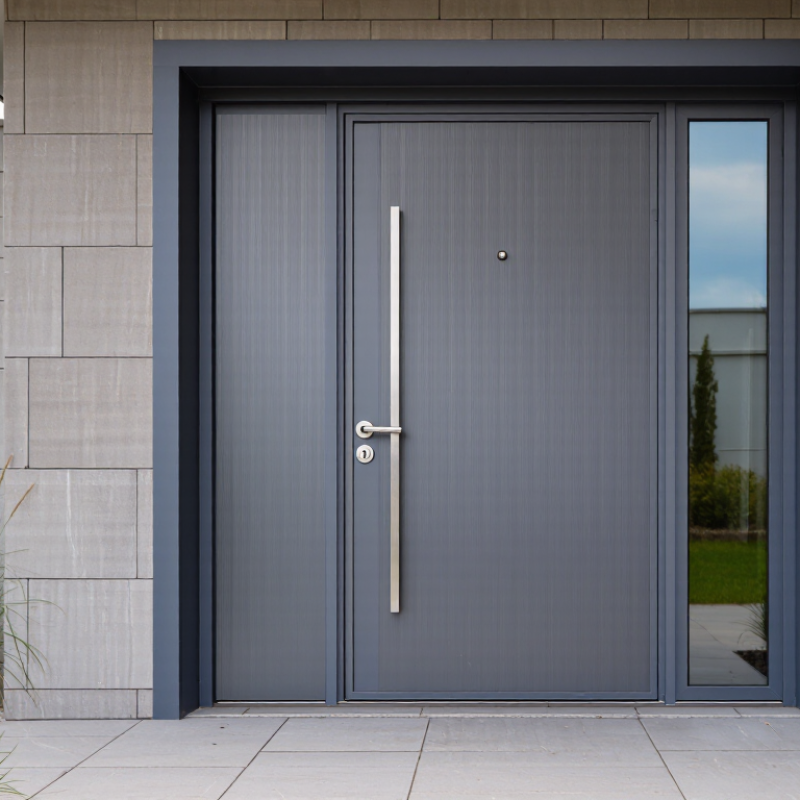
When comparing premium aluminum entry doors, read the NFRC label rather than relying on phrases like “energy efficient.” The U-factor measures heat transfer through the rated door assembly; a lower number generally means better insulation. For a cold-climate home, that can help limit heat loss near a draft-prone foyer. Still, the number alone cannot tell you whether the door suits your building.
SHGC, or Solar Heat Gain Coefficient, estimates how much sunlight-driven heat passes through the product. A higher value may help warm a shaded entrance in winter, but can add unwanted heat to a west-facing doorway on sunny afternoons. There is no universally best rating. Consider your climate, entrance direction, glazing area, and whether direct sun reaches the door. Small differences in glass layout can matter.
Check that the NFRC rating matches the door configuration you plan to buy, including its glazing and frame. Aluminum conducts heat readily, so thermal breaks and insulated cores can influence performance. The label is useful, but it does not predict every real-world result. Installation quality matters too: a poorly sealed threshold can allow drafts even when the rated U-factor looks strong. One practical check: inspect the weatherstripping and ask how the frame is insulated. I would not choose from one number alone; that is an easy detail to overlook.
Aluminum entry doors differ in how they open and how they manage heat. A single-hinged door is familiar and easy to weather-seal when installed squarely. Double-hinged doors create a wider opening, but need more wall clearance. Pivot doors rotate on floor and ceiling hardware, making a broad, dramatic entrance. Their weight and alignment demand careful planning.
Thermal-break doors use an insulating barrier between interior and exterior aluminum sections. This can reduce heat transfer, though glazing, seals, and installation also matter. Insulated-panel doors offer privacy and a more solid appearance. Glazed doors bring daylight into a foyer; specify suitable safety glass and consider afternoon glare. Sliding entry doors save swing space, but track drainage and locking hardware deserve close attention. Small details matter.
The seven options are not perfectly separate categories: a hinged door can also have a thermal break or glazed panels. Compare the complete assembly, not just the frame description. Ask for documented air, water, and thermal performance, then check that testing suits your climate and opening size. A beautiful pivot door may disappoint if the threshold leaks in wind-driven rain. It happens. Measurements, local installer experience, and clear warranty terms can be as important as the door style.
Comparison guide: actual thermal, air, water, wind-load, security, and size performance depends on the complete door assembly, glazing, hardware, installation, and local test standards. A thermal break is a frame-construction feature and can be combined with several operating styles.
| Door Type | How It Opens | Thermal & Weather Considerations | Space & Accessibility | Best Suited For | Key Buying Checks |
|---|---|---|---|---|---|
| 1. Thermally Broken Hinged Door | A single leaf swings on side hinges, inward or outward. | A polyamide or similar insulating barrier separates the inner and outer aluminum sections, reducing heat transfer through the frame. Whole-door results depend on glazing, seals, threshold, and tested assembly. | Needs a clear swing area. A low or accessible threshold can be specified, subject to water-management requirements. | Primary residential entrances in climates with hot summers, cold winters, or significant temperature variation. | Request whole-door U-factor or U-value, air-leakage and water-penetration test results, thermal-break details, and threshold specifications. |
| 2. Aluminum Pivot Door | Rotates around a vertical pivot set inboard from the door edges rather than conventional side hinges. | Large leaves can increase air pressure and sealing demands. Performance depends on pivot hardware, perimeter seals, frame design, and installation. | Requires clearance on both sides of the pivot path. The opening and handle arrangement should be checked for accessible use. | Architectural entrances where a wide, prominent door leaf is desired. | Confirm maximum tested leaf dimensions and weight, pivot capacity, closing control, multipoint locking, and perimeter-seal design. |
| 3. Non-Thermally Broken Hinged Door | A single aluminum leaf swings on side hinges; the frame and sash do not include a thermal barrier. | Direct metal paths can conduct more heat than thermally broken construction. Suitability depends on climate, building use, and applicable energy requirements. | Needs a clear swing area. The simple operating layout is familiar and can support a straightforward entry configuration. | Interior entrances, mild climates, or locations where thermal separation is not a primary requirement. | Check local energy-code compliance, condensation risk, weather-seal arrangement, corrosion protection, and the tested performance of the complete unit. |
| 4. Aluminum Sliding Door | One or more panels slide horizontally along a track, typically with at least one fixed panel. | Does not require a swing arc, but track drainage, interlocking stiles, and perimeter seals are important to air and water control. | Space-efficient indoors and outdoors. A standard track may create a threshold height that needs to be considered for accessibility. | Entrances opening onto patios, terraces, or compact outdoor areas. | Review track drainage, sill height, panel overlap, locking points, screen compatibility, and certified air and water performance. |
| 5. Aluminum Lift-and-Slide Door | Turning the handle lifts the panel slightly off its seals so it can roll; closing lowers it onto the seals. | The lowered panel can compress seals around the perimeter. Certified performance still depends on the specific frame, panels, threshold, and installation. | Slides without a swing arc. Large, heavy panels can be easier to move when correctly sized and fitted with compatible hardware. | Large glazed openings where smooth operation and a strong closed-position seal are priorities. | Check panel weight limits, operating-force guidance, sill and drainage details, locking hardware, and whole-system test documentation. |
| 6. Aluminum Bifold Door | Multiple linked panels fold and stack to one or both sides of the opening. | Multiple joints and seals require careful design and adjustment. Weather resistance varies with the system, configuration, and exposure conditions. | Opens a wide passage, but the folded panels occupy space at the sides. A suitable traffic-door configuration may be available. | Wide entrances or indoor-outdoor openings where a broad clear opening is useful. | Confirm panel count and stacking direction, threshold details, hardware load ratings, locking arrangement, and tested weather performance for the chosen layout. |
| 7. Double-Leaf Hinged Door | Two hinged leaves meet at the center; one leaf may serve as the everyday access door while the other is secured when not needed. | Thermal and weather performance depends on the frame construction, meeting-stile seals, locking system, threshold, and whether either leaf is thermally broken. | Needs swing clearance. Both leaves can open to create a wider passage for moving furniture or equipment. | Formal or generously sized entrances where occasional wide access is valuable. | Check the active-leaf width, flush bolts or equivalent securing hardware, meeting-stile seals, multipoint locking, and accessible clear-opening width. |
Aluminum’s density is about 2.70 g/cm³, much lower than steel’s. That number describes the material, not the finished door’s weight. Profile shape, wall thickness, glass, and hardware all affect what installers handle on site. A broad, reinforced frame can still feel substantial. Density alone cannot tell buyers how rigid or durable a door will be.
Thermal breaks address a different issue. Aluminum transfers heat readily, so an uninterrupted frame can become cold indoors during winter. Many premium systems separate the inner and outer sections with a low-conductivity strip, often made from polyamide. This reduces heat flow through the frame, but it does not make the whole doorway equally insulating. Glass, seals, corner joints, and installation gaps matter too. There is a catch.
For global buyers, request tested whole-door performance rather than relying on a frame-only figure. Check the specified thermal transmittance, air leakage, and water resistance for the intended configuration. Ask how the thermal break is joined and whether the test sample matches the proposed size and glazing. A specification sheet can make this look simpler than it is. Even a well-designed frame may underperform if drainage is blocked or the opening is poorly sealed. Temperature, exposure, and workmanship deserve a closer look.
For premium aluminum entry doors, a strong test record matters more than a thick-looking frame. ASTM E330/E330M evaluates doors under uniform static air pressure, testing both inward and outward loading. The standard does not set one universal pass pressure; buyers should compare the tested pressure with the project’s wind-load requirements. Watch the frame corners and hinge-side jamb during review. Deflection matters.
E330 is not a forced-entry test. Ask for separate security-test evidence if resistance to physical attack is a priority. For finish durability, AAMA 2605-20 is a useful benchmark for high-performance organic coatings on aluminum. The specification includes a 10-year South Florida outdoor-weathering exposure, a demanding test of color and gloss retention under intense sun, heat, and moisture. That does not mean every installed door will look unchanged for ten years. Site exposure, cleaning, and installation all matter.
Request the full test report, not just a pass claim. Check that the tested specimen matches the offered door’s size, glass, hardware, and construction. A mismatch can weaken the comparison. Confirm coating preparation and finish documentation, too. Small details count. ASTM E330 and AAMA 2605 assess different things: structural response and coating durability. Neither alone proves overall security or long-term performance. Buyers should treat both as evidence, then weigh them against local wind exposure, salt air, and maintenance conditions.
7 Best Premium Aluminum Entry Doors for Global Buyers
Global sourcing starts with the opening, not the catalog. Measure width and height at three points, then record jamb depth, sill condition, handing, and threshold height. Older masonry openings are rarely square. Ask for shop drawings in millimeters and inches, and confirm whether quoted dimensions describe the frame or rough opening. Easy to miss. Before ordering, check local requirements for wind pressure, thermal performance, accessibility, and fire egress where applicable. The IEA’s 2023 Global Status Report for Buildings and Construction estimates that buildings accounted for 30% of global final energy use and 26% of energy-related emissions in 2022. That context makes verified performance worthwhile, but it does not replace local code checks.
Compare documented ratings, not vague claims. Request test reports showing applicable air leakage, water penetration, structural performance, and thermal values. NFRC labels can help compare U-factor and solar heat gain coefficient where that rating system is recognized; local standards may differ. One weak point in many sourcing plans is assuming a rating transfers unchanged across markets. Verify the test method and product configuration with the local project team.
Tips: Confirm anchor locations, wall substrate, flashing, drainage, and perimeter sealant before shipment. Ask who handles installation and whether the warranty depends on approved methods. A well-rated door can still underperform if the sill is uneven or water has no path out.
Metric values are conversions of the nominal inch widths using 1 inch = 25.4 mm, rounded to the nearest millimeter. These are example slab sizes, not code minimums; confirm the actual slab, frame, rough opening, clear opening, and local requirements before ordering.
It estimates heat transfer through the rated door assembly. A lower value generally means better insulation. It is not the whole story.
SHGC estimates sunlight-driven heat entering through the door. A higher value may help a shaded entrance feel warmer in winter, but could add afternoon heat on a sunny west-facing side.
Check that each rating matches the glazing and frame you plan to buy. A different glass layout can change performance.
It separates interior and exterior aluminum sections with an insulating barrier. This can reduce heat transfer, though seals and installation matter too.
Pivot doors need careful alignment because they rotate on floor and ceiling hardware. Double-hinged doors also need extra wall clearance. Measure first.
Glazing can bring daylight into a foyer, but direct sun may cause glare. Specify suitable safety glass and consider the entrance’s direction.
Measure width and height at three points, then record jamb depth and threshold height. Older masonry openings may not be square. Easy to miss.
Ask for test reports covering air leakage, water penetration, structural performance, and thermal values. Confirm that the test method and configuration suit your project.
Yes. An uneven sill, weak weatherstripping, or poor perimeter sealing can cause problems. I would not choose by one number alone.
Choosing a Premium Aluminum Entry Door starts with understanding how it performs, not just how it looks. NFRC U-factor indicates how readily heat passes through a door assembly, while SHGC describes how much solar heat it admits. Comparing hinged, pivot, thermal-break, sliding, and other configurations helps buyers weigh appearance, opening space, insulation, and everyday use. Aluminum’s density is about 2.70 g/cm³, and a well-designed thermal break can reduce heat transfer through the frame.
Durability and safety also depend on the complete assembly. ASTM E330 evaluates structural performance under uniform air pressure, while AAMA 2605 sets demanding expectations for exterior coating performance. Before sourcing internationally, confirm dimensions, glazing and hardware options, performance ratings, applicable local building requirements, and installation details. Careful coordination among the supplier, designer, and installer can help ensure the selected door suits its climate, opening, and intended use.