Choosing a Modern Aluminum Entry Door is more than selecting a stylish entrance. It affects security, energy use, weather resistance, and the first impression of a property. Global buyers face different climates, building standards, and installation conditions. A door suited to Dubai may perform differently in Toronto or coastal Sydney.
Architect Ludwig Mies van der Rohe’s principle, “Less is more,” still offers useful guidance. Clean lines should not hide weak hardware or poor insulation. Look for thermally broken frames, multi-point locks, weather-resistant seals, and carefully tested glass. These details matter when strong sunlight, heavy rain, salt air, or winter frost reach the entrance.
A practical comparison should also examine powder-coating quality, hinge strength, threshold design, glazing options, and after-sales support. Ask suppliers for test data, warranty terms, installation instructions, and replacement-part availability. Certification can support confidence, but it does not replace professional inspection.
No door is perfect.
Even an excellent aluminum system can fail when measured poorly or installed without proper drainage. I have seen attractive doors develop alignment problems because the surrounding wall was not prepared correctly. That detail is easy to overlook. Buyers should compare these seven modern options through real performance, not photographs alone. The best Modern Aluminum Entry Door balances visual simplicity with dependable operation, measurable thermal performance, and practical service support across borders.
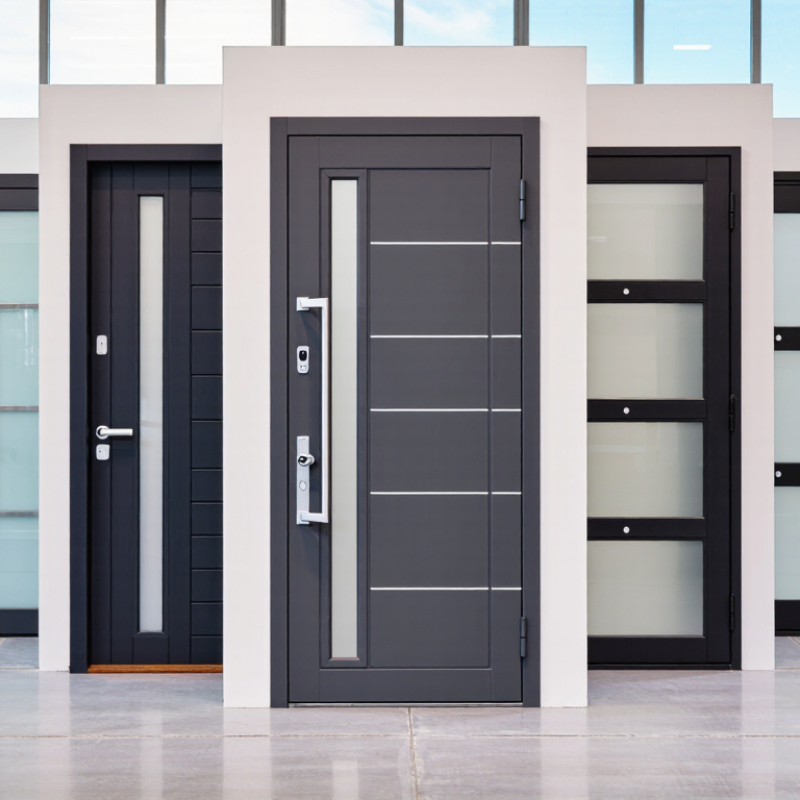
A modern aluminum entry door is more than a slim frame and a dramatic glass panel. It combines thermal control, weather resistance, security, and precise daily operation. The International Energy Agency reports that buildings consume about 30% of global final energy. That makes the door’s performance relevant, not decorative.
A thermally broken aluminum frame separates interior and exterior metal paths, reducing heat transfer. Low-emissivity glazing can further limit unwanted solar gain and winter heat loss.
The U.S. Department of Energy estimates that windows account for 25–30% of residential heating and cooling energy use.
Entry doors are not identical to windows, but the lesson remains useful: weak seals matter. Air leakage should be tested, not guessed. Look for documented results under ASTM E283 or equivalent standards, plus water and structural testing.
Experience shows that hardware often decides whether a door feels genuinely modern.
Multi-point locking, adjustable hinges, concealed drainage, and replaceable weather seals support long-term reliability. A flush threshold can improve accessibility, yet poor installation may invite water inside. That detail is easy to miss.
Buyers should check frame depth, glass specification, corrosion protection, and repair access before choosing a design.
The honest limitation is simple: aluminum conducts heat efficiently without a thermal break, so a beautiful door can still perform poorly. Modern design requires evidence, not only clean lines.
7 Best Modern Aluminum Entry Doors for Global Buyers?
Key Features Global Buyers Should Compare
When global buyers compare modern aluminum entry doors, appearance should not lead the decision. Measure thermal performance through U-value, frame design, and thermal-break quality. A well-designed break reduces heat transfer through the metal frame. Ask for tested air leakage, water penetration, and wind-load results. These documents matter more than a polished product image. Small detail. Also compare glazing, because laminated or insulated glass can improve safety, comfort, and sound control.
Hardware deserves equal attention. Check hinge capacity, cylinder quality, multipoint locking, and replacement access. A heavy door may feel secure, yet poor alignment can cause rubbing within months. Request corrosion-resistant finishes suited to coastal air, intense sun, or freeze-thaw cycles. Powder coating needs consistent coverage, especially around corners and drainage points. Ask whether color samples show outdoor aging, not only showroom lighting.
Sizing and installation often decide real performance. Compare frame depth, threshold height, sill drainage, and tolerance for uneven openings. Confirm the door meets local accessibility and emergency-egress requirements where applicable. A factory warranty is useful, but local technical support may matter more. Get written details for delivery, replacement parts, glass specifications, and installation responsibility. Do not ignore maintenance. Wipe coastal salt from exposed surfaces and inspect seals annually. One concern remains: buyers can overvalue minimal design and overlook serviceability. A beautiful door that cannot be adjusted easily may become an expensive lesson.
Key features are scored on a 0–100 comparison index using widely used specification categories: thermal performance, weather resistance, acoustic potential, and security hardware readiness. Higher scores indicate stronger specification potential; actual results depend on testing, installation, glazing, and local building codes.
Buyers should verify U-value or U-factor, air leakage, water penetration resistance, acoustic rating, corrosion protection, threshold design, and multi-point locking through independent test documentation.
Global buyers are choosing aluminum doors for clean lines, corrosion resistance, and easier maintenance. The International Energy Agency reports that buildings consume about 30% of global energy. That makes thermal performance more than a design detail.
A thermally broken, slimline glazed door suits bright entrances, but check its tested U-value before ordering.
A flush-panel door offers a quiet, architectural appearance. It works well with concrete, brick, and smooth render.
A pivot door creates a dramatic entrance with a wide movement path. It needs accurate floor alignment and strong hinges.
A narrow-frame glass door brings daylight into darker halls, although privacy glass may be necessary.
A louvered aluminum door improves airflow in sheltered areas. It should not replace a weather-sealed entrance in exposed climates.
A perforated-screen door adds shadows and ventilation. Hole patterns can feel excellent in drawings, yet disappointing at night without planned lighting.
A wood-effect aluminum door gives warmth without regular staining. Finishes still require careful color matching.
The U.S. Department of Energy estimates that windows can cause 25–30% of residential heating and cooling energy use. Entry doors are not windows, but poorly sealed glazing can create similar comfort problems. Ask for air-leakage, water-penetration, wind-load, and thermal test results.
The seventh option is a solid minimalist door with concealed hardware and a deep powder-coated finish. It looks simple. That simplicity exposes every installation error, especially uneven reveals and weak thresholds. Availability, local climate, and repair access should influence the final specification.
7 Best Modern Aluminum Entry Doors for Global Buyers?
Climate should guide every aluminum entry door decision. A coastal home needs marine-grade finishes and corrosion-resistant hardware. A cold-region property needs thermal breaks, insulated cores, and low air leakage. Hot climates benefit from reflective coatings, shaded glazing, and controlled solar heat gain. Small details matter. Many buyers focus on appearance first, but local weather can expose weak seals within one season.
Safety requirements also vary by location. Laminated glass can reduce dangerous shattering near busy entrances. Multipoint locks, reinforced hinges, and tested cylinders improve resistance against forced entry. However, stronger hardware does not automatically create a certified security door. Buyers should request test reports, installation instructions, and clear warranty conditions. I have seen attractive doors fail because the frame was poorly anchored. The product was not always the problem.
Regional compliance deserves careful checking before purchase. Confirm thermal performance, water penetration, wind-load resistance, fire classification, and accessibility requirements with local professionals. In storm-prone areas, independently tested impact systems may be essential. In colder markets, verify the declared U-value using the correct regional calculation method. Threshold height can affect wheelchair access and interior drainage. Some specifications remain unclear across export listings. That is a warning sign. A door may meet one market’s standard but require additional testing elsewhere. Manufacturers and importers should also confirm labeling, documentation, and approved installation methods before shipment.
Choosing the right aluminum entry door starts with performance, not appearance. The IEA’s Buildings 2023 Global Status Report states that buildings consume about 30% of global final energy. A poorly sealed entrance can weaken an otherwise efficient building envelope. Request tested U-values, air-leakage results, water resistance, and wind-load ratings. Thermal breaks, insulated cores, and low-emissivity glass usually improve comfort. Still, performance depends on installation quality.
For global sourcing, compare the complete specification sheet. Check alloy grade, wall thickness, powder-coating durability, hinge load, cylinder type, and replacement-part availability. Ask for test reports from accredited laboratories, not only factory claims. Standards such as EN 14351-1, ASTM E283, and ASTM E331 can help buyers compare products across markets.
Confirm local fire, accessibility, and energy requirements before production. Container dimensions also matter. A beautiful door that arrives damaged is an expensive lesson.
Tips: Send the supplier a measured opening drawing, climate zone, swing direction, glass preference, and target quantity. Request one sample unit when possible. Inspect corner joints, drainage paths, gaskets, and surface consistency. Do not judge quality from photos alone. The World Bank’s 2023 Logistics Performance Index highlights how tracking and delivery reliability vary between markets. Build inspection time into the contract. I would also keep a small contingency budget; overlooked flashing details often cost more than expected.
Compare thermal performance, frame design, glazing, hardware, installation needs, and local climate suitability. Appearance alone can mislead. Request tested U-value, air leakage, water penetration, and wind-load results.
Flush-panel doors create a quiet, simple appearance with concrete, brick, or smooth render. Pivot doors make dramatic entrances but require accurate floor alignment. Narrow-frame glass doors bring daylight indoors. Louvered and perforated designs improve airflow in sheltered locations. Wood-effect finishes add warmth without regular staining.
Coastal properties need corrosion-resistant hardware and durable exterior finishes. Cold regions need thermal breaks, insulated cores, and low air leakage. Hot climates benefit from shaded glazing and controlled solar heat gain. Weak seals may fail after one harsh season.
Insulated glazing can improve comfort and reduce heat transfer. Laminated glass offers better safety near busy entrances. Privacy glass may help narrow halls or exposed homes. Ask for glass specifications, not just attractive sample images. Lighting can change the appearance at night.
Check hinge capacity, cylinder quality, multipoint locking, and replacement access. A heavy door is not automatically secure. Poor alignment may cause rubbing within months. Choose finishes suited to coastal air, strong sunlight, or freeze-thaw cycles.
Compare frame depth, threshold height, sill drainage, and tolerance for uneven openings. Strong products can still fail when frames are poorly anchored. Check floor alignment carefully for pivot doors. Uneven reveals expose mistakes quickly.
Request reports for thermal performance, water penetration, wind resistance, air leakage, and fire classification. Confirm accessibility and emergency-egress requirements with local professionals. Storm-prone regions may require independently tested impact systems. One market’s approval may not satisfy another market.
Wipe coastal salt from exposed surfaces regularly. Inspect seals every year. Check drainage points and hardware adjustment. Confirm how replacement parts will be supplied. A warranty helps, but local technical support may matter more. That is easy to underestimate.
A Modern Aluminum Entry Door combines clean architectural lines, durable construction, and practical performance for residential and commercial projects worldwide. This guide explains how modern aluminum doors are defined by slim profiles, large glass areas, customizable finishes, thermal insulation, weather resistance, and secure locking systems. It also highlights the key features global buyers should compare, including material quality, frame design, energy efficiency, hardware, maintenance needs, and installation options.
The article presents seven contemporary door design concepts, from minimalist solid-panel styles to glass-focused entrances and statement pivot configurations. It also discusses how climate, safety expectations, accessibility, and regional building requirements can influence product selection. Finally, readers will learn how to evaluate suppliers, confirm technical specifications, review certifications, manage measurements and shipping, and choose a reliable Modern Aluminum Entry Door that balances appearance, durability, security, and long-term value.